Iran Calls for Structural Reform at BRICS Summit in New Delhi
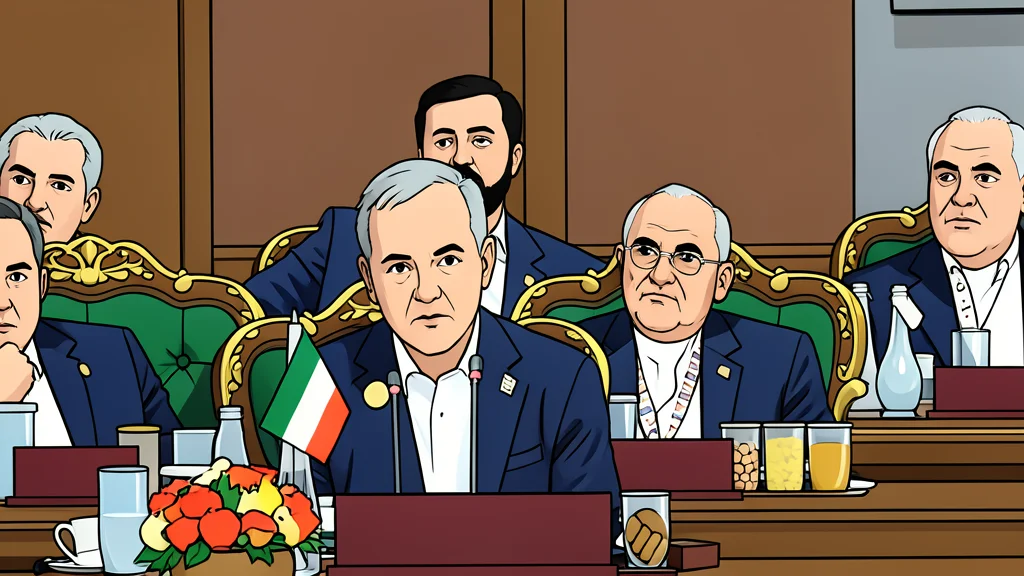
President Masoud Pezeshkian argued that the current international order is failing to protect sovereign states, urging BRICS members to prioritize genuine multilateralism over unilateral pressure.
At the recent BRICS leaders' meeting in New Delhi, Iranian President Masoud Pezeshkian delivered a pointed critique of the existing global governance framework. Speaking at a closed-door session, he argued that the current international system suffers from a fundamental contradiction: while global interdependence continues to deepen, there is a simultaneous resurgence of unilateralism and the weaponization of financial and technological tools. According to reports from GN auto geopolitics/global, Pezeshkian emphasized that these trends undermine the credibility of multilateral institutions and expose the limitations of the current rules-based order.
The Iranian president contended that genuine multilateralism is impossible if international rules are applied selectively. He highlighted the perceived double standards in the enforcement of the UN Charter, noting that it often fails to protect nations against unlawful uses of force. Pezeshkian stressed that the legitimacy of any governance system depends on its capacity to safeguard the rights of all countries, regardless of their size or power. He warned that if rules are binding for some but open to interpretation by others, the concept of multilateralism becomes meaningless in practice.
Critique of Unilateral Pressure
Pezeshkian specifically cited the impact of unilateral sanctions and the use of economic systems as instruments of political power. He stated that Tehran has experienced the consequences of such actions, referencing damage to civilian and vital infrastructure resulting from military aggression. The president argued that the international system must be capable of protecting human life and national sovereignty against war and aggression, rather than serving as a tool for exerting pressure on specific states. He called for reforms that produce practical changes in how these issues are addressed.
The speech also touched upon the humanitarian situations in Gaza and Lebanon, asserting that the global order must prevent genocide and aggression. Pezeshkian urged the BRICS group to oppose attacks on civilian infrastructure, including peaceful nuclear facilities. He maintained that lasting security cannot be achieved by ensuring safety for some nations while leaving others exposed to insecurity, a dynamic he described as incompatible with the principles of inclusive governance.
Proposed Priorities for Reform
Outlining a roadmap for change, the Iranian president presented four key priorities for global governance. First, he called for equal respect for national sovereignty and international law. Second, he advocated for the reform of global institutions, specifically mentioning the UN Security Council and international financial bodies. Third, he promoted economic cooperation through the use of national currencies, independent payment mechanisms, and the New Development Bank. Finally, he emphasized the need for collective action against unilateral sanctions, suggesting that BRICS members should coordinate their efforts to defend the UN Charter and expand economic and financial cooperation.
Pezeshkian also called for the establishment of a permanent secretariat for BRICS to improve the implementation of common decisions and strengthen collaboration in science, technology, energy, and food security. Regarding the Palestinian issue, he asserted the right to self-determination and urged the group to play an active role in supporting legitimate rights. He concluded by expressing Iran's readiness to cooperate toward a world where power does not replace law, sanctions do not replace cooperation, and war does not replace dialogue.
Forward Focus on Cooperation
The next phase of BRICS engagement will likely focus on the practical implementation of these stated priorities. Observers will watch for concrete steps toward independent payment mechanisms and deeper economic integration among member states. The summit’s emphasis on inclusive governance sets a challenging benchmark for future diplomatic interactions, as the group seeks to balance its internal diversity with a unified stance on global reform. The extent to which these rhetorical commitments translate into actionable policy will determine the group's influence in the coming years.