Iran Cuts Trust in IAEA Chief Citing Political Bias
Tehran asserts a lack of confidence in the agency's leadership, arguing that recent actions have shifted the dialogue from technical verification to geopolitical maneuvering.
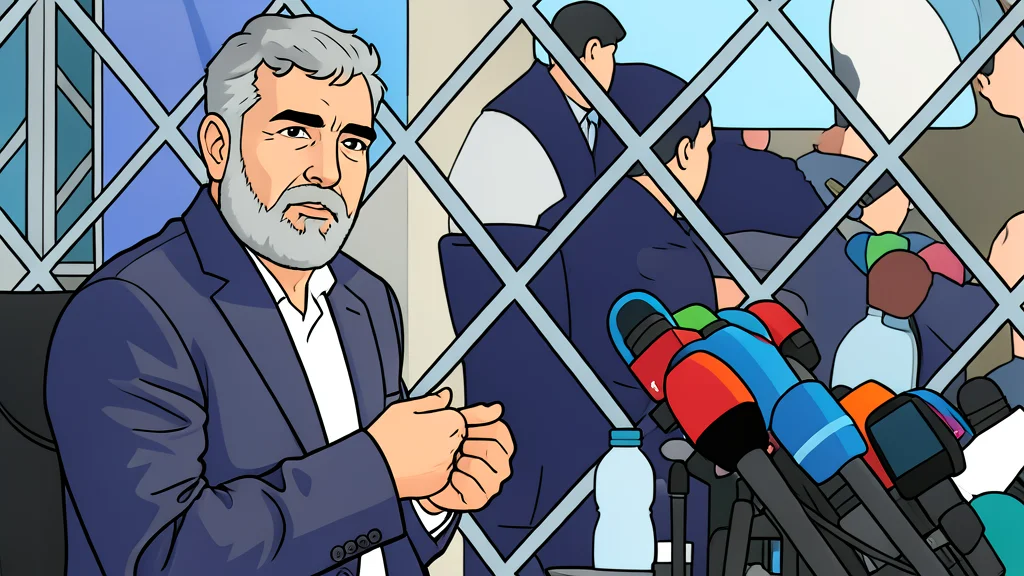
A senior official from Iran’s Atomic Energy Organization has declared that Tehran holds no trust in Rafael Grossi, the Director General of the International Atomic Energy Agency. Speaking on Wednesday, Behrouz Kamalvandi, the AEOI spokesman, characterized Grossi’s handling of the nuclear file as inherently political rather than professional. According to reports from Anadolu Agency, this stance represents a significant escalation in the diplomatic friction between the two parties, moving beyond routine procedural disagreements to a fundamental challenge of the agency's impartiality.
Kamalvandi indicated that this position is not necessarily permanent, suggesting it could shift only if the IAEA leadership fundamentally alters its approach. The core of the complaint centers on the belief that Grossi’s public statements and reports have served as instruments for political pressure exerted by European nations, the United States, and Israel. The Iranian official urged the agency to return to what he described as its proper role: a technical and professional body focused on verification rather than a participant in geopolitical strategy.
Security Concerns Drive Access Restrictions
The dispute extends to physical access for inspectors at nuclear facilities damaged during recent hostilities. Iran has restricted IAEA entry to these sites, citing significant security risks. Kamalvandi argued that adversaries could exploit information gathered by inspectors to plan further attacks, making the protection of such data a national priority. Consequently, Tehran questions the confidentiality of any information shared with the IAEA, arguing that it cannot be expected to provide full transparency if that data cannot be adequately safeguarded against potential misuse by hostile actors.
This stance places Iran in direct contradiction with the IAEA, whose leadership has repeatedly emphasized the necessity of unrestricted access to verify nuclear material and activities. The tension highlights a broader divergence in how each party views the agency’s mandate. For Tehran, the current environment is one of existential threat, requiring protective measures that limit external oversight. For the IAEA, such restrictions undermine the integrity of the non-proliferation regime and the ability to verify compliance with international obligations.
Diplomatic Friction Over Visa Denials
Beyond technical issues, the relationship has been strained by a recent diplomatic incident involving AEOI chief Mohammad Eslami. Kamalvandi disclosed that Austria initially issued Eslami a multiple-entry Schengen visa for his planned attendance at the IAEA General Conference in Vienna. However, the Austrian government subsequently indicated that the visit should not proceed. Iran accused Vienna of reversing its position under pressure from Washington, leading Tehran to summon Austria’s charge d’affaires and file a formal protest. This episode underscores how external geopolitical pressures are perceived to be influencing administrative decisions that affect Iran’s participation in international forums.
Observing Future Diplomatic Movements
As the IAEA prepares for its upcoming General Conference, the atmosphere remains tense. Analysts monitoring the situation, including those contributing to GN auto geopolitics/middle-east: Iran nuclear, note that the breakdown in trust complicates any potential for renewed dialogue. The key question now is whether the IAEA will attempt to decouple its technical mandate from political narratives to restore credibility, or if the dispute will harden into a prolonged standoff. Watch for any official responses from Vienna or Washington, as well as any changes in Iran’s posture regarding inspector access, which will signal whether a path toward de-escalation exists or if the nuclear file is entering a more isolated phase.