Pezeshkian Rejects Aggressor Label Amid BRICS Dialogue
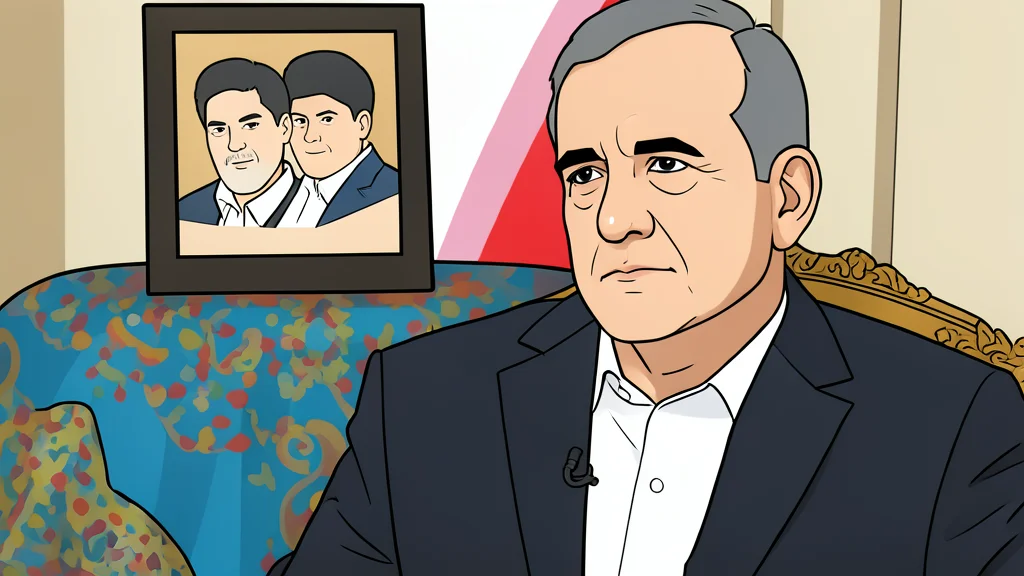
Iranian President Masoud Pezeshkian has reaffirmed Tehran's commitment to international law during a BRICS summit, rejecting accusations of nuclear ambitions while highlighting economic cooperation opportunities with India and regional partners.
Iranian President Masoud Pezeshkian has asserted that his country has never initiated conflict, emphasizing a defensive posture in response to actions by the United States and Israel. Speaking on the sidelines of the BRICS summit in India, Pezeshkian framed Tehran’s stance as one of readiness for dialogue within the boundaries of international law and the Treaty on the Non-Proliferation of Nuclear Weapons. According to the GN geopolitics/nuclear (en-US) report, this statement aims to counter narratives that portray Iran as a destabilizing force in the region.
The president further underscored the historical depth of ties between Iran and India, proposing an expansion of bilateral cooperation focused on transit and investment. He highlighted the potential of the Chabahar port to serve as a critical node in a broader network connecting the global south to the north and east to the west. Pezeshkian suggested that such infrastructure could facilitate economic and cultural exchanges, positioning Iran as a central transit hub in regional logistics.
Chabahar Port Anchors Bilateral Ambitions
Discussions between Tehran and New Delhi have centered on various models for investing in the Chabahar port, with options ranging from continued Indian direct investment to joint ventures. Pezeshkian described the port as a strategic asset that could leverage Iran’s geographical position to reduce trade friction. By revitalizing this route, both nations aim to strengthen their economic interoperability and reduce reliance on traditional shipping lanes that are often subject to geopolitical volatility.
BRICS Platform Challenges Economic Isolation
The Iranian leader characterized the BRICS bloc as a mechanism for diminishing dependence on a US-dominated financial system. He argued that member states should be capable of pursuing trade and investment independently of unilateral sanctions imposed by Western powers. Pezeshkian specifically pointed to the New Development Bank as a key instrument for supporting joint projects and fostering alternative currencies, thereby mitigating the impact of dollar-centric monetary policies on developing economies.
In addressing regional dynamics, Pezeshkian distinguished between tensions with Washington and relations with neighboring Arab states. He stated that Tehran maintains no fundamental issues with countries such as the United Arab Emirates, Saudi Arabia, or Qatar, attributing regional instability primarily to the presence of US military bases. The president advocated for the establishment of joint regional security mechanisms that promote development without external interference, describing neighboring nations as brothers and partners in a shared stability framework.
Nuclear Program Remains Subject of Debate
Pezeshkian firmly rejected allegations that Iran seeks to develop nuclear weapons, arguing that such ambitions would be incompatible with its membership in the NPT. He questioned the lack of concrete evidence presented by critics and highlighted the extensive inspections Iran has already undergone. The president criticized Israel for its non-participation in the treaty, calling for consistent international standards regarding nuclear capabilities across the Middle East. This rhetorical strategy seeks to isolate the dispute with the US while appealing to broader international legal norms.
Regarding potential direct negotiations with Washington, Pezeshkian indicated that current conditions do not favor such talks. He cited previous experiences where agreements were abandoned by the US after signing, which he said undermined trust. For any future engagement to be viable, he stated that rebuilding mutual confidence is a prerequisite. The forward question remains whether diplomatic channels can be reopened in a way that addresses these historical grievances while advancing a comprehensive settlement.