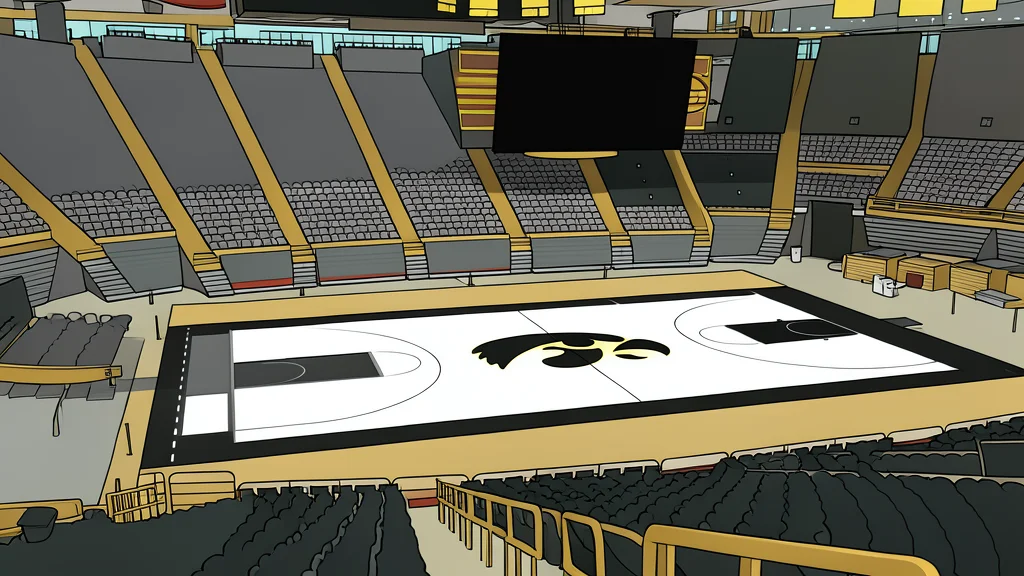
South Korea's Basketball Surge Meets Iran in Nagoya

The hardwood gleams under Nagoya’s stadium lights as South Korea prepares to test Iran, carrying four straight wins and a hunger for a final that has eluded them for a decade.
The squeak of sneakers on polished hardwood cuts through the humid air of Nagoya. South Korea’s men’s basketball team stands on the precipice of a historic moment, their momentum a tangible force after four consecutive victories at the 2026 Aichi-Nagoya Asian Games. They have stormed into the semifinals, a feat unseen in eight years, and now face a direct challenge from Iran. The court is set, the lights are bright, and the path to the gold medal game hangs in the balance.
This is not a casual encounter. It is a collision of styles and rankings. South Korea, riding a wave of offensive firepower that has seen them score over 100 points in their last three outings, meets Iran, a team ranked 28th in the FIBA world standings. For South Korea, a win here unlocks a door that has remained shut since the 2014 Incheon Asian Games. The stakes are high, the atmosphere electric, and the physicality of the game ready to erupt.
Four Wins, One Historic Run
The journey to this semifinal has been a display of raw dominance. South Korea dismantled Saudi Arabia 82–66, then crushed Indonesia 102–48, before subduing Japan 100–83. Each victory was a statement, a rejection of doubt. The win over Japan was particularly sweet, erasing the sting of previous friendly defeats and signaling a team locked in. Their offensive rhythm is relentless, with three straight games of triple-digit scoring showcasing a team that refuses to slow down.
In the quarterfinals, that intensity peaked. Against Jordan, a team ranked 41st globally and the previous tournament’s runner-up, South Korea imposed their will with a 114–80 victory. The game was a masterclass in balanced scoring and physical control. They dominated the glass, winning rebounds 44–29, and outpaced Jordan in assists 36–18. It was a comprehensive display of team depth, proving they can win on any night, against any opponent.
Balanced Firepower Defines the Team
There is no single point of failure in South Korea’s system. In the Jordan match, all twelve players who touched the floor found the net. Lee Hyun-jung led the charge with 28 points, including six three-pointers, while also contributing nine rebounds and five assists. Yoo Gi-sang added 16, and Lee Jung-hyun chipped in with 12 points and six assists. This depth is their secret weapon. With Yeo Joon-seok returning from injury and Choi Joon-yong joining the squad, the rotation options have expanded, making it nearly impossible for opponents to game-plan against a single threat.
The team’s cohesion is evident in their ball movement and defensive pressure. They do not rely on isolated brilliance; they thrive on collective execution. This balanced approach has allowed them to overcome higher-ranked teams and navigate the bracket with confidence. As they prepare to face Iran, this depth will be crucial. Iran is a physical, well-drilled side, and South Korea’s ability to distribute the load and maintain intensity across all four quarters will be the deciding factor.
A High-Stakes Semifinal Clash
Iran enters the game as the statistical favorite, holding the 28th spot in the FIBA rankings, 29 places above South Korea’s 57th. They are a formidable Middle Eastern power, known for their physicality and defensive grit. However, rankings are static; form is dynamic. South Korea is peaking, their confidence soaring after four straight wins. The mismatch on paper may favor Iran, but the momentum in the building belongs to the Koreans. It is a test of whether their current surge can withstand the pressure of a top-tier opponent.
The match is scheduled for 4 p.m. on September 18 in Nagoya. For fans and bettors alike, the anticipation is building. Sports Toto has released the 111th Proto Victory game for this fixture, with tickets available from 8 a.m. until the tip-off. As reported by GN auto sports/multisport: Asian Games, the betting markets reflect the uncertainty of the matchup, offering various game types including win-loss, handicap, and under-over. The outcome will determine which team advances to the final, a stage South Korea has not reached in twelve years.