Japan's Cricket Milestone: A Trial by Fire Against India
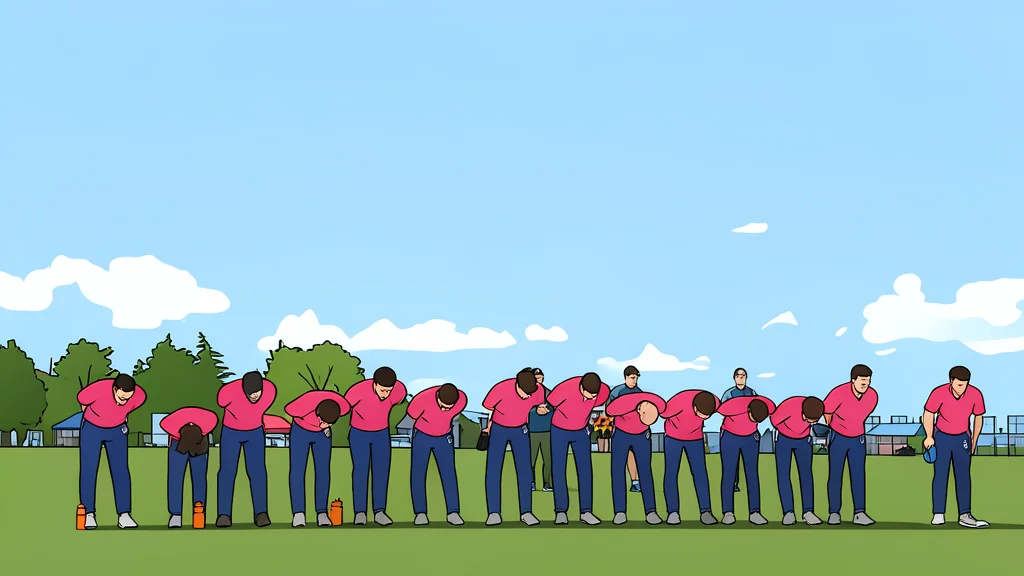
In Sano, the air hums with anticipation as Japan prepares for its first-ever T20I against India, a match that doubles as a crucial rehearsal for the Asian Games.
The grass in Sano is cut short, the soil packed tight under the weight of history. On September 22, the Sano International Cricket Ground will host a moment that has waited decades to arrive: the first international meeting between Japan and India in cricket. It is not merely a game; it is a threshold. For the hosts, this fixture carries a gravity that transcends the scorecard, serving as a vital litmus test before the Asian Games begin. The stakes are high, the air thick with the promise of a new era for Japanese cricket.
India arrives with the confidence of reigning ICC Men's T20 World Cup champions, viewing the match as a strategic warm-up to gauge conditions ahead of the continental tournament. For them, it is a practice run, a chance to sharpen their edges. But for Japan, it is a trial by fire. They are stepping into the arena with the best in the world, seeking to prove that their rapid development is more than just a statistical anomaly. The contrast is stark: one side seeking refinement, the other seeking validation.
A Squad Forged for Battle
Japan’s lineup is a blend of emerging talent and seasoned veterans, ready to face the challenge. Kendel Kadowaki-Fleming, the team’s leading T20I run-scorer, leads the charge, bringing a steady hand to the bat and the heart of the squad. Behind him stand Ibrahim Takahashi and Declan Suzuki, both with more than 50 T20I appearances under their belts, providing the experience needed to navigate high-pressure situations. Makoto Taniyama, the team’s top wicket-taker, and Charlie Hara-Hinze complete a core group that has trained together for the Asian Games. This is not an experimental side; it is their strongest possible lineup, chosen to compete at the highest level.
More Than a Friendly Encounter
The timing of this match is no accident. The Asian Games begin just two days after this one-off T20I, making the Sano fixture a critical pre-tournament assessment. India has a direct ticket to the quarter-finals, but Japan must fight for their spot from the start. This match offers them a rare opportunity to test their mettle against a giant under familiar conditions. As reported by Yahoo Sports, the significance of this fixture extends beyond the field. It is a celebration of 75 years of diplomatic relations between the two nations, a symbolic bridge built on the back of sport.
Yet, cricket remains a minority sport in Japan, overshadowed by the dominance of baseball and football. The Japan Cricket Association has spent years cultivating this niche, and this match is a major step in that journey. It provides massive exposure, introducing the sport to local fans and an international audience. Kadowaki-Fleming is clear about the team’s intent: they are not there to merely celebrate the occasion. They are there to compete, to understand their gaps, and to show how far their cricket has come. The stage is set, the eyes are on Sano, and the game is about to begin.