Jeffery Simmons Slaps Down Ragebait After Titans' Opening Loss
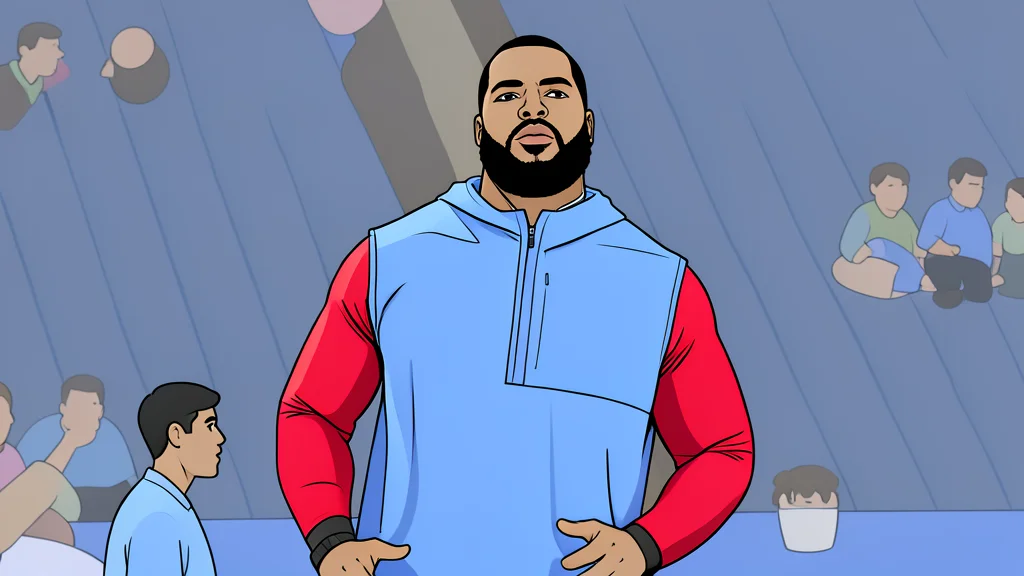
The grass is still damp from the afternoon rain as the Titans walk off the field, leaving behind a 23-10 defeat and a sharp exchange in the tunnel.
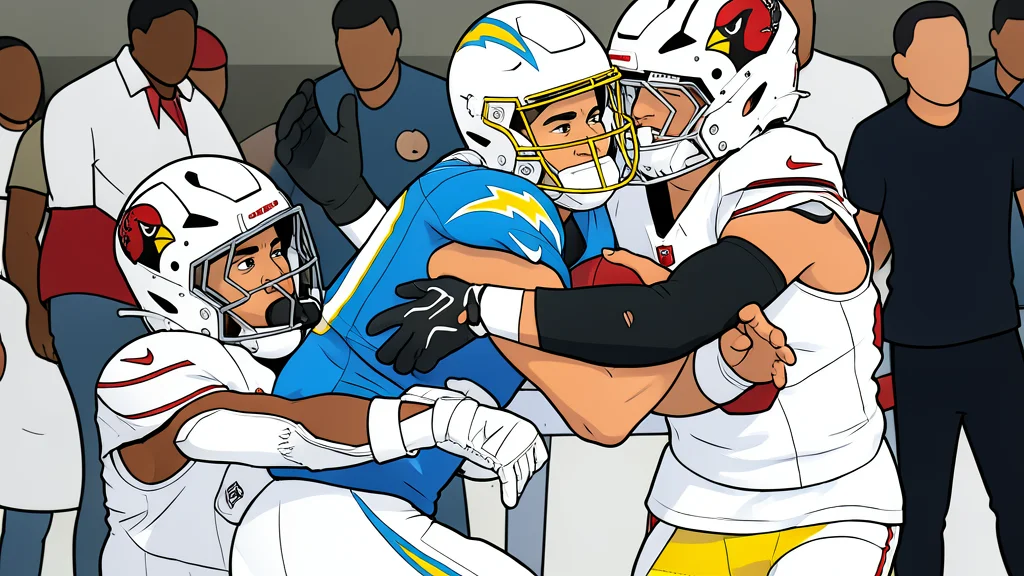
The green of the turf feels heavy under the cleats of Tennessee’s defensive line, the grass slick with sweat and the residual chill of a Sunday afternoon that ended in disappointment. Jeffery Simmons stands in the tunnel, the air thick with the scent of turf and exertion, his chest heaving after a grueling shift against the New York Jets. The final whistle has long since faded, replaced by the hum of stadium lights and the murmur of reporters crowding the narrow space. It is a moment suspended between the roar of the crowd and the quiet, grinding reality of a 23-10 loss, a score that hangs in the air like smoke.
Local reporter Paul Kuharsky leans in, microphone raised, seeking a narrative of stagnation. He asks if this was just another "same old Titans" performance. The question lands with the weight of a physical blow, cutting through the post-game haze. Simmons does not flinch. He turns his gaze directly onto the lens, his voice cutting through the ambient noise with precise, unyielding clarity. There is no hesitation, no apology, only a sharp rejection of the premise. The tension in the tunnel spikes, the air suddenly brittle and charged with the friction of a star player refusing to be boxed in by a headline.
Simmons Rejects Narrative of Stagnation
"You're ragebaiting there, Paul," Simmons says, the words landing with the impact of a snap. He points to the freshness of the moment, the raw potential of a new era under head coach Robert Saleh. "When I said about the newness, it's still there. It's the first game, Paul. That was a ragebait question." The defensive lineman’s tone is firm, a wall built against the easy cynicism of the press. He does not offer excuses, but he refuses to accept the framing that one loss defines the trajectory of a new coaching staff. The word "ragebait" hangs in the air, a label he has applied to the question itself, dismissing it as a manufactured conflict rather than a genuine inquiry.
The dismissal is not just verbal; it is a stance. Simmons shifts his weight, the muscles in his shoulders tightening as he prepares to leave the press area. He speaks of tomorrow, of the work that will be done in the quiet of the facility while the public debates the outcome. "At the end of the day, we'll be back," he states, the sentence short and declarative. "We'll get in there tomorrow, and we'll be ready for Week 2." The focus shifts from the past to the immediate future, a deliberate pivot away from the loss and toward the grind of preparation. The tunnel remains, a narrow corridor leading back to the locker room, but Simmons’s gaze is fixed on the horizon of the next game.
A Decisive Jet Victory on the Road
On the field, the Jets executed with a precision that left little room for debate. Quarterback Geno Smith, in his re-debut with New York, moved the ball with fluid efficiency, throwing for 254 yards. The passing game found its rhythm early, connecting with receivers in the soft spots of the Tennessee secondary. The Titans’ offense, by contrast, sputtered and stalled, unable to generate the momentum needed to counter New York’s pressure. The 23-10 scoreline is a stark reflection of that disparity, a mathematical verdict on a day when the Jets controlled the tempo and the clock.
The defensive line, including Simmons, who recorded four total tackles, struggled to find the same level of disruption. There were no sacks, only a single hit on the quarterback, a lack of pressure that allowed the Jets to operate without significant fear of a turnover. The absence of pass rush was a visible gap in the game plan, a hole that the Jets exploited with calculated ease. The offense, meanwhile, found no rhythm, the plays disjointed and the execution lacking the spark needed to challenge a well-coordinated opponent. The result was a comprehensive loss, a clear indicator of the work that remains ahead.
The Road Ahead for Saleh
For Robert Saleh, the debut was a rough start, a harsh introduction to the NFL’s unforgiving landscape. The loss is a blemish on an otherwise promising start to his tenure, a reminder that expectations are high and patience is scarce. Yet, as Simmons noted, the season is only beginning. There are sixteen more games on the schedule, each one a chance to adjust, to refine, to prove the naysayers wrong. The Titans must now turn their attention to the next challenge, a test that will define their resilience and their ability to bounce back from an early setback.
The next opponent is formidable, bringing their own brand of precision and power to the field. The Titans must process the loss, analyze the film, and make the necessary adjustments. The silence of the practice facility will soon be broken by the sounds of effort, the clack of pads, and the voices of coaches directing the flow of the game. It is a cycle that repeats week after week, a relentless march toward excellence that demands constant evolution. For now, the loss is in the rearview mirror, a data point in a much larger story that is still being written. The Titans walk away from the tunnel, their minds already on the next battle, the next chance to prove that the first game was just a single note in a much longer symphony.