Szoboszlai's Versatility Creates Tactical Puzzle for Liverpool
Dominik Szoboszlai’s range of roles forces Andoni Iraola to balance midfield control with creative freedom as the Reds chase stability.
The grass at Anfield is a green expanse under the stadium lights, white lines cutting sharp arcs across the surface. In the center circle, the air hums with anticipation. Dominik Szoboszlai stands ready, his boots planted in the turf, embodying the central dilemma facing Liverpool’s new manager. He is both the solution and the problem, a player whose brilliance is matched only by the tactical complexity he introduces to Andoni Iraola’s system.
Iraola’s midfield has swung from maligned to magnificent in a matter of weeks. The Hungarian is at the heart of this volatility, offering a conundrum that must be solved if the Reds are to find consistent success. His ability to drift into multiple positions creates a fluidity that can be dazzling, yet it risks leaving gaps in the defensive structure when the ball is lost.
A Half-Volley and High Expectations
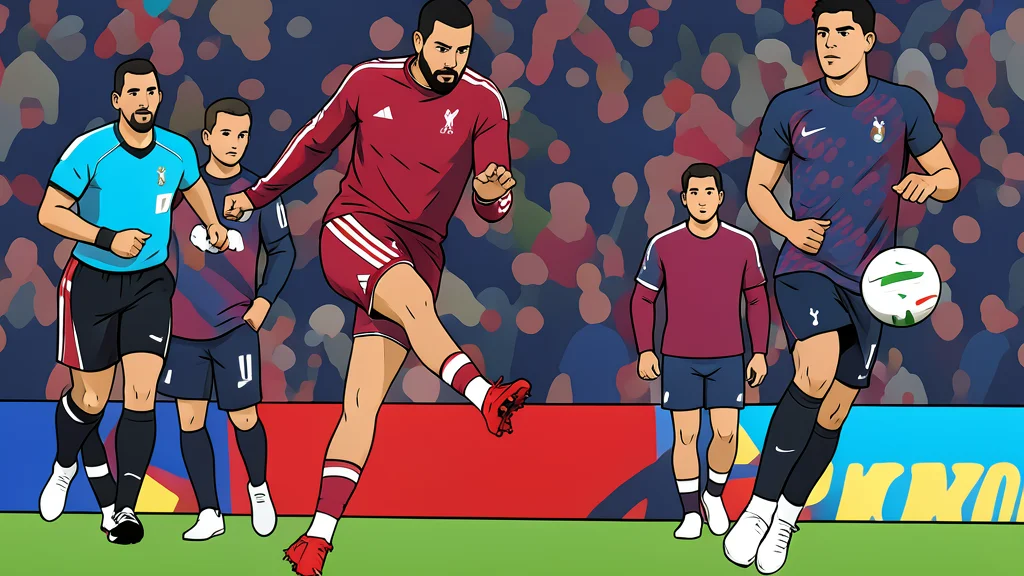
Wednesday’s match against Tottenham showcased Szoboszlai’s explosive capability. From thirty yards out, he unleashed a half-volley that sang into the net, a moment of pure individual genius. "I was thinking, 'why not?'” he admitted, his understatement masking the sheer audacity of the strike. Yet this brilliance casts a long shadow. Four days earlier, against Fulham, the same player won only one of ten duels, a stark reminder that his defensive engagement is not always consistent.
The contrast is sharp. Liverpool struggled to control the midfield in those moments, conceding goals when the ball was lost high up the pitch. Szoboszlai’s license to roam forward, often operating as a number eight, means he is frequently caught offside when transitions occur. This duality is the core of the issue: his goalscoring instincts are elite, having contributed five of the team’s eleven goals this season, but his positional discipline is under scrutiny.
Redefining the Midfield Structure
Szoboszlai rejects the conventional label of a double pivot. He insists the setup is not two holding midfielders side by side, but a triangular arrangement involving a six, an eight, and a ten. "The number eight is a little bit higher," he explained, detailing the nuanced differences in positioning. This structure allows him the freedom to push forward, a role he excels in with sixteen goals since the start of last season.
However, this freedom comes with a cost. After the stalemate with Fulham, criticism of his defensive efforts mounted. Szoboszlai responded with characteristic bluntness, claiming he had not seen the backlash. When he scored against Tottenham, he gestured to his ear, a gesture he claimed was for himself, not a rebuttal to critics. Yet the message was clear: his high ceiling demands that the team accepts his occasional dips in form.
The Challenge of Positional Balance
Iraola faces a difficult calculation. Szoboszlai’s skill set allows him to occupy half of the outfield positions, from right-back to number ten. When Mohamed Salah was dropped, Szoboszlai shifted to the wing, and later to right-back, where he won the player-of-the-year award. "I have been number two, number six, number eight, number ten, number seven," he noted, his diplomatic tone masking a preference for the central roles.
The search for balance continues. With Florian Wirtz as a specialist ten, Szoboszlai is often the second choice for that role, but his versatility makes him indispensable. As reported by Yahoo Sports, the key lies in finding the right mix of Gravenberch, Mac Allister, and Szoboszlai. The manager must harness Szoboszlai’s creative chaos without sacrificing the defensive solidity that has been Liverpool’s point of vulnerability. The pitch is wide, the options many, but the solution must be precise.