JA Solar Launches P-HJT Modules to Test Low-Orbit Durability
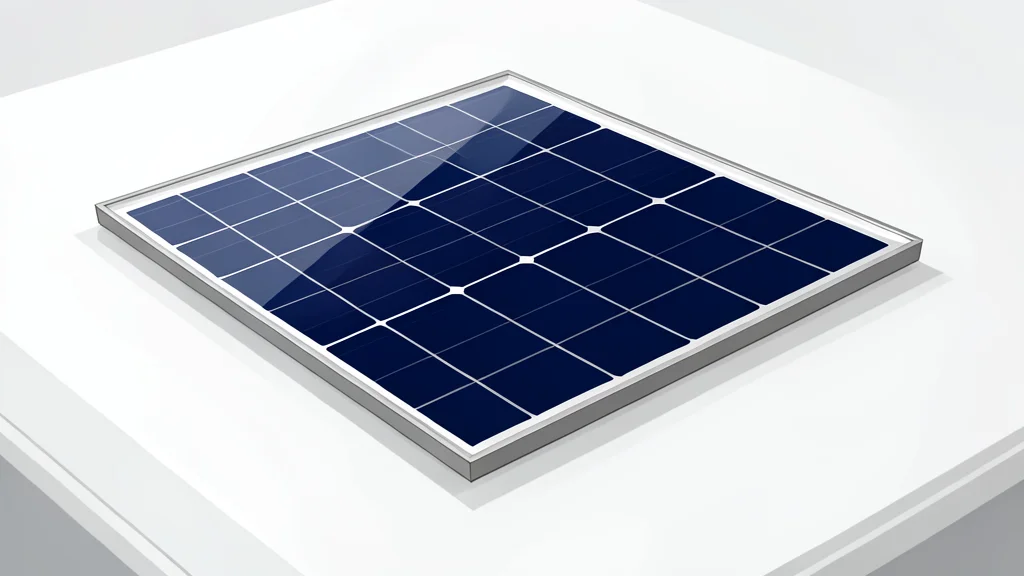
JA Solar's first in-orbit P-HJT test aims to verify if terrestrial cost advantages translate to viable satellite power savings.
Key points
- JA Solar launched P-HJT modules to test power attenuation in low-orbit environments.
- The test compares in-orbit data with ground simulations to verify reliability.
- JA Solar reports no current space orders, citing high uncertainty in commercialization.
JA Solar has launched a set of P-type heterojunction (P-HJT) modules into low Earth orbit aboard the Kuaizhou-11 rocket from Jiuquan. This marks the company's first dedicated in-orbit validation of crystalline silicon technology for satellite power systems, moving beyond ground-based simulations to assess real-world performance.
The primary objective is to determine whether the significant cost advantage of terrestrial photovoltaic cells can be successfully converted into operational savings for satellite operators. According to 36kr.com, the data collected will compare in-orbit metrics against ground tests to evaluate reliability and power attenuation, addressing the commercial viability of using cheaper silicon cells in mass constellation deployments.
Orbital conditions drive power attenuation
Space environments impose unique stressors that terrestrial stations do not face, including repeated thermal cycling between sunlight and shadow, vacuum exposure, and atomic oxygen. These factors damage cell materials and encapsulation layers, leading to gradual output power loss over time.
Since satellites cannot be serviced or have modules replaced after launch, engineers must design power systems with substantial margins to ensure end-of-life performance. JA Solar’s test seeks to verify if the decay rate of P-HJT modules in orbit aligns with predictions from ground irradiation and temperature cycling tests, which is critical for determining required power reserves.
Cost efficiency faces structural trade-offs
While crystalline silicon slices are cheaper than traditional multi-junction III-V cells, their lower efficiency and radiation resistance may necessitate larger solar wing areas and heavier protective structures. This increase in structural weight can offset the initial cell cost savings by raising launch expenses and complicating satellite design.
The commercial question is not merely about cell price, but the total cost of the power supply system. If the weight and area penalties of silicon technology are too high, the economic benefit for low-orbit constellation operators may be negated, keeping the more expensive but efficient gallium arsenide cells as the standard for high-reliability missions.
Commercial impact remains uncertain
JA Solar states that space photovoltaics are still in the exploration and verification stage, with no relevant orders currently secured. The company notes that this activity has no substantial impact on its current operating performance and that large-scale commercialization remains highly uncertain.
The value of this test lies in accumulating irreplaceable operational data to support future design life assessments. Until the deviation between ground predictions and in-orbit reality is quantified, the transition of terrestrial silicon technology to a mainstream space component remains speculative.