Planted Raises $31.8M to Scale Autonomous Solar Construction
California-based Planted secured new capital to expand its robotic fleet and accelerate the deployment of high-density solar arrays, aiming to reduce construction timelines from years to months.
Planted, a California-based firm specializing in autonomous power deployment, has raised $31.8 million to scale its operations and address growing demand for solar capacity. The new capital will expand the company's robotic fleet and support the launch of Sage, its next-generation deployment robot. This investment is designed to resolve capacity constraints by converting solar construction into a manufacturing process, allowing the company to build on difficult terrain and deliver power in months rather than years.
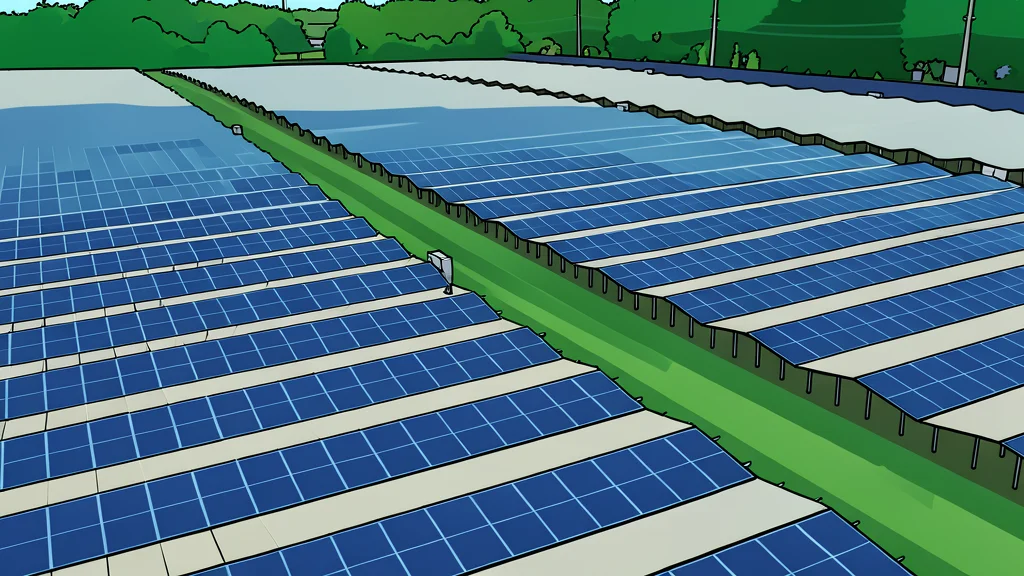
The funding round was led by Piva Capital and RA Capital Management Planetary Health, with participation from Breakthrough Energy Ventures, Gigascale Capital, Google, and Khosla Ventures. Planted’s approach combines planning software, high-density terrain-following solar arrays, and field robotics into a single system. This integration enables the company to utilize land parcels that legacy tracking systems cannot accommodate, resulting in smaller project footprints and higher energy yield per acre.
Record installations highlight capacity gaps
Despite a record 664 GW of solar photovoltaic power installed worldwide last year, the industry faces significant constraints in supply chains, land availability, interconnection, and skilled labor. Planted’s CEO Eric Brown stated that solar deployment needs to occur five times faster than current rates to meet 2050 targets. By treating power plant construction as a manufacturing problem, the company aims to close this gap using robots that prove the model works in the field today.
The company recently completed a 28-MW behind-the-meter project for a neocloud data center, moving from initial contact to power generation in ten months. Field construction for this project was completed in under three months. Planted asserts that its system is simplified for automation and defined in software, which allows for rapid deployment. The firm also completed the 11-MW Bowes Solar project in Illinois for Cultivate Power, validating its bankable development model with independent engineering reviews.
Denser arrays reduce land requirements
Planted’s high-density racking system delivers twice the energy per acre compared to traditional methods. This efficiency allowed the company to redesign the Armoracia project for Aligned Climate Capital, reducing the required footprint to 16 acres, ten fewer than the original design. According to the company, this denser layout was approved by local authorities after the initial proposal was rejected. The reduction in land usage is a key differentiator in markets where space is limited and regulatory hurdles are high.
Scaling output for 2026 targets
Having deployed more than 10 MW in 2025, Planted is on track to reach 100 MW in 2026, representing a tenfold increase in annual output. The company maintains a project pipeline exceeding 20 GW. Investors note that electricity demand is rising sharply, particularly from industrial buyers like data centers, while traditional power generation projects often take years to come online. Planted’s model reduces bottlenecks in land, steel, and labor, offering a more capital-efficient solution for meeting immediate energy needs.
The next-generation Sage robot is scheduled for deployment later this year. By combining intelligent planning software with autonomous field robotics, the company aims to unlock orders of magnitude more scale at lower costs. This shift from bespoke site-by-site construction to a standardized, manufactured process is intended to accelerate the availability of new power generation capacity in a market facing tightening constraints.