Bloom Energy and Diamondback Energy Show Divergent 2025 Financial Outcomes
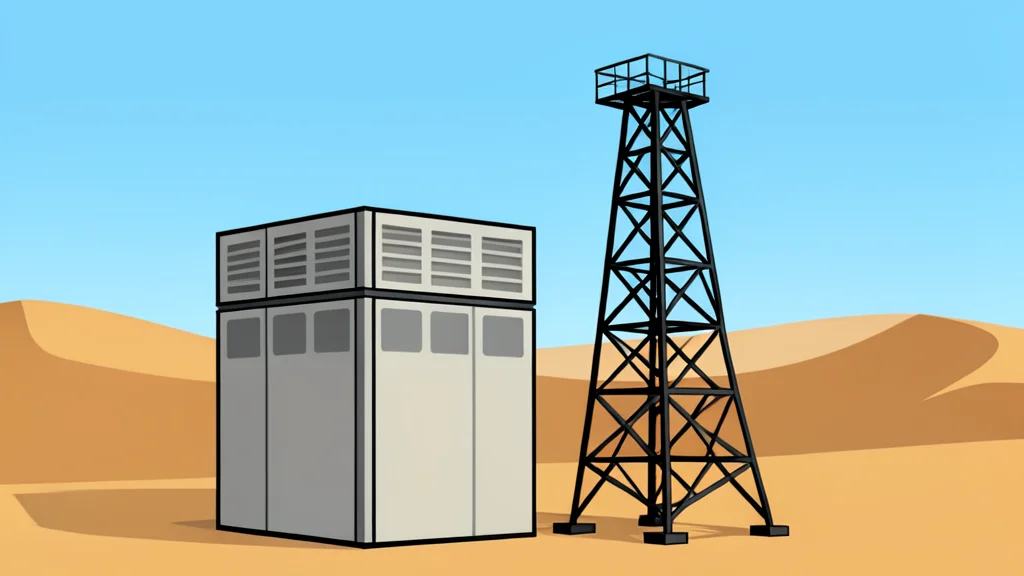
A comparison of two energy stocks reveals stark contrasts in profitability, debt structure, and market positioning for 2026 investors.
Bloom Energy and Diamondback Energy present opposing financial profiles for 2026, highlighting the trade-off between growth-oriented clean technology and established hydrocarbon production. Bloom Energy, a key player in renewable energy stocks, targets data center and industrial power needs with solid oxide fuel cells. Its FY 2025 revenue reached $2.0 billion, a 37.3% year-over-year increase, yet the company recorded a net loss of $88.4 million. This loss widened from $29.2 million in FY 2024, though the negative net margin improved to -4.4% from -22.7% in FY 2023.
Diamondback Energy, focused on Permian Basin oil and gas, generated $14.3 billion in FY 2025 revenue, up 36.3% from the prior year. The company reported a net income of $1.7 billion, resulting in an 11.1% net margin. Despite this profitability, net income declined from $3.3 billion in FY 2024, reflecting volatility in global energy prices. Diamondback’s conservative balance sheet includes a debt-to-equity ratio of 0.4x and free cash flow of $5.5 billion, supporting dividends and drilling operations.
Bloom Energy Faces Loss Amid Revenue Growth
Bloom Energy’s financial position is characterized by high leverage and emerging market risks. The company holds a debt-to-equity ratio of 3.9x, indicating significant reliance on borrowed funds for expansion. However, its current ratio of 6.0x suggests strong short-term liquidity to cover immediate liabilities. Free cash flow for FY 2025 was $57.2 million, a modest figure given the scale of its capital-intensive business model.
Strategic partnerships underpin Bloom’s growth trajectory, including an agreement with American Electric Power to supply up to one gigawatt of fuel cells. A financing framework with Brookfield, valued at nearly $5.0 billion, further supports its capital needs. These deals target large-load customers in sectors with critical power reliability requirements, such as semiconductors and data centers, where onsite power generation offers distinct advantages.
Diamondback Energy Maintains Profitable Operations
Diamondback Energy’s business model centers on operational efficiency in the Wolfcamp and Spraberry formations of West Texas. The company utilizes horizontal drilling to maximize extraction from unconventional onshore reserves. Its subsidiary, Viper Energy, contributes additional revenue through mineral interests in the same region. However, the company faces customer concentration risk, as a small group of significant clients accounts for a majority of its revenue.
While Diamondback’s net income decreased in FY 2025, its free cash flow of $5.5 billion remains robust, providing ample capital for shareholder returns. The current ratio of 0.4x indicates tight short-term liquidity relative to immediate liabilities, a common characteristic in the oil and gas sector where working capital is managed differently than in manufacturing. The low debt-to-equity ratio of 0.4x reflects a preference for equity financing over debt.
Risk Profiles Diverge Across Sectors
Bloom Energy’s primary risk lies in the maturity of distributed energy and hydrogen markets. Demand in these sectors may not materialize as projected, posing a threat to its long-term revenue assumptions. In contrast, Diamondback Energy faces price volatility inherent to commodity markets, which directly impacts its net income despite stable revenue growth. Investors must weigh Bloom’s growth potential against its current losses and debt load, versus Diamondback’s profitability and lower leverage.
The choice between these two stocks reflects a broader market tension between clean energy innovation and traditional hydrocarbon extraction. Bloom Energy offers exposure to the AI infrastructure boom through onsite power solutions, while Diamondback Energy provides a direct play on Permian Basin production. Both companies delivered strong revenue growth in FY 2025, but their profitability and capital structures present distinct risk and return profiles for 2026.