Emerald, Google, and Nvidia Form Alliance for Flexible AI Data Centers
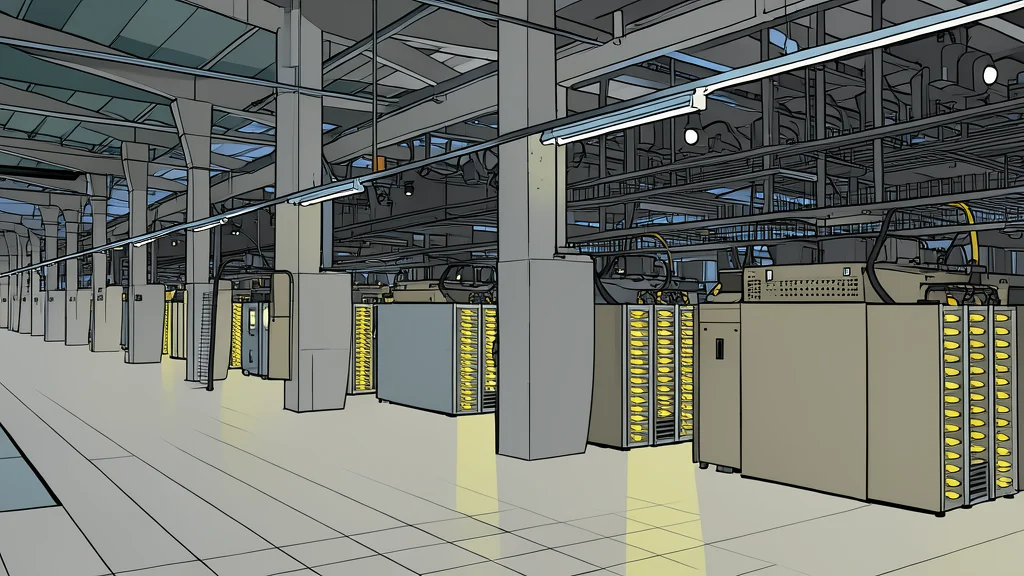
Emerald AI, Google, and Nvidia have established the AI Energy Management Alliance to integrate flexible data centers into the US power grid. The group aims to standardize how AI facilities manage energy demand and support grid stability.
Emerald AI, Google, and Nvidia have launched the AI Energy Management Alliance to transform data centers into flexible assets for the US power grid. The coalition includes energy majors AES, Constellation, Invenergy, NextEra Energy, Nscale Energy and Power, and Vistra. Their objective is to coordinate technical and operational strategies that allow AI infrastructure to respond dynamically to real-time grid conditions.
The initiative expands on the existing partnership between Nvidia and Emerald AI. It leverages Nvidia’s Vera Rubin DSX reference design and the DSX Flex software library to connect AI factories to grid services. Emerald AI’s Conductor platform orchestrates computational flexibility alongside onsite generation and battery storage, enabling facilities to shift workloads or discharge storage in response to system needs.
Flexibility unlocks significant grid capacity
According to research from Duke University’s Nicholas Institute cited by the alliance, making data centers moderately flexible could unlock up to 100 GW from the existing US power system. This approach treats large electricity customers as controllable resources rather than fixed loads. The strategy combines improved internal efficiencies with the ability to adjust grid draw, reducing the need for immediate infrastructure expansion.
Performance-based standards replace hardware specifics
The alliance operates on a technology-neutral, performance-based model. It focuses on measurable services such as response speed, duration, and predictability during emergencies, rather than specific hardware or software stacks. This framework standardizes technical requirements and operational data sharing to reduce uncertainty for developers while providing system operators with the necessary control for reliability.
Key principles include defining ride-through, curtailment, and contingency-response obligations before interconnection. The group seeks to create faster, risk-adjusted pathways for customers making credible flexibility commitments. Interconnection costs are to be allocated based on actual system impacts, such as avoided upgrades and improved ramping capability, ensuring a balanced approach to grid integration.
Collaboration targets policy and interconnection
Members of the AI Energy Management Alliance will collaborate with utilities on interconnection solutions and advocate for policies that recognize grid-responsive demand. By bringing together technology, energy, and policy communities, the group aims to deploy these models across the US. This coordinated effort is designed to build AI infrastructure at a pace that aligns with sustainability goals and grid stability requirements.