AI Hardware Leaders Discuss Silicon Limits and Market Shifts

Industry veterans argue that the current AI boom is constrained not by chip design, but by the physical pace of data center construction and manufacturing capacity.
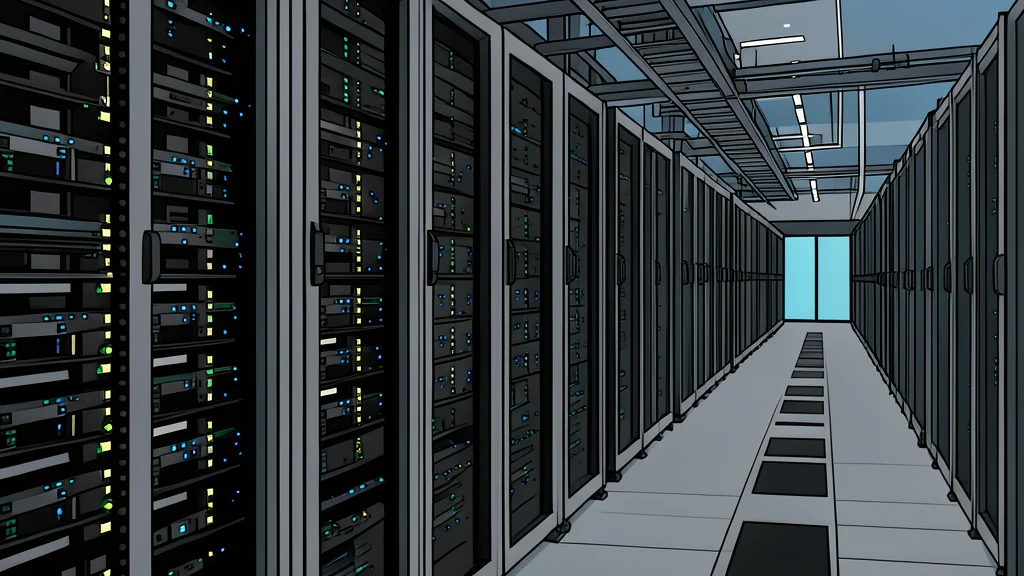
The rapid expansion of artificial intelligence hardware has reached a critical juncture, with industry leaders suggesting that the pace of innovation is now limited by physical infrastructure rather than software capabilities. During a recent discussion at The Next Endeavour event in San Jose, executives from Cerebras Systems and other semiconductor pioneers outlined the challenges facing the sector. The conversation highlighted a significant shift in how the market perceives computing power, moving away from simple chip design toward the complex logistics of scaling data centers. According to reports from GN auto tech/hardware, this period is marked by both unprecedented demand and significant structural bottlenecks that could slow down progress.
Andrew Feldman, co-founder and CEO of Cerebras Systems, emphasized that the company is operating in a unique economic environment. With a reported backlog of $25 billion, Cerebras is planning to increase its production capacity significantly over the next two years. Feldman noted that the industry is currently moving at the speed of software, but it is held back by the speed of real estate development. This mismatch between digital demand and physical supply is creating a widespread constraint across the sector, forcing companies to rethink their growth strategies and operational timelines.
Physical Limits Constrain Digital Speed
The primary obstacle identified by the panel is the availability of data center space. Feldman explained that while algorithms and models can be updated in days, building the physical infrastructure to house them takes years. This disparity means that even the most advanced chips cannot be deployed quickly enough to meet current demand. He predicted that manufacturing capacity, or fab capacity, will become the next major bottleneck within three years. For investors and engineers, this means that the next phase of competition will depend less on who has the best code and more on who can secure the physical space and manufacturing slots to run it.
Unexpected Origins of Current Chips
Dave Blundin, an entrepreneur and investor, provided historical context on how the current AI hardware landscape emerged. He pointed out that the GPUs powering today's AI models were originally designed for video games and graphics rendering. None of the companies that built these chips anticipated that they would become the backbone of the AI industry. The shift happened when researchers discovered that these graphics processors were unexpectedly well-suited for AI workloads. This accidental fit created a massive market inversion, turning niche components into the most critical resources in the technology sector.
This history serves as a reminder that technological leadership is often serendipitous. The companies that are now worth billions did not set out to build AI infrastructure; they built better gaming chips and found a new audience. As the industry moves forward, Blundin suggested that this pattern of unexpected utility may continue to drive innovation. Understanding where the current hardware came from helps explain why the market is so dominated by a few specific architectures, and why new entrants face such high barriers to entry.
Shifting Focus Toward Enterprise Inference
Atiq Raza, a semiconductor veteran, discussed how the priorities within AI hardware are evolving. He noted that the industry has moved through several distinct phases, starting with training large models, then shifting to consumer-level inference, and now transitioning to enterprise inference. Each phase addresses different bottlenecks and requires different hardware optimizations. Raza emphasized that every new innovation must solve a specific problem in this evolving pipeline. As workloads become more complex and distributed, the focus is shifting toward efficiency and in-memory compute to handle the demands of large-scale enterprise applications.