Beijing Robot Maker Targets 90 Billion Warehouse Labor Gap
With 70% of US warehouses lacking automation, a Beijing-based firm is moving into the market by offering flexible robot solutions that avoid the high upfront costs of traditional systems.
The United States employs 1.8 million people in warehouses, representing an annual labor cost of roughly $90 billion. However, about 70% of these facilities do not use physical automation. Many are either too small to support expensive, fixed infrastructure or are waiting for technology that can deliver savings without requiring a massive initial investment. This gap has created a significant opportunity for companies that can offer scalable, autonomous solutions.
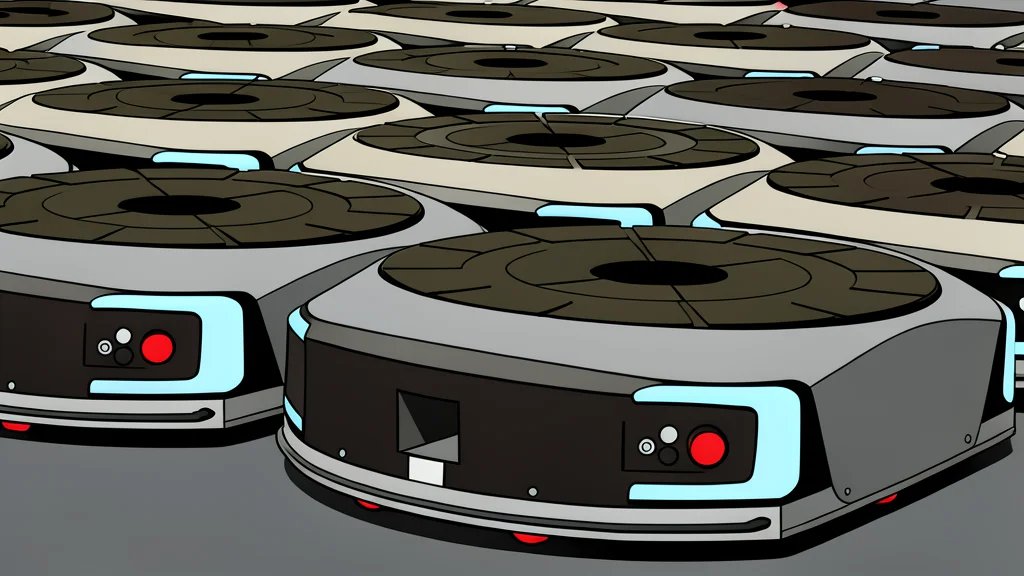
Beijing-based Geekplus is positioning itself to capture this untapped market. The company provides Autonomous Mobile Robots, or AMRs, which handle tasks ranging from picking up goods from forklifts to organizing inventory on shelves. By focusing on flexibility and cost reduction, the firm aims to make automation accessible to a broader range of businesses, from small distribution centers to large industrial hubs.
The company targets flexible labor needs
Geekplus divides its operations into two main areas: warehouse fulfillment and industrial material transport. Warehouse fulfillment accounts for 94% of the company’s total sales, making it the primary driver of its business. The robots are designed to integrate into existing operations without requiring a complete overhaul of the facility. This approach allows businesses to test and deploy automation gradually, reducing the financial risk associated with large-scale robotic projects.
The appeal of this model lies in its ability to adapt to varying demand levels. Unlike fixed conveyor systems, which require significant capital expenditure and structural changes, mobile robots can be reconfigured or scaled back as needed. This flexibility is particularly attractive to smaller warehouses that may not have the capital to invest in permanent automation infrastructure but still seek to improve efficiency and reduce labor costs.
Global expansion faces competitive hurdles
While the domestic US market offers substantial potential, Geekplus faces intense competition in its home market of China. The Chinese robotics sector is highly developed, with numerous local firms competing for market share. Expanding globally requires navigating different regulatory environments, labor laws, and customer expectations. Additionally, the company must demonstrate that its technology can reliably perform in diverse warehouse environments, where conditions vary significantly from one location to another.
The success of such automation depends not only on the technology itself but also on the ability to integrate it seamlessly into existing workflows. Workers and managers must trust the robots to handle critical tasks, and the systems must be robust enough to withstand the rigors of daily warehouse operations. Any downtime or errors can quickly erode the cost savings that automation is supposed to provide.
Trade-offs in adopting mobile robotics
For prospective customers, the primary trade-off is the shift from static to dynamic logistics. While mobile robots offer flexibility, they also introduce complexity in managing traffic flow and coordination within the warehouse. Unlike fixed systems, where the path is predetermined, mobile robots require sophisticated software to avoid collisions and optimize routes. This can lead to unexpected challenges in implementation and maintenance.
Furthermore, the long-term cost savings are not guaranteed. Businesses must carefully evaluate the total cost of ownership, including maintenance, software updates, and potential repairs. The initial savings in labor costs must be weighed against the ongoing expenses of keeping the robots operational. For many companies, the decision to adopt such technology comes down to a careful analysis of whether the flexibility and efficiency gains outweigh the added complexity and costs.