AI Increases Employee Workload Despite Efficiency Gains
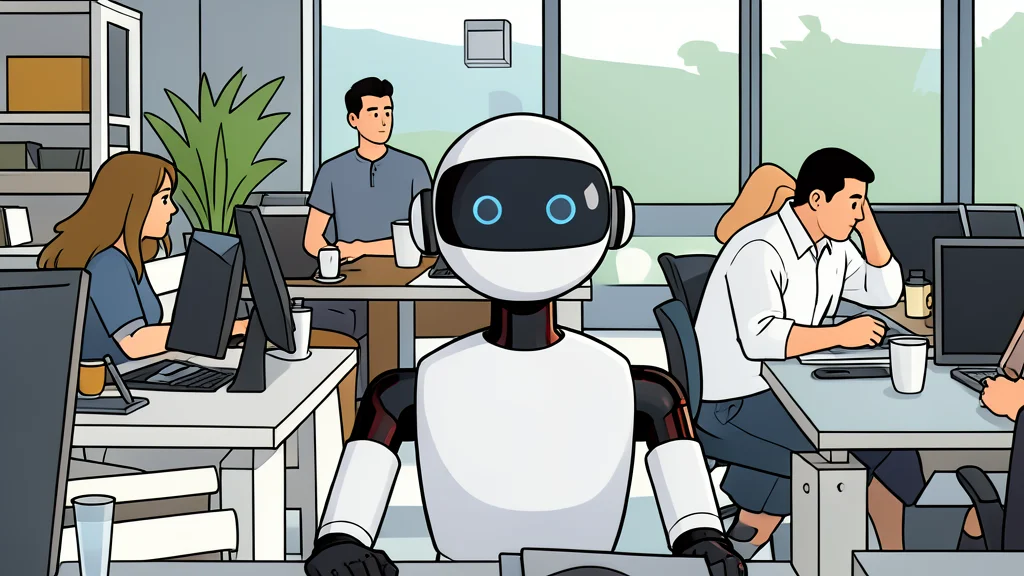
Marsh reports that AI tools often raise cognitive strain rather than reduce it, exposing gaps in outdated mental health benefits.
Key points
- Marsh finds that AI tools often increase employee workload by enabling parallel task management rather than reducing total work volume.
- Many existing mental health benefits are outdated, designed for pre-digital environments and failing to address current cognitive strains.
- Future benefits may rely on digital twins for preventive care, but widespread adoption is hindered by employee privacy concerns and trust issues.
The common assumption that adopting workplace AI will reduce employee workloads is not holding up in practice. Marsh, a major insurance broker, reports that staff using these tools are often busier than before because the technology allows them to manage more tasks in parallel without actually decreasing their total volume of work.
This shift increases cognitive strain and challenges the basis of many existing employee support programmes. Kate Brown, Marsh's global digital leader for employee benefits, notes that many mental health benefits were designed for a pre-digital era and no longer align with the current demands of an AI-enabled workforce.
Outdated benefits fail to match new demands
According to Insurance Business, employers are often mistaken in believing that AI adoption reduces the need for updated support structures. Brown points out that some companies are still relying on mental health frameworks created decades ago, creating a widening gap between the actual cognitive load employees face and the support designed to manage it.
For benefits brokers, this creates a practical dilemma: rolling out AI tools does not automatically lower the risk of stress or burnout. In many cases, it intensifies these risks, yet the benefits packages have not been revisited to address the new reality of parallel task management and increased throughput.
HR shifts from processing to governing
Simon Jarvis, head of product development at Marsh, describes the evolution of AI in benefits as moving from simple task automation to the elimination of certain roles entirely. As this progresses, benefits decisions become increasingly data-driven, with active employee choice potentially reduced. This shifts the HR function from managing administrative processes to governing the appropriate deployment of AI.
This transition requires different skills and a new relationship with benefits data. However, a significant near-term obstacle remains connectivity. Andrew Owens, Marsh's CTO, notes that most employers run benefits across disconnected systems that do not share data effectively, limiting the quality of AI-assisted decisions and the ability to identify wellbeing trends early.
Trust barriers limit personalized health data use
Looking ahead, the panel identified hyper-personalization and digital twin technology as key future developments. A digital twin would model an employee's likely future health trajectory using wearable and biometric data, allowing for preventive benefit design rather than reactive treatment. This approach could significantly reduce both the human and financial costs of employee health risks.
Despite the commercial appeal, particularly for self-funded employers, a major barrier exists. Employees are unlikely to share sensitive biometric data unless they trust that their organization will protect it and demonstrate clear benefits. The panel emphasized that this is a governance and communication challenge, not a technical one, and most employers have not yet resolved it.