Toyota to Spend $6.4B Yearly on 400k Factory Robots by 2028
Toyota plans a massive robotic expansion starting in 2028, aiming to add 400,000 units while insisting human jobs remain secure.
Key points
- Toyota plans to invest $6.42 billion annually starting in 2028 to deploy 400,000 robots.
- Human workers are currently training wheeled humanoid robots to perform precise assembly tasks.
- An executive stated the goal is coexistence, not the replacement of the 18,000 veteran workforce.
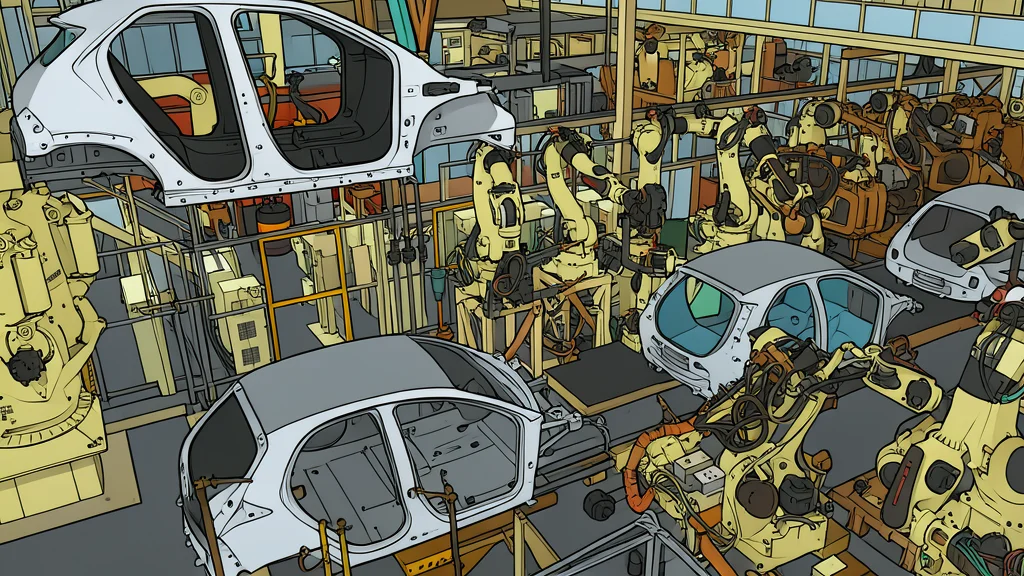
Toyota is preparing a significant shift in its manufacturing operations, with a plan to integrate 400,000 robots into its production lines. The initiative is set to begin in 2028, marking a major step in the automaker’s automation strategy. However, company leadership has explicitly stated that these machines are not intended to displace the human workforce.
According to reports from Nikkei Asia, the Toyota Motor group intends to invest $6.42 billion annually in these upgrades. The goal is to place 150,000 robots in its own car factories and another 250,000 at facilities owned by group companies that produce components and materials.
Humanoids Learn Precision Tasks
Toyota has already started testing ELEY humanoid robots on assembly lines. These wheeled units are currently being taught by human workers to perform tasks that require precise hand movements. Employees wear specialized finger attachments to demonstrate the necessary motions, allowing the robots to mimic and learn complex actions.
This training process highlights a practical trade-off: while robots handle repetitive or precise work, humans remain essential for teaching and oversight. The company currently employs 18,000 veteran workers across 60 factories globally, including 11 manufacturing plants in the United States.
Executive Promise of Coexistence
Hiroki Nakajima, an executive vice president at Toyota, clarified the company's intent during an interview with Nikkei Asia. He emphasized that the aim is for robots and humans to coexist rather than for one to replace the other. This stance seeks to alleviate concerns about job losses in a sector traditionally heavy on manual labor.
However, the scale of the investment suggests a significant change in daily operations. It remains unclear how many of the 400,000 units will be humanoids versus traditional industrial arms. The distinction matters because different types of robots automate different kinds of tasks.
Global Context of Robot Adoption
Toyota’s push follows a broader trend in the automotive industry, which has adopted industrial robots for decades. According to the International Federation of Robotics, China deployed two million industrial robots in 2024. Japan followed with 450,500 units, while the United States and South Korea ranked third and fourth with 34,200 and 30,600 robots, respectively.
Ars Technica notes that while the numbers are striking, the integration of such a large robotic workforce is a gradual process. The coming years will determine whether Toyota’s model of human-robot collaboration can scale effectively without disrupting the jobs of its experienced staff.