Steam Deck's Software Shift Forced Windows Handhelds to Change
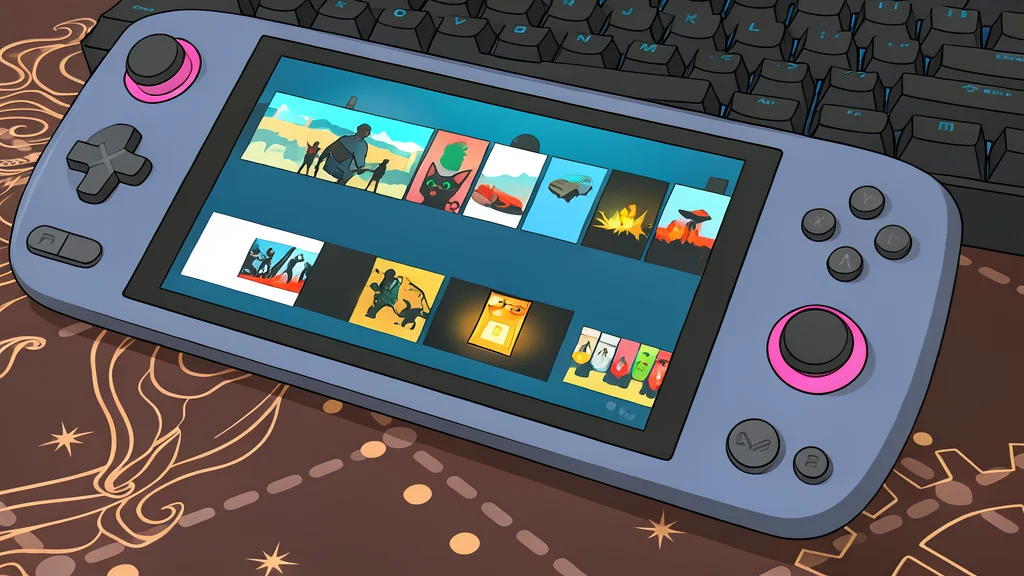
The Steam Deck’s biggest impact was not its hardware specs, but its controller-first OS that redefined user expectations for portable PC gaming.
Key points
- Steam Deck's success was driven by its controller-first SteamOS interface, which made portable PC gaming feel more like a console.
- Major manufacturers like Asus and Lenovo now include dedicated software layers to provide similar quick-access controls on Windows devices.
- Users are increasingly replacing Windows with Linux-based systems like Bazzite to achieve a smoother, game-centric experience on non-Valve hardware.
Valve’s Steam Deck transformed the handheld PC market not by offering the most powerful processor, but by redefining the user experience. Before its launch in 2022, portable gaming devices were essentially small laptops with attached controllers, often feeling clunky and difficult to navigate without a keyboard and mouse. The device proved that a simplified, console-like interface could make high-performance PC gaming accessible and intuitive on the go.
As reported by XDA Developers, the core of this shift was SteamOS, a custom operating system designed specifically for controller-first navigation. By prioritizing the game library and system controls over a traditional desktop environment, the Steam Deck made the hardware feel like a unified gaming console rather than a miniature computer, setting a new standard for usability in the portable gaming segment.
Software defined the device experience
The Steam Deck’s hardware, featuring a custom AMD APU with an 8CU RDNA2 integrated GPU, was competent but not the most advanced available at launch. However, the software layer was the decisive factor. SteamOS allowed users to manage performance settings, adjust brightness, and suspend games with simple button presses, eliminating the friction of traditional PC interfaces.
This approach treated the device as a dedicated gaming platform. Instead of forcing users to adapt to a desktop environment, the system adapted to the handheld form factor. The result was a seamless transition from booting up to playing, which fundamentally changed how consumers perceived the potential of portable PC hardware.
Competitors adopted controller-centric interfaces
Following the Steam Deck’s success, major manufacturers like Asus, Lenovo, and MSI realized that simply shrinking a Windows PC was no longer sufficient. They began introducing dedicated software layers such as Asus Armory Crate SE and Lenovo Legion Space. These tools mirror the Steam Deck’s philosophy by providing quick access to performance profiles and game libraries through controller-friendly menus.
While these devices still run Windows under the hood, preserving the flexibility of the desktop OS, the user-facing experience has shifted dramatically. The desktop is increasingly pushed to the background, and the primary interface is now optimized for immediate gaming. This concession to the Steam Deck’s model confirms that a console-like experience is now a mandatory feature for mainstream gaming handhelds.
Users bypass Windows for better usability
The influence of the Steam Deck has also driven a grassroots movement among users who prefer the original experience. Many owners of Windows-based handhelds are replacing their operating systems with Bazzite, a Linux-based distribution built on Fedora. Bazzite offers a similar controller-first interface and deep integration with Steam, effectively bringing the Steam Deck’s usability to other hardware.
This trend highlights a significant trade-off: users are willing to abandon the familiar Windows environment to gain a more streamlined gaming experience. The fact that capable devices are being modified purely for interface improvements underscores how deeply the Steam Deck has altered expectations. The hardware remains flexible, but the software experience is now judged against the standard set by Valve.