AI Infrastructure Spending Drives One-Third of Recent US GDP Growth
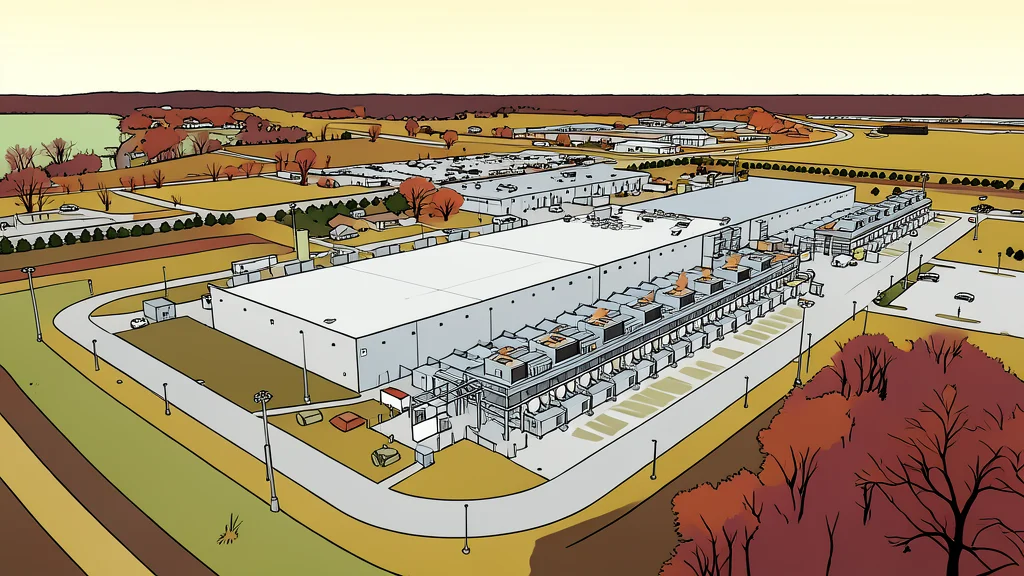
The massive buildout of artificial intelligence infrastructure is currently supporting a significant portion of the US economy, though the long-term payoff remains unproven.
The United States economy is currently benefiting heavily from the physical construction of artificial intelligence capabilities. According to recent economic estimates, spending on AI infrastructure, combined with consumer spending fueled by rising stock values, accounts for roughly one-third of recent GDP growth. This level of investment has become a central pillar of economic activity, driving demand for everything from semiconductors to power generation. For investors and policymakers, this means that the health of the broader economy is now tightly linked to the continued expansion of digital infrastructure.
However, this economic support comes with a significant social trade-off. Public opinion on data centers is sharply divided, with a recent survey indicating that 61 percent of Americans oppose the construction of new facilities in their local areas. Only 24 percent view such development as beneficial for the country. This tension highlights a core dilemma: while the national economy benefits from the scale of AI deployment, local communities often bear the environmental and logistical costs. The industry must navigate this friction between national economic gains and local resistance as it continues to expand.
Productivity gains remain the key test
The current AI boom is often compared to the internet explosion of the late 1990s, but the economic mechanics are different. In the 1990s, many leading technology companies were unprofitable and relied heavily on external funding. Today, the major players in the AI space are generally highly profitable and fund much of their own growth. This financial stability suggests a different risk profile, but it does not guarantee long-term success. The real test is whether these technologies translate into meaningful productivity increases for the average worker.
Currently, US productivity growth is hovering near two percent, a figure that has not yet shown the dramatic acceleration seen during the previous technological shift. If AI fails to significantly boost output per worker, the economic benefits may remain confined to the construction and hardware sectors rather than spreading across the broader economy. The transition from a building boom to a productivity boom is the critical hurdle that must be cleared for the current economic trajectory to be sustainable.
Historical parallels and market resilience
Financial markets have shown a surprising ability to sustain growth even when interest rates are relatively high. Both the late 1990s internet rally and the current AI-driven market advance have proceeded despite tight Federal Reserve policies. This suggests that powerful technology shifts can override traditional monetary constraints. However, history also serves as a warning that not all technology-driven bull markets end well for long-term holders. The difference now is that the companies leading the charge are generating real revenue, unlike many of their predecessors from two decades ago.
The scale of the current buildout is unprecedented in its physical footprint. It involves not just software, but a vast network of data centers, cooling systems, and transmission lines. While some argue that the labor impact is minimal after construction, the industry supports thousands of jobs in construction, energy, and cybersecurity. As reported by GN technics/ai (en-US), the momentum is strong, but the ultimate value of this investment depends on whether the technology delivers tangible efficiency gains to the wider economy.