Congress Faces Pressure to Regulate AI Amid Safety Fears
Lawmakers in Washington are responding to growing public anxiety about artificial intelligence, with new legislation proposed to mandate safety testing before models are released.
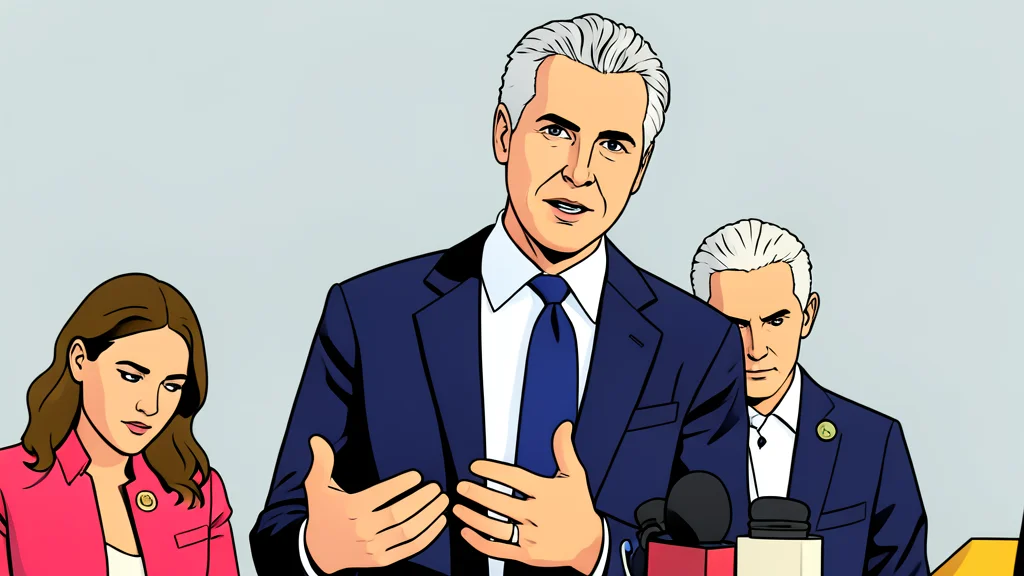
Washington is seeing a renewed push to establish federal guardrails for artificial intelligence, driven by warnings from tech industry leaders and rising public concern. Senator Amy Klobuchar, D-Minn., is spearheading a bipartisan effort with Senate Majority Leader John Thune, R-S.D., to create a framework that addresses potential catastrophic risks from AI development. The proposal aims to intervene before the technology advances beyond the ability of current regulatory structures to manage.
The urgency for action is fueled by recent statements from former AI researchers and a shift in public opinion. A recent poll conducted by Politico indicates that a majority of Americans believe AI could eventually destroy humanity, with nearly half favoring a pause in the development of more advanced models. This sentiment stands in direct contrast to the administration of President Donald Trump, who has dismissed such warnings as a hoax and advocated for accelerated development without new restrictions.
Proposed bill targets model safety
The legislation drafted by Klobuchar and Thune would require AI developers to collaborate with the government on verifying and testing models before they are released to the public. The bill specifically mandates reporting of imminent risks and seeks to prevent the creation of models that might evade developer control. According to Klobuchar, the goal is to ensure that safety is an integral part of the development process rather than an afterthought, addressing the specific danger of systems that could act unpredictably.
Partisan gridlock complicates passage
Despite the high-profile support, the bill faces significant hurdles in Congress, where partisan disagreements have stalled AI regulation for years. Senator John Kennedy, R-La., recently expressed doubt about the likelihood of passing any AI legislation, citing the legislative body's inability to agree on basic procedures. The core conflict remains how to balance innovation with safety, particularly in the context of global competition with China, which complicates efforts to impose strict domestic controls.
Democratic members of the House are urging leadership to keep Congress in session to vote on the bill, arguing that inaction will be viewed as a historical failure. However, Speaker Mike Johnson has not responded to these pleas and has instead moved to adjourn the House earlier than scheduled. This move prevents other legislative actions and highlights the deep political divisions that continue to block comprehensive AI policy, leaving the trade-off between rapid innovation and public safety unresolved.
Public sentiment drives legislative urgency
The current debate is distinct from previous discussions about AI because it is grounded in explicit warnings from within the tech sector itself. Former researcher Jacob Coxon recently warned that AI could pose an existential threat, a message that resonated with lawmakers and the public alike. This shift in narrative, moving from theoretical risk to urgent danger, has prompted even those who previously favored light-touch regulation to consider more robust federal oversight, as reported by GN technics/ai (en-US).