Emerald AI, Google, and NVIDIA Form Alliance for Flexible Data Centers
A new coalition aims to turn data centers from passive power consumers into active participants in grid stability, potentially accelerating infrastructure rollout.
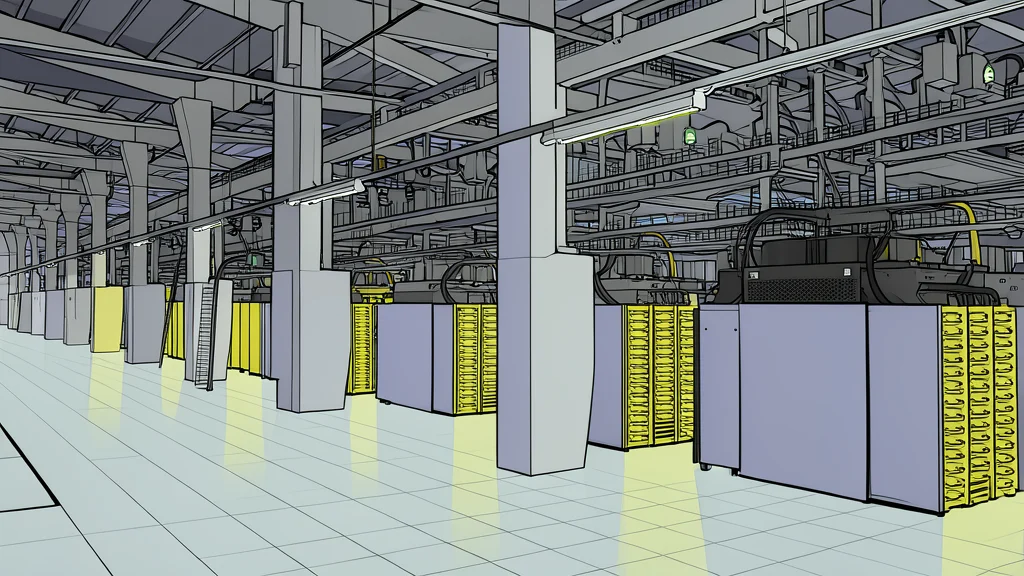
Emerald AI, Google, and NVIDIA have announced the formation of the AI Energy Management Alliance, a group dedicated to building data centers that actively manage electricity use in response to grid conditions. The initiative seeks to move beyond static power consumption by enabling facilities to shift workloads or adjust demand dynamically, a shift that could unlock faster connections for artificial intelligence infrastructure while supporting the broader energy system.
The core premise is that power availability has become a primary bottleneck for expanding AI capabilities in the United States. Traditional grid interconnection processes were designed for facilities with flat, predictable energy demands. They were not built to handle computing infrastructure that can intelligently respond to system constraints. By treating data centers as controllable resources rather than fixed loads, the alliance aims to reduce the environmental impact per unit of computing power and improve energy affordability for communities.
Flexibility solves grid capacity limits
According to reporting by GN technics/ai, the alliance focuses on what is described as power flexibility. This involves shifting computing tasks, discharging battery storage, or using paired generation sources to match grid needs. When used effectively, these capabilities allow large electricity customers to serve as stabilizing resources. This approach can make more efficient use of existing grid capacity, reduce demand during periods of stress, and avoid the need for costly new infrastructure upgrades.
The trade-off for this flexibility is a higher operational complexity. Data centers must now be designed to respond to external signals rather than just internal cooling needs. However, the alliance argues that this responsiveness gives utilities greater confidence to approve connections on shorter timelines, reducing the uncertainty that currently delays many AI projects.
Performance standards replace hardware mandates
The AI Energy Management Alliance is technology-neutral, meaning it does not require specific brands of hardware or software. Instead, it relies on performance-based requirements. The focus is on measurable services such as response speed, duration, and predictability during emergencies. This approach allows developers to use various technologies as long as they meet defined reliability standards.
Reliability remains the central concern. The alliance’s principles define clear obligations for facilities, including requirements for staying connected during brief grid disturbances and reducing power use when necessary. By standardizing technical requirements and operational data sharing, the group aims to reduce uncertainty for developers while giving system operators the control needed to preserve grid stability.
A broader industry coalition forms
The coalition brings together the full value chain, including AI platforms, data center operators, power producers, and regional grid operators. Launch partners from across the ecosystem will join the founding members to develop technical approaches and advocate for policies that recognize grid-responsive demand. This collaborative model is intended to create a common framework for deploying flexible AI infrastructure across the United States.
While the alliance offers a path to faster deployment, it also introduces a new layer of coordination between tech companies and energy providers. The success of this model depends on whether utilities and grid operators will accept these new operational roles. If adopted widely, it could reshape how critical digital infrastructure interacts with the physical power grid, turning a constraint into a collaborative opportunity.