Americans Rate Current AI Positively but Fear Future Impact
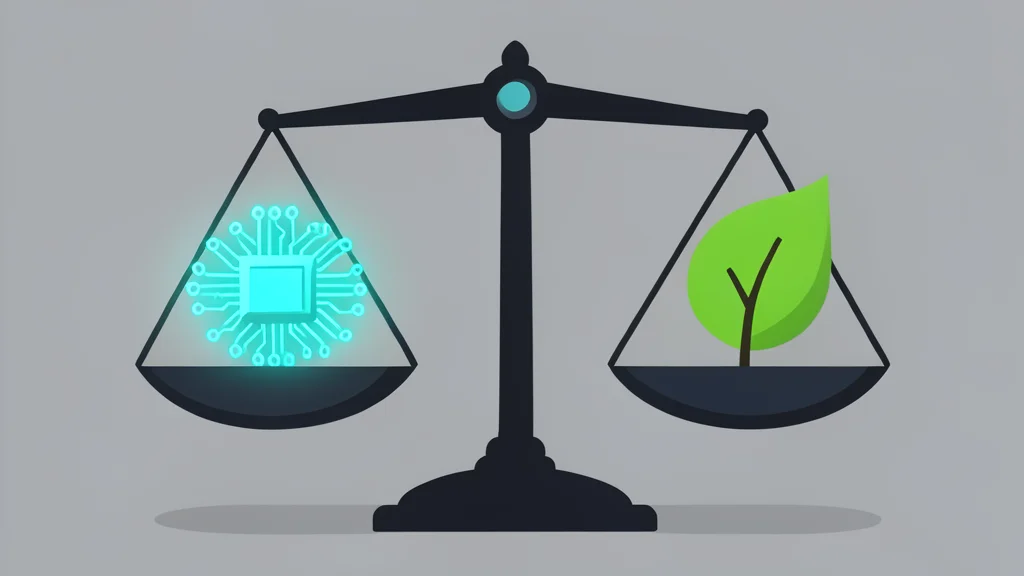
New data shows a split in public opinion: daily life benefits are clear, but long-term environmental and economic worries are growing.
A new national survey reveals that most Americans currently experience artificial intelligence as a net positive in their daily lives. However, this optimism erodes significantly when respondents look further ahead, citing deep concerns about environmental costs and job security. The study, conducted by Just Capital, marks a shift from abstract debates about AI capabilities to concrete measurements of how the technology is actually felt by the public.
According to the report, the most immediate benefits are seen in the workplace, where tools are streamlining tasks and boosting productivity. In contrast, the environmental impact of AI infrastructure is the only category where negative perceptions outweigh positive ones. This divergence highlights a critical trade-off: while users enjoy efficiency and convenience, they are increasingly aware of the hidden physical costs, such as energy consumption and resource depletion, associated with running large-scale models.
Workplace gains drive current satisfaction
The data indicates that the primary driver of positive sentiment is the direct utility of AI in professional settings. Workers report that these tools help them manage workloads more effectively, leading to a sense of accomplishment and reduced friction in daily tasks. This practical application stands in sharp contrast to the customer experience, which respondents describe as mixed. While some appreciate faster service, many express a strong desire for human interaction, suggesting that automation has not yet fully replaced the need for personal touch in service industries.
Community-level effects remain ambiguous, with many participants unsure how AI is influencing their local economies or social fabric. This uncertainty contributes to a broader skepticism about the technology's long-term societal role. The survey notes that while individual productivity may be rising, the collective impact on community stability is still difficult for the average person to measure, leaving a gap between personal convenience and public understanding.
Environmental concerns dominate future outlook
When asked about their expectations for the next few years, Americans become markedly more pessimistic. The environment is identified as the most pressing concern, with respondents worried about the carbon footprint of data centers and the strain on natural resources. This view contrasts with the current positive daily experience, creating a tension where users benefit from the technology now but fear its cumulative damage to the planet later. The study suggests that this environmental anxiety is a major barrier to sustained public trust in AI deployment.
Financial impacts remain largely invisible
Another surprising finding is that the majority of Americans are unaware of any direct financial gains or losses from AI. While investors and corporate leaders discuss the economic potential of these tools, the average household does not perceive a change in their savings or investment portfolios. This disconnect means that the economic benefits of AI are not yet visible in the daily lives of most people, contributing to a general skepticism about whether the technology will ultimately improve their financial well-being.
The research, sourced from GN technics/ai (en-US) and conducted by The Harris Poll, emphasizes that public trust is fragile. It is built on immediate, tangible benefits like workplace efficiency but undermined by long-term fears regarding safety, jobs, and the environment. For leaders in tech and policy, the message is clear: without addressing these underlying anxieties, the current positive sentiment may not persist as the technology becomes more pervasive in society.