Mercedes Signs Wayve Deal for AI Driving in Two Years
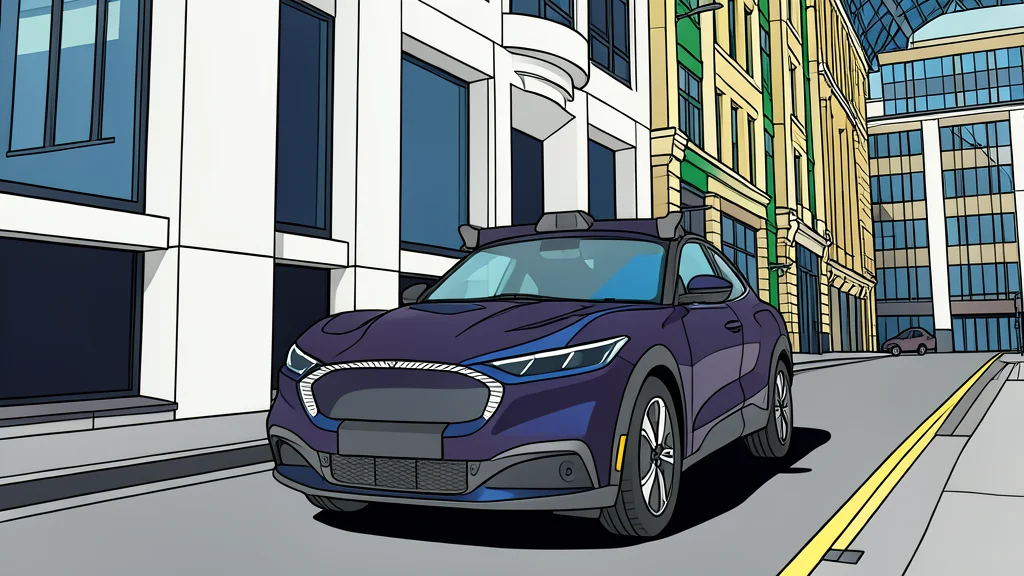
Mercedes-Benz will integrate Wayve's AI Driver software into its vehicles within two years, marking a major shift in premium autonomy.
Key points
- Mercedes-Benz signed a definitive agreement to integrate Wayve’s AI Driver software into its vehicles within two years.
- Wayve’s system uses end-to-end AI that learns from data, avoiding the need for high-definition maps or geofences.
- Mercedes is simultaneously pursuing three different autonomy strategies, including its own Level 3 system and Nvidia’s model.
Mercedes-Benz has finalized a production agreement with British startup Wayve to embed its AI Driver software into future models. Integration is scheduled to begin within the next two years, marking the first time Wayve's end-to-end system will appear in a premium vehicle.
The deal deepens a relationship that already includes a Mercedes investment in Wayve’s recent funding round. While the announcement highlights a strategic move toward higher automation, it lacks specific details on which car models will be equipped or the exact level of driver assistance provided.
Software replaces hand-coded driving rules
Wayve’s approach differs significantly from traditional systems that rely on high-definition maps and geofences. Instead, its system learns driving behaviors from data, allowing it to generalize to new cities without specific retraining. This method mirrors the philosophy behind Tesla’s Full Self-Driving but adds radar sensors, which Tesla has removed from its current lineup.
For this integration, Wayve adapted its software to run on Mercedes’ existing hardware and operating system. The training process utilized Nvidia infrastructure hosted on Microsoft Azure. Mercedes describes the result as advanced urban and highway driving assistance, though it has not specified an SAE automation level, leaving the precise capabilities undefined for consumers.
Hedging bets on multiple autonomy stacks
Mercedes is not committing to a single self-driving solution. It already offers Drive Pilot, a Level 3 system for highway jams, and is testing Nvidia’s Alpamayo model for Level 2+ assistance. Adding Wayve represents a third distinct path, suggesting the automaker is unsure which technology will ultimately prevail in the market.
This strategy contrasts with Tesla’s in-house development model. By outsourcing to specialists like Wayve, Mercedes avoids reliance on a direct competitor. As noted by Electrek, this approach allows legacy automakers to access advanced autonomy without the risks associated with maintaining a single proprietary software stack across diverse hardware versions.
Investor confidence in the startup
Wayve’s valuation reached $8.6 billion following its Series D funding round, which was backed by Mercedes, Nissan, and Stellantis. The company’s CEO emphasized the technical alignment between the teams, suggesting a long-term partnership rather than a one-off contract. This investment signals strong industry confidence in Wayve’s ability to deliver scalable autonomous driving solutions.