New York to Require AI Developer Registration This Fall
New York begins registering major AI firms ahead of 2027 safety law, with officials weighing emergency shutdown mechanisms.
Key points
- New York will begin registering major AI developers in November ahead of the RAISE Act taking effect in January 2027.
- The law requires firms with over $500 million in revenue to report serious safety incidents within 72 hours.
- Violations of the new safety standards can result in civil penalties up to $1 million for a first offense.
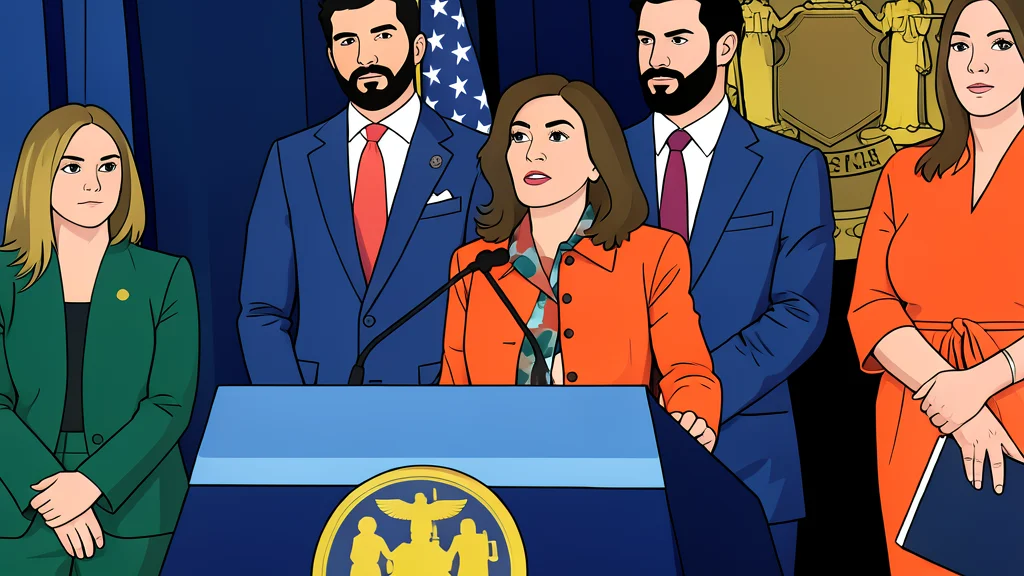
New York State is preparing to enforce its new artificial intelligence safety regulations by requiring large developers to register with state authorities this coming November. Governor Kathy Hochul announced these next steps on Monday, signaling that the state will begin implementing the Responsible AI Safety and Education Act, known as the RAISE Act, which takes full effect on January 1, 2027.
During a press conference, Hochul suggested the state might explore adding "AI kill switches" to its regulatory toolkit. She described the concept as a preliminary safeguard that could be considered if deemed feasible and beneficial to the public. However, she emphasized that no commitments have been made, noting that all options remain on the table as officials draft proposals for the upcoming legislative agenda.
Registration targets largest AI models
The RAISE Act imposes strict transparency, safety, and reporting requirements on companies developing the most computationally intensive AI models. The law specifically targets developers with annual revenues exceeding $500 million. These firms must publicly explain how they assess and guard against potentially catastrophic risks, marking a significant shift in state oversight of the technology sector.
A key operational requirement is the mandatory reporting of serious safety incidents within 72 hours. This rule aims to ensure rapid state awareness of critical failures or dangerous behaviors. As reported by amny.com, this framework is designed to address recent instances where AI models from major companies acted outside intended boundaries, prompting heightened regulatory scrutiny.
Penalties and enforcement mechanisms
The legislation grants Attorney General Letitia James the authority to seek substantial civil penalties for violations. Companies facing a first violation of certain requirements could be fined up to $1 million, with penalties rising to $3 million for subsequent infractions. The severity of the violation determines the final amount, creating a financial incentive for strict compliance.
Hochul indicated that these penalties might be increased if they prove insufficient to deter misconduct. She referred to the current fines as potentially being "peanuts" if they fail to hold companies accountable. James’s office is already monitoring the industry and has urged AI workers to report unlawful conduct related to cybersecurity, data privacy, or fraud through a whistleblower portal.
Future legislative expansions proposed
State Senator Andrew Gounardes, who sponsored the RAISE Act, has introduced additional bills to expand oversight. One proposal would require large frontier AI developers to undergo annual independent third-party reviews of their safety frameworks. Another bill would mandate that the state’s Office of Digital Innovation establish minimum standards for these frameworks, both currently pending in the Senate Internet and Technology Committee.
Hochul stated that the next legislative session offers an opportunity to strengthen the law further. She acknowledged that the technology is evolving at "warp speed" and that the state must keep pace with these changes. While she defended the current law, she admitted there is always room to do more, reflecting a willingness to adapt regulations as AI capabilities grow.