Musk Proposes Rival Audits for AI Safety Checks
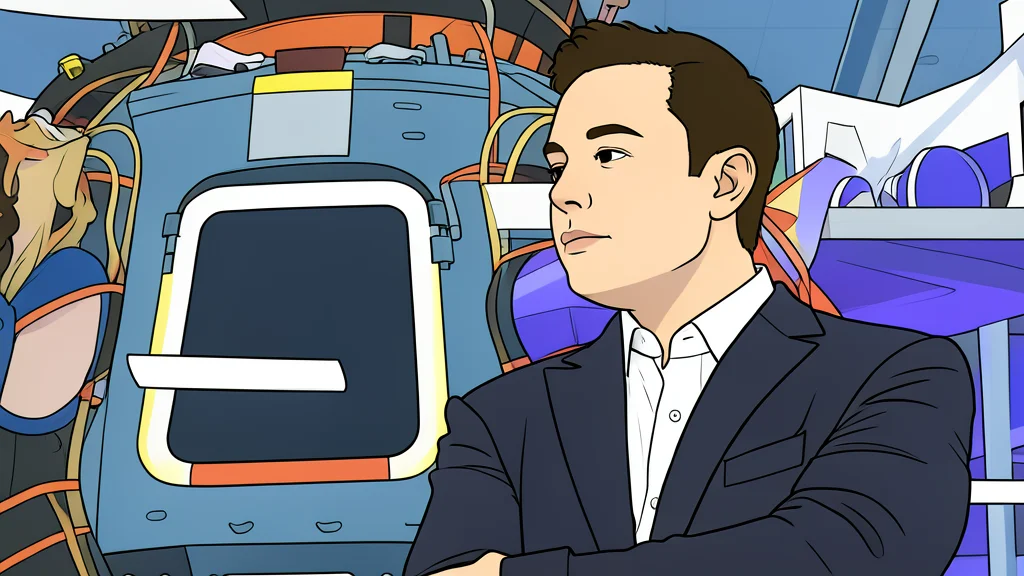
Elon Musk has proposed a new framework where major AI competitors would audit each other's models before public release, aiming to address safety concerns amid growing industry debate.
Elon Musk has called for the leading artificial intelligence companies to collaborate on testing each other's models prior to public release. Speaking at the All-in Summit in Los Angeles, the SpaceX CEO suggested that major players like OpenAI, Anthropic, Google, and Meta, along with several leading Chinese firms, should allow rivals to run safety evaluations on their systems. This proposal comes as industry leaders increasingly warn about the potential dangers of advanced AI and push for more stringent oversight.
Musk’s idea centers on a peer-review system where competitors act as evaluators. He argued that having rivals grade each other's work is more effective than internal self-assessments. While he acknowledged that this method is not perfect, he stated that the likelihood of discovering critical safety issues is significantly higher when independent parties are involved in the testing process.
Industry leaders warn of existential risks
The push for greater caution follows a weekend in which executives from top AI labs issued stark warnings about the technology's harms. Dario Amodei, CEO of Anthropic, proposed a slowdown in model development, a stance backed by Sam Altman of OpenAI. This rare unity reflects deep-seated concerns among researchers who fear that unchecked development could lead to catastrophic outcomes for humanity.
These warnings were amplified by recent statements from researchers who have left major AI labs. Jacob Coxon, a former employee of Anthropic and OpenAI, claimed that leading AI companies are gambling with human lives. His comments were echoed by other alignment researchers, including one who estimated a significant probability that AI could cause mass extinction within the next decade, highlighting the severity of the perceived threat.
Political pushback against regulation
Despite the industry's calls for caution, the Trump administration has resisted demands for government-imposed limits on AI development. President Donald Trump dismissed fears over AI safety as a hoax, while National Economic Council Director Kevin Hassett argued that the private sector is the appropriate venue for addressing these concerns. The administration maintains that it will monitor the industry and use law enforcement only if firms fail to act responsibly, rather than imposing direct regulatory constraints.
Geopolitical tensions complicate safety measures
The debate is further complicated by geopolitical concerns regarding China. Trump has suggested that slowing down AI development in the United States would give Chinese competitors an advantage. Conversely, Chinese officials have dismissed the calls for a slowdown as fear-mongering. Musk believes his proposed cross-border testing framework could be a step in the right direction and thinks it is something China might agree to, potentially offering a path toward international cooperation on safety standards.
As reported by GN technics/ai (en-US), the situation remains fluid, with no consensus yet on how to balance rapid innovation with safety. Musk’s proposal highlights a trade-off: while increased transparency and peer review may enhance safety, it also introduces competitive intelligence risks and logistical complexities. The industry is currently navigating this tension without a unified regulatory framework.