Rivage Launches on PC and Consoles with Time Loop Puzzle Mechanic
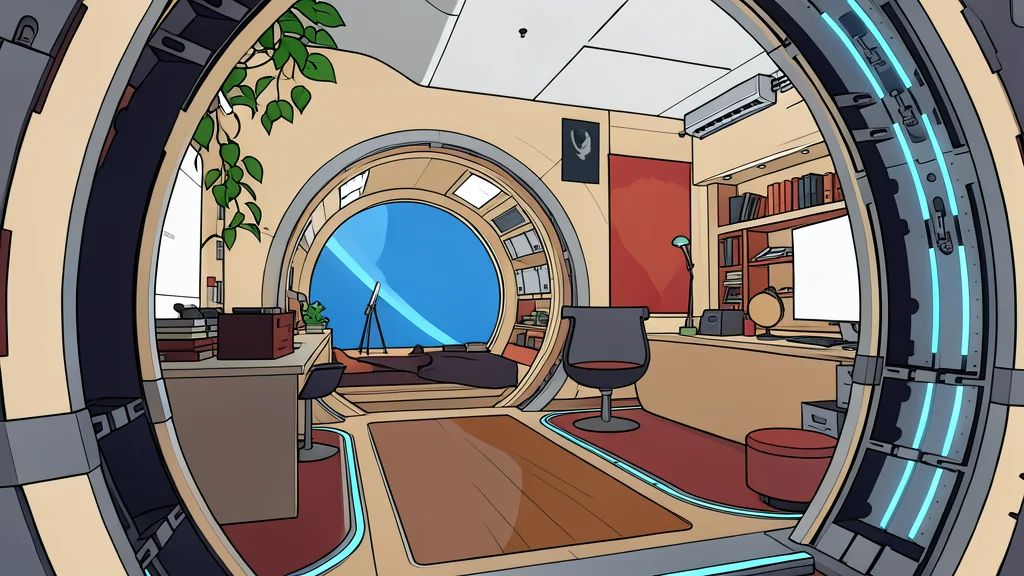
Exnilo Studio releases Rivage, a sci-fi puzzle game where players solve logic challenges while stuck in a repeating time loop on a space station.
Key points
- Rivage launches on PC, PS5, and Xbox Series X/S, featuring a time loop mechanic that resets puzzle states.
- Players solve logic puzzles and investigate the disappearance of the A.R.E.S. crew through environmental storytelling.
- The K9 system helps players log discoveries and track progress, aiding in solving complex multi-step challenges.
Exnilo Studio has officially launched Rivage on PC, PlayStation 5, and Xbox Series X/S. The title arrives with a new one-minute trailer that highlights the core gameplay loop, where players repeatedly wake up in the same bunk to solve a series of logic puzzles. This launch follows a delay from the original August 13 date, giving developers more time to refine the intricate narrative and puzzle design.
The game focuses on isolation and mystery as the player character, Miranda, investigates the disappearance of the A.R.E.S. space station crew. Rather than combat or action, Rivage relies on environmental storytelling and a unique time loop mechanic. Players must deduce the correct order of actions to progress, using clues found in journals and the station's broken machinery to uncover the truth behind the crew's fate.
Time loop drives puzzle progression
The central mechanic of Rivage is a repeating cycle that resets the station's state after each failure. According to GamingBolt, this requires players to think sequentially, figuring out which actions must happen first to unlock the next set of challenges. It transforms the puzzle-solving process into a logical exercise rather than a trial-and-error grind, demanding that players understand the cause-and-effect relationships within the station's systems.
This structure creates a high-stakes environment where mistakes have immediate consequences. The reset forces players to re-evaluate their strategies, ensuring that each solution feels earned. The mechanic also serves the narrative, as the repetition mirrors the protagonist's psychological state and the mysterious nature of the loop itself. It is a design choice that prioritizes mental engagement over reflexes, appealing to players who prefer strategic thinking.
Narrative depth through environmental clues
Rivage uses environmental storytelling to reveal the backstory of the A.R.E.S. station and its crew. Miranda collects journal entries and physical items scattered throughout the metallic corridors, which provide context for the scientific mission to the exoplanet Vesta. These narrative fragments are essential for understanding the full scope of the mystery, as the game does not rely on heavy dialogue or cutscenes to convey information.
The isolation theme is central to the emotional experience, with the journal entries highlighting the psychological toll of being alone in space. As players progress through multiple timelines, they piece together the crew's final moments and the cause of their disappearance. This approach allows the story to unfold organically, rewarding careful observation and attention to detail over passive consumption of plot points.
K9 system aids complex tracking
To manage the complexity of the puzzles, Exnilo Studio introduced the K9 system. This in-game tool allows players to log discoveries and puzzle states in a centralized location, acting as a digital notebook. It helps players track progress across different loops, making it easier to identify narrative threads and assemble solutions for multi-step challenges. This feature is crucial for preventing frustration in a game that demands precise sequencing of events.
The K9 system bridges the gap between the player's external memory and the game's internal logic. By providing a clear record of what has been tried and what has been found, it reduces the cognitive load required to keep track of multiple variables. This design decision acknowledges that the puzzles can become overwhelming, offering a structured way to organize information without breaking the immersion of the space station setting. It is a practical tool that supports the game's demanding puzzle structure.