NVIDIA and Digital Realty Face Grid Limits on AI Growth
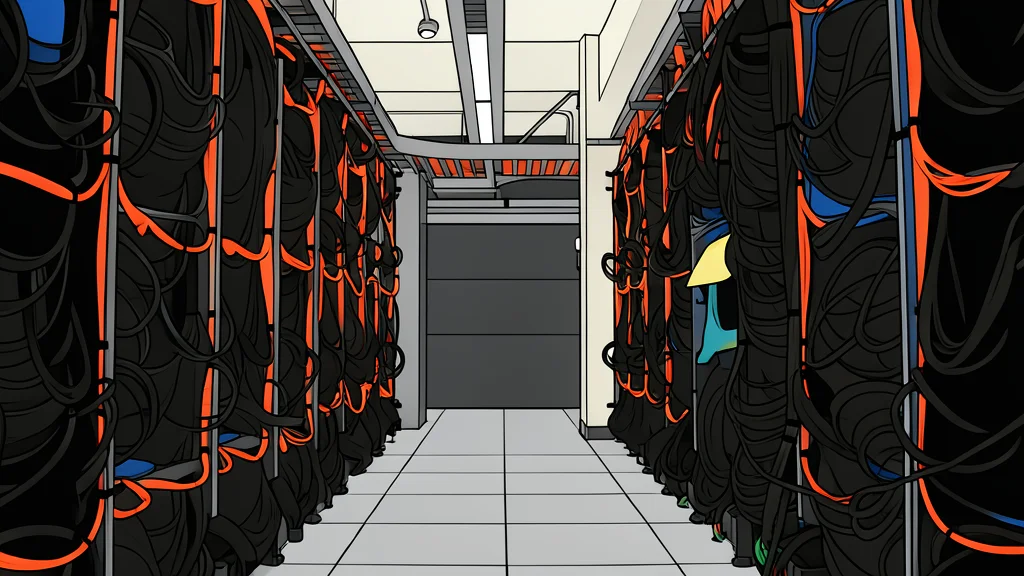
A new $150 million investment aims to solve a critical bottleneck: keeping AI data centers running without overloading the power grid. However, the solution requires a delicate balance between energy saving and computing performance.
Emerald AI has secured $150 million in financing, with NVIDIA listed among the investors. The capital is intended to support the commercial expansion of a technology that allows data centers to adjust their power consumption in real-time. This approach is designed to keep artificial intelligence workloads running within the strict limits of the electrical grid, a growing constraint for the industry.
The primary goal is to increase the amount of usable computing capacity available to customers. While more funding helps build new facilities, it does not automatically solve the problem of power availability. The success of this model depends on whether the system can flex its energy use without significantly disrupting the valuable work being performed on the servers.
Virginia facility timeline shifts to later
The project includes a nearly 100-megawatt research facility in Manassas, Virginia, developed in partnership with NVIDIA and Digital Realty. Originally, an announcement in October 2025 suggested the site would come online in the first half of 2026. However, the recent August 25 update indicates the facility is expected to be operational later this year.
This shift in timing is significant for investors and observers. It clarifies that the Virginia site is not yet fully operational, despite earlier expectations. The newer schedule should be treated as the current benchmark for when this specific infrastructure will contribute to the network, rather than assuming the original date was achieved.
Balancing energy savings with performance
The core challenge is technical: coordinating computing workloads with onsite energy resources. When the grid is under strain, the system must reduce electricity draw. NVIDIA provides the software and infrastructure controls, while Emerald handles the orchestration. The catch is that reducing power usage can sometimes interrupt high-priority tasks. If the system saves energy by degrading performance, the value proposition weakens considerably.
Emerald claims to have achieved a successful commercial deployment at a California data center, which supports the viability of the concept. However, this single instance does not guarantee that the Virginia project will be economically sustainable at a larger scale. For wider adoption, the technology must prove it can maintain a workable balance between responding to grid demands and delivering consistent computing performance.
Financial stakes differ for partners
NVIDIA and Digital Realty have different reasons for supporting this technology. For NVIDIA, successful deployments could ease a major barrier for customers who struggle to install and use its systems due to power limits. This supports demand through practical infrastructure availability rather than just additional marketing or investment.
Digital Realty, a real estate investment trust focused on data centers, sees value in helping customers access reliable power. More efficient use of its facilities can improve rental returns. However, the project announcement does not quantify any specific earnings contribution for Digital Realty, nor does it represent a new order for NVIDIA. As reported by GN technics/ai (en-US), the companies are participating in the same technical effort, but their financial benefits are not identical. The investment signals confidence in the technology, but it does not yet translate into direct, measurable revenue for either partner.