Nvidia's Backing Shifts Focus to AI Data Centre Hardware Suppliers
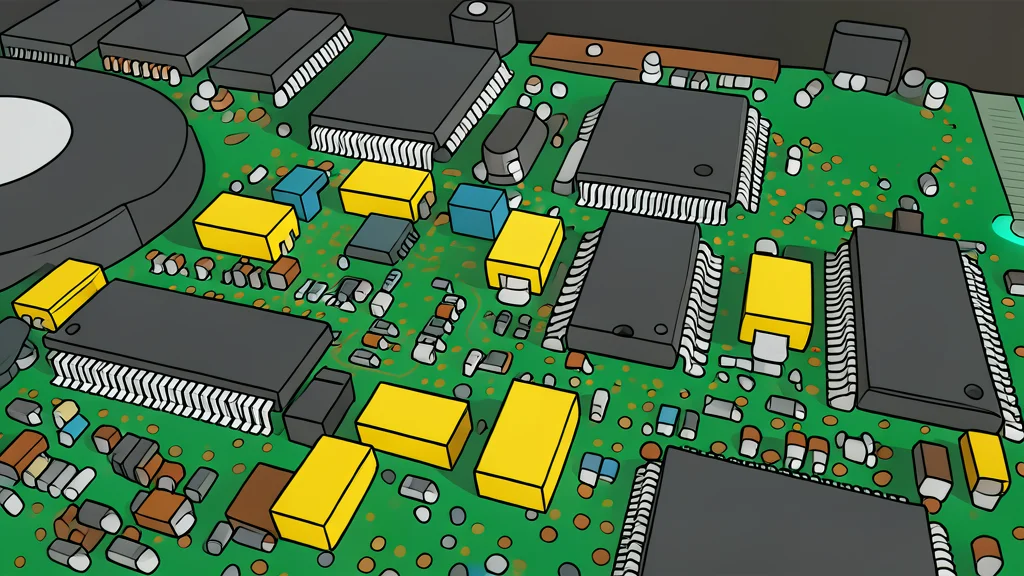
As Nscale moves toward a massive US listing, investors are looking past the chips to find the companies building the critical infrastructure that makes AI work.
Nscale’s pursuit of a US listing with a potential valuation of up to $35 billion has shifted investor attention away from the AI chips themselves and toward the physical infrastructure that supports them. Backed by Nvidia and anchored by long-term contracts for data centre capacity, the move has prompted a re-evaluation of who actually supplies the essential plumbing for artificial intelligence systems. Capital is now hunting for the companies that provide the connectivity, control, and cloud backbone required to run these massive GPU clusters.
While the spotlight often remains on semiconductor manufacturers, the real bottleneck in AI scaling may lie in the hardware that links these components together. Three companies in the US and UK stand out in this theme, each addressing a different layer of the data centre stack. Their performance depends less on the raw power of the processors and more on the efficiency, security, and reliability of the systems surrounding them.
Connectivity Hardware Faces New Demand
Astera Labs, a US semiconductor firm with a market capitalization of roughly $50.9 billion, designs the connectivity solutions that link high-speed chips and memory within data centres. As AI clusters grow in size, the need for smarter hardware and software to manage data flow becomes critical. The company reports significant revenue from regions including China, Singapore, and Taiwan, reflecting the global nature of data centre construction.
The catch for Astera Labs lies in customer concentration and the evolving nature of hyperscaler requirements. While management expects to add new customers by the end of the year, the company’s growth is tightly coupled to the specific design choices of a few large cloud providers. If the technical constraints within these expanding racks change, or if pricing power shifts due to competition, the margins that currently support its valuation could face pressure.
Control Chips Secure Data Centre Operations
Lattice Semiconductor, with a market cap of approximately $15.8 billion, provides low-power FPGA chips that help control, secure, and accelerate data centre hardware. Its products act as a companion layer to AI accelerators, ensuring that heavy GPU racks operate efficiently and remain resilient against faults. The company sees its attach rate increasing as hyperscalers integrate these chips into their standard server and networking equipment.
However, this position brings a specific trade-off. Lattice’s earnings are dependent on the design preferences of a small number of large customers who dictate the architecture of their data centres. If these hyperscalers shift their internal designs or find alternative ways to secure and manage their hardware, Lattice’s ability to maintain robust design wins and expand its gross margins could be challenged. The quiet shift in how these giants build their racks is the key risk for the company.
Cloud Infrastructure Faces Price Pressure
Kingsoft Cloud Holdings, valued at around $3.0 billion, operates cloud infrastructure and AI-ready services primarily for enterprises in mainland China. Unlike the hardware-focused companies, Kingsoft provides the compute and storage backbone that AI workloads depend on for processing power. Its business model is directly exposed to the demand for large-scale cloud capacity within its home market.
The major challenge for Kingsoft is the intensifying competition in the cloud services sector. According to analysis from GN auto tech/cloud, the commoditization of basic infrastructure services is putting increasing pressure on the company. Dominant Chinese and international providers are driving down prices, which threatens Kingsoft’s margins. While the growth in AI demand is a tailwind, the ability to maintain profitability in a price-driven market remains the central uncertainty for investors.