Partisan Clash over AI Safety Regulations
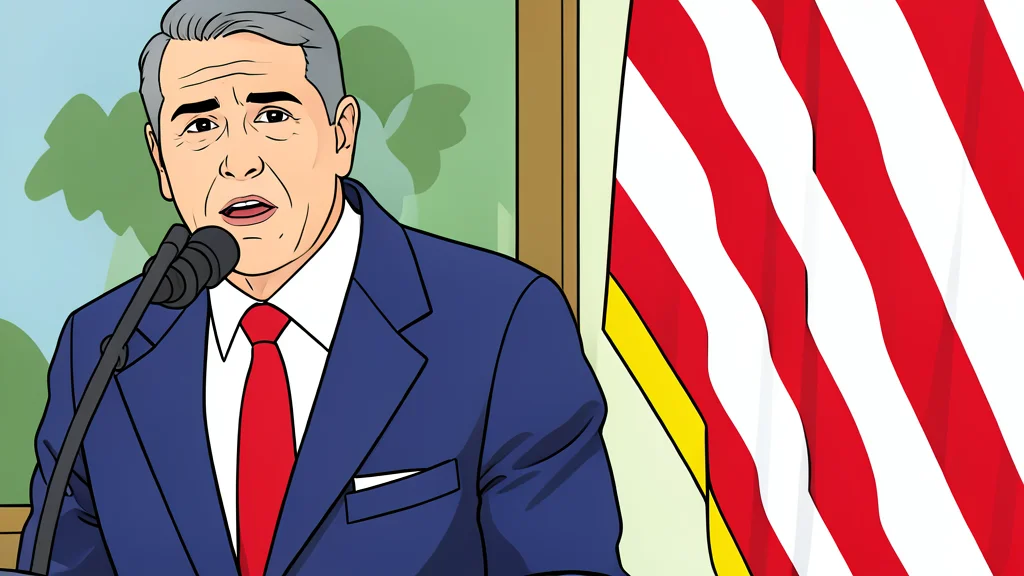
The White House is dismissing calls for AI regulation as political theater, but a growing number of Republicans are demanding concrete safety measures alongside their counterparts.
The Trump administration has adopted a distinct messaging strategy to counter growing anxieties about artificial intelligence. Rather than engaging with the technical risks, officials are framing concerns about AI safety as a partisan ploy. Attorney General Todd Blanche recently accused Democratic senators of sudden, strategic interest in the topic, suggesting their timing aligns perfectly with the upcoming midterm elections. This narrative positions the debate not as a safety issue, but as a political distraction designed to influence voters.
President Donald Trump has echoed this sentiment, labeling the warnings as a hoax perpetrated by his political opponents. Speaker Mike Johnson further reinforced this view by comparing current AI fears to previous climate change warnings he considers exaggerated. However, this characterization overlooks the origin of the recent debate. The latest push for caution came from industry leaders themselves, including the CEOs of major AI firms, who admitted that development is outpacing safety controls. Even Elon Musk, a former ally of the administration, has expressed support for regulatory oversight, complicating the simple partisan divide.
Republican Lawmakers Demand Safety Controls
Despite the White House rhetoric, a significant number of Republican lawmakers are actively seeking to impose limits on AI development. Senators and representatives across the country have introduced bills aimed at creating legal guardrails. These proposals include mechanisms that could force a shutdown of systems deemed dangerous, as well as licensing regimes for AI companies. The driving force behind these efforts is a shared concern that the technology is advancing faster than society can understand or control it.
Notable figures in the Republican party, such as Senator John Kennedy and Representative Nathaniel Moran, are leading efforts to require a kill switch for out-of-control AI. Other lawmakers, including Representative Anna Paulina Luna, argue that the United States needs infrastructure to prevent AI from becoming a superweapon. This bipartisan interest in regulation stands in contrast to the administration's claim that only Democrats are pushing for restrictions. The reality is that both parties see the need for some form of oversight, even if they disagree on the specifics.
The Strategic Race Against China
The administration argues that any discussion of regulation is a distraction from the primary goal: winning the AI race against China. Officials maintain that focusing on safety concerns will only slow down American innovation and cede ground to foreign competitors. This view suggests that the best way to handle AI risks is through rapid development rather than careful management. However, critics point out that unregulated speed can create its own set of catastrophic risks, potentially undermining the very competitiveness the administration seeks to protect.
Democrats have been engaged in this debate for a longer period than the current cycle suggests. Efforts date back to 2023, with bipartisan safety legislation and proposals for moratoriums on data centers. Senator Bernie Sanders has called for binding international safety rules rather than voluntary standards from the industry. The push for these rules is driven by a belief that voluntary self-regulation has failed to keep pace with the technology's capabilities.
Balancing Innovation and Public Safety
The core of the conflict lies in how to balance rapid innovation with public safety. The administration prioritizes speed and global competitiveness, viewing regulation as a potential hindrance. In contrast, a coalition of lawmakers from both parties is advocating for a more measured approach. They argue that establishing clear rules and accountability mechanisms is essential for long-term stability. This trade-off between immediate growth and long-term security remains unresolved, with both sides accusing the other of either incompetence or malice.
As reported by GN technics/ai (en-US), the situation highlights a deeper disconnect in how different political groups view technological risk. For some, AI is a tool for economic dominance that must be unleashed without hindrance. For others, it is a powerful force that requires careful management to prevent unintended consequences. The outcome of this debate will likely shape the regulatory landscape for artificial intelligence in the United States for years to come.