The Real Bottleneck in Enterprise AI Deployment
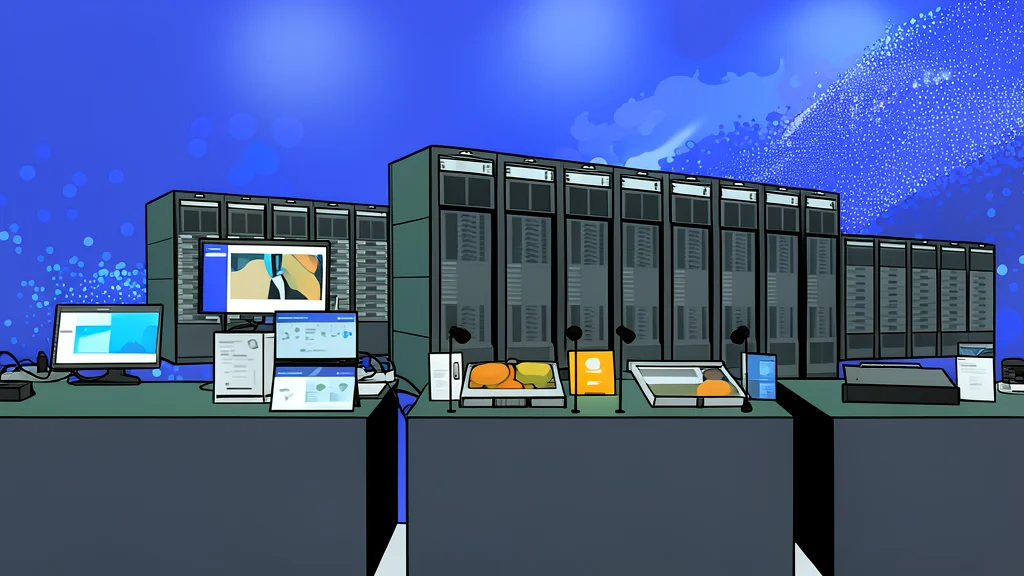
Moving from experimental AI projects to reliable daily operations reveals that the biggest hurdles are often physical infrastructure and data management, not just computing power.
Enterprises across manufacturing, finance, and public sectors are facing a common frustration: their initial AI experiments work well in isolation but struggle when integrated into real-world business processes. The transition from a controlled pilot to a production environment exposes weaknesses that were previously invisible. While early discussions focused on acquiring enough processing power, the current focus has shifted to more fundamental questions about data location, heat management, and network stability.
According to reports from GN technics/ai (en-US), simply adding more graphics processing units is no longer a sufficient strategy. Organizations are discovering that the limiting factors are often storage speed, cooling capacity, or operational complexity. This shift indicates a broader industry realization that successful AI deployment requires a robust underlying platform rather than just high-performance hardware.
Hidden Constraints Beyond Compute Power
Technical teams often assume that computational capacity is the primary barrier to scaling AI. In practice, the bottleneck frequently shifts to other areas of the infrastructure. For example, a system may have ample processing power but be held back by slow data transfer rates or insufficient cooling systems. These physical constraints become critical as AI workloads move from intermittent testing to continuous, high-density operation.
The complexity of these issues means that problems often only surface after implementation begins. When a system fails to meet expectations, the cause is rarely the AI model itself. Instead, it is usually the surrounding infrastructure that cannot handle the sustained load. This requires a different approach to planning, where engineers consider the entire lifecycle of the system, including power consumption and thermal output, from the outset.
Infrastructure Design for Continuous Operations
To address these challenges, vendors are reimagining the structure of AI environments. The goal is to create platforms that support continuous operation rather than just one-off projects. This involves integrating governance, deployment, and operational management into a single framework. By doing so, organizations can reduce the support burden associated with scaling new use cases, allowing teams to focus on business outcomes rather than constant troubleshooting.
Regional differences also play a role in how these systems are prioritized. In markets like Singapore, reliability and rapid response times are often the top concerns. Companies are building scalable environments that support both training and inference, ensuring that security and monitoring services can run consistently. This approach treats AI infrastructure as a critical utility, similar to electricity or internet connectivity, rather than a specialized tool.
Integration Challenges in Real World Use
Even with robust hardware, AI systems must coexist with existing enterprise tools. This integration is rarely straightforward. Data is often scattered across different departments, and security teams must vet how the AI interacts with sensitive information. The ability of a system to connect with legacy applications and adapt to changing business conditions is a major determinant of its long-term success.
The trade-off for enterprises is significant. Building this level of infrastructure requires upfront investment and careful planning. However, the alternative is a fragile system that breaks under pressure or requires constant manual intervention. As AI moves from a novelty to a core business function, the focus is shifting from raw performance to operational resilience and sustainable integration.