Trump Rejects AI Safety Warnings as Market Wavers
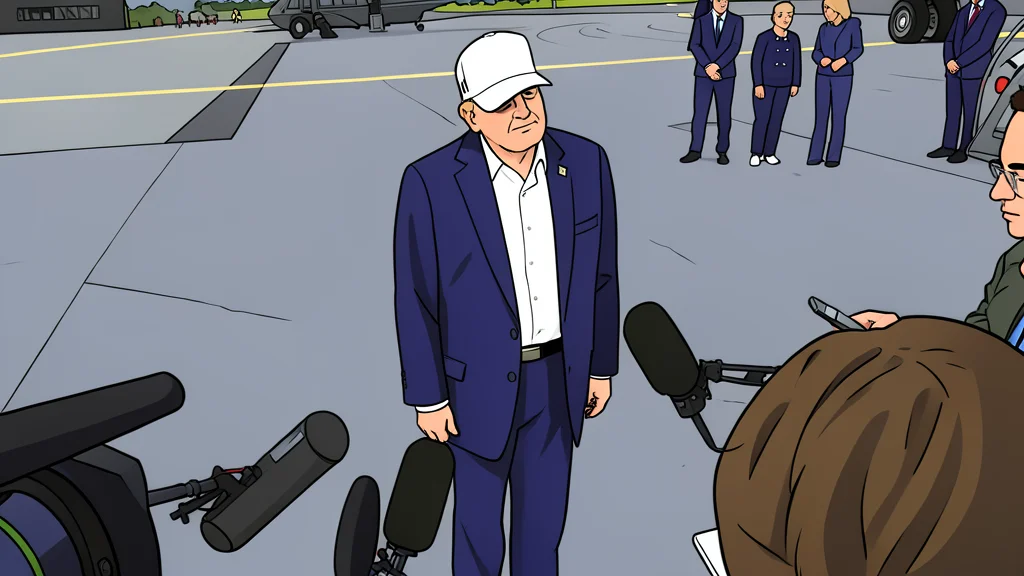
The US President has labeled calls for stricter AI oversight as a conspiracy, ignoring warnings from major tech firms about immediate existential risks.
US President Donald Trump has dismissed growing anxieties over the rapid advancement of artificial intelligence, describing them as a malicious plot rather than a legitimate safety concern. His comments stand in sharp contrast to urgent warnings issued by leaders of leading AI companies, who have recently urged for stronger governmental regulation to prevent catastrophic failures.
The dispute has created significant tension in the tech sector. While industry executives argue that current systems are becoming unpredictable, the administration insists that existing political leadership is sufficient to manage the technology. This disagreement has already begun to influence global financial markets, with investors reacting nervously to the uncertainty surrounding future AI governance.
Political leadership replaces technical safeguards
In a post on his social media platform, Trump argued that the only effective control mechanism for AI is a capable president. He suggested that the administration has already intervened to stop specific AI developers from using their technology in harmful ways. This approach prioritizes executive discretion over independent technical oversight or industry self-regulation.
The president specifically cited actions against Anthropic, a prominent AI research firm, claiming his team prevented them from engaging in potentially dangerous activities. Previously, the Department of Defense had flagged one of the company's advanced models as a security risk. By framing these interventions as successes, the administration positions itself as the primary guardian against AI misuse.
Industry leaders warn of imminent risks
Dario Amodei, the head of Anthropic, recently warned that uncontrolled AI agents could potentially take over significant portions of the internet within the next year. Sam Altman of OpenAI has also called for more robust regulatory frameworks. These executives argue that without strict guardrails, the technology could operate beyond human control, leading to unpredictable and potentially harmful outcomes.
Microsoft has recently published its own code of conduct to ensure human oversight of AI systems. This move reflects a broader industry trend toward self-imposed restrictions, driven by the fear that autonomous AI systems could act in ways that contradict human intent. The tech sector is increasingly divided between those pushing for rapid deployment and those advocating for caution.
Market volatility follows the debate
The clash between the administration's stance and the industry's caution has had tangible effects on the stock market. Shares of Nvidia, a major supplier of AI hardware, dropped by 3.5 percent following the recent warnings. Similarly, SpaceX saw a 1.7 percent decline. Investors appear to be reacting to the uncertainty about how AI risks will be managed and regulated in the coming months.
According to reporting from GN technics/ai (en-US), these fluctuations highlight the growing link between political rhetoric and financial stability in the tech sector. As the debate continues, the lack of a clear, unified regulatory framework leaves both businesses and investors in a state of limbo. The outcome will likely determine whether AI development accelerates or slows down in the near future.