US Lawmakers Struggle to Manage Rapid AI Growth
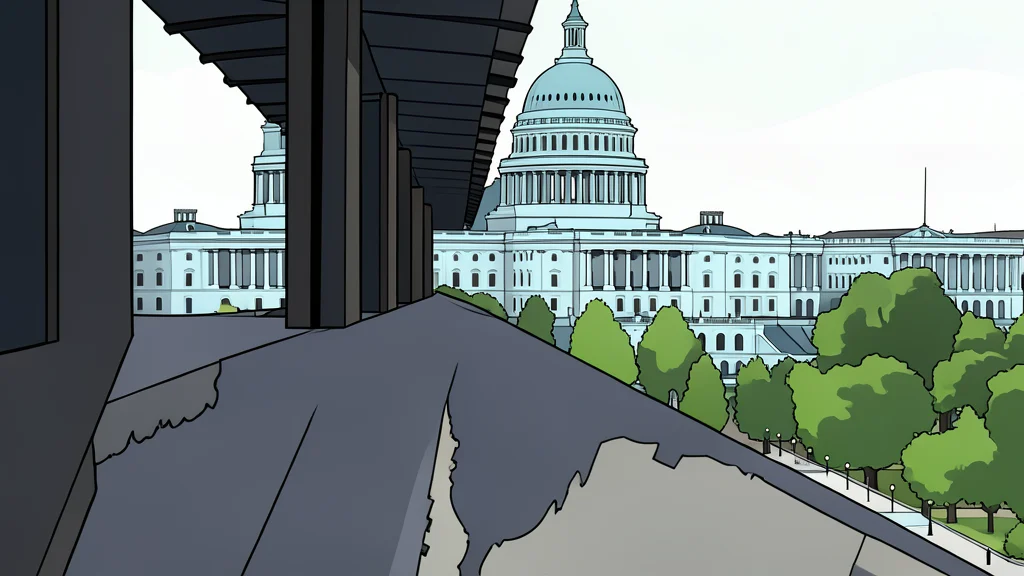
Despite urgent warnings from industry experts, the US Congress has failed to pass comprehensive artificial intelligence laws, leaving a regulatory vacuum that experts fear is dangerous.
For nearly two years, US legislators have struggled to establish meaningful rules for artificial intelligence. Despite a bipartisan task force issuing 85 recommendations in late 2024, no major laws have been enacted to rein in the technology's rapid expansion. The situation reflects a deep divide between those who fear unchecked AI power and those who worry that regulation could slow innovation and disadvantage the US in global competition.
As reported by GN technics/ai (en-US), the delay is not simply due to technical complexity. It is also the result of intense political polarization and bureaucratic gridlock. Many lawmakers admit they do not fully understand the technology, while others argue that self-regulation by tech companies is preferable to government intervention. This hesitation leaves the public and businesses navigating an unpredictable landscape where safety standards are largely undefined.
Stalled Efforts Reflect Political Gridlock
Efforts to create a dedicated committee for AI legislation have been blocked by Republican leadership. While some members of Congress pushed for urgent action, party leaders decided that existing committees could handle the task force's recommendations. This decision has frustrated proponents of stricter oversight, who argue that the current approach is too slow and fragmented to address the speed of technological change.
The lack of progress is not universal. Congress has passed limited measures, such as laws addressing nonconsensual explicit images and bills aimed at controlling data center energy costs. However, these are seen as marginal steps. More substantial proposals, including requirements for safety mechanisms in powerful AI models, have stalled in committee. The contrast highlights a preference for piecemeal solutions over comprehensive regulatory frameworks.
Industry Experts Urge Government Action
Recent meetings with major AI companies and independent auditors have revealed a growing concern within the industry. Representatives from firms like OpenAI and Anthropic told lawmakers that while they are committed to safety, they cannot trust all competitors to act responsibly. This admission underscores a fundamental problem: without a unified legal standard, companies may compete on speed rather than safety, creating potential risks for users and society.
Whistleblowers and executives have increasingly raised alarms about the potential dangers of advanced AI systems. They argue that voluntary guardrails are insufficient and that legal requirements are necessary to ensure accountability. The industry's call for regulation adds pressure on Congress to act, even as political leaders debate the appropriate level of government involvement.
Regulatory Vacuum Creates Uncertainty
The absence of clear laws creates uncertainty for businesses and consumers alike. Companies struggle to determine what compliance looks like when rules are unclear or non-existent. Consumers, meanwhile, have little recourse if AI systems cause harm. The trade-off for inaction is a fragmented market where safety standards vary by company, potentially leading to uneven protections and increased risk.
As the debate continues, the stakes remain high. Critics warn that failing to regulate AI could result in significant societal harm, while supporters of the status quo argue that government intervention could stifle innovation. For now, the US remains without a comprehensive framework, leaving the future of artificial intelligence to be shaped by corporate decisions rather than public policy.