Why Fixing Your Audio Matters More than Chasing 4K
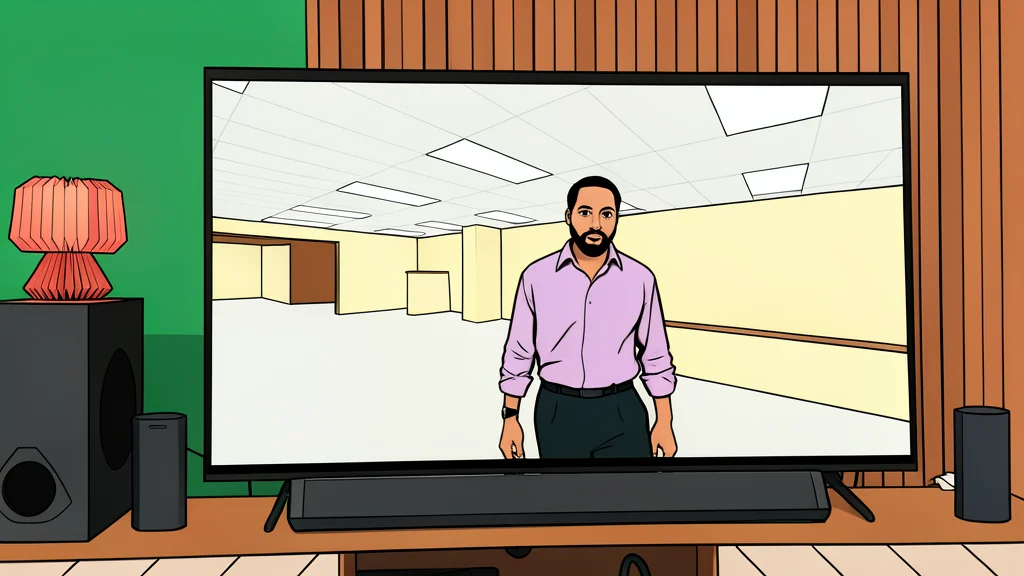
A tech desk analysis suggests that most home theater enthusiasts are optimizing the wrong variable. While resolution offers easy numerical comparisons, audio improvements often deliver more tangible gains in immersion and clarity.
For many home theater enthusiasts, the pursuit of higher resolution has become an endless cycle of chasing better encodes and sharper upscaling algorithms. This obsession with pixels often overshadows the other half of the audiovisual experience: sound. As reported by XDA Developers, many users find themselves stuck in a loop of minor visual refinements that fail to significantly improve enjoyment. The result is a setup that looks technically superior but feels emotionally flat, missing the visceral impact that quality audio provides.
The core issue is not that higher resolution is bad, but that it is the easiest metric to quantify. Resolution offers a clear number to compare, making it a tempting target for optimization. However, once a display reaches a certain size and the viewer sits at a reasonable distance, the law of diminishing returns sets in. Further increases in sharpness provide negligible benefits to the viewing experience. Meanwhile, the audio chain is often left to default settings, relying on built-in speakers that lack the depth and directionality needed to fully engage the viewer.
Resolution hits diminishing returns quickly
While the jump from standard definition to high definition was transformative, the leap from 1080p to 4K is less dramatic for most users. The perceived difference depends heavily on screen size and viewing distance. If these factors are not aligned, the extra pixels do not translate into a better movie experience. Other visual elements, such as contrast, motion handling, and color accuracy, often have a greater impact on perceived quality than raw resolution. Chasing the highest bitrate or the most advanced codec is a pursuit that yields very little in terms of actual enjoyment once the baseline is met.
Audio provides tangible immersion benefits
Shifting focus to audio yields immediate and noticeable results. Upgrading from basic TV speakers to a dedicated multi-channel system transforms dialogue clarity and background ambiance. Instead of a wall of noise, sound effects gain direction and weight, and quiet scenes develop a richer texture. This shift moves the experience from passive observation to active immersion. The difference is not just about volume, but about the spatial positioning of sounds, which helps the brain process the narrative more effectively.
However, buying new equipment is only the first step. Proper placement and calibration are critical for realizing the full potential of any audio system. Speakers positioned incorrectly can create dead zones or distort the soundstage. The ideal listening position forms a specific geometric relationship with the speakers, ensuring that the sound reaches the listener's ears simultaneously and accurately. Without this basic setup, even expensive gear will underperform, leaving the user with a muddled and unsatisfying experience.
Setup matters more than specs
The trade-off for prioritizing audio is the time and effort required for proper configuration. It is not enough to simply plug in a soundbar or satellite speakers and walk away. Room acoustics, crossover settings, and level matching all play a role in the final output. This process requires a willingness to adjust and test, rather than relying on automated presets that may not suit the specific environment. For the average user, this means moving furniture and tweaking settings to achieve a balanced sound profile.
Ultimately, the goal is to remove distractions from the movie rather than adding visual noise. A well-calibrated audio system allows the viewer to focus on the story and emotional beats, rather than straining to hear dialogue or understanding the context of a scene. While visual upgrades are still valuable, they are secondary to the foundational experience provided by sound. By addressing the audio chain first, users can achieve a more satisfying and immersive home theater experience without needing to chase the latest visual technologies.