BYD Plans Four European Factories to Meet EV Demand
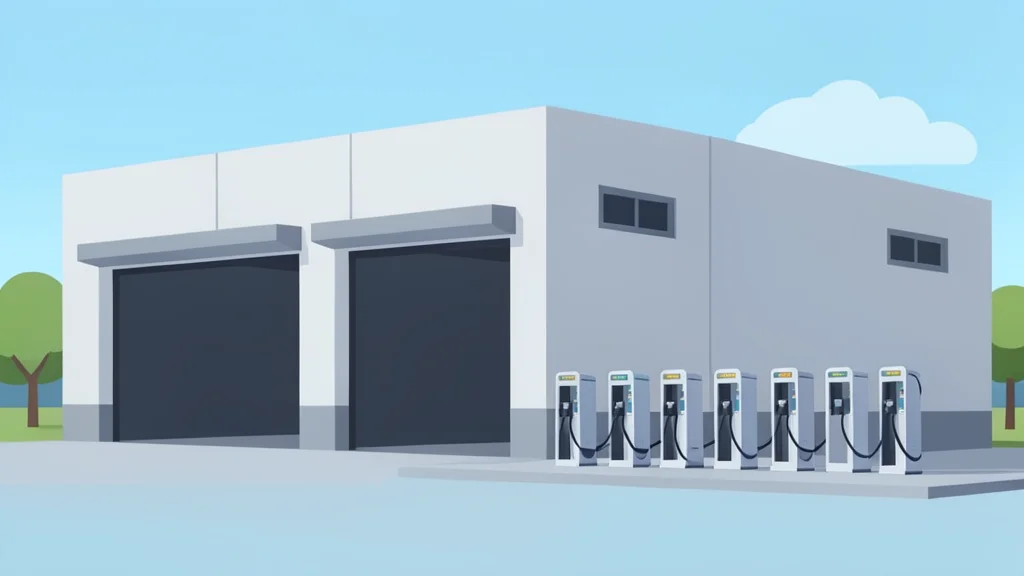
BYD is preparing to build four new sites in Europe, a move designed to satisfy local manufacturing rules while addressing rising consumer demand for electric vehicles.
BYD has announced a plan to establish four new facilities in Europe, comprising three vehicle assembly plants and one dedicated battery factory. The announcement was made by Alfredo Altavilla, a former Fiat Chrysler executive now advising BYD’s European operations, during an event in Turin. This expansion is a direct response to the need to comply with stringent EU regulations that favor locally produced vehicles.
The primary goal is to secure a stronger foothold in the European market, where demand for electric vehicles is surging due to high fuel prices and geopolitical tensions. By manufacturing within the region, BYD aims to attract more consumers while navigating complex trade rules. Reports indicate the company is in discussions with governments and local automakers in France, Spain, and Italy to acquire underutilized factories, a strategy that could accelerate its operational scaling.
Regulatory Compliance Drives Expansion
Building production capacity inside the European Union allows BYD to bypass potential import barriers and tariffs. This local presence is crucial for maintaining competitiveness against established European and Asian rivals. The move also signals a long-term commitment to the region, reducing the company's reliance on cross-border logistics and supply chain vulnerabilities.
However, this strategy comes with significant trade-offs. Acquiring and retrofitting existing factories requires substantial capital investment and time. Furthermore, the company must navigate diverse labor laws and environmental standards across different countries. The reliance on underutilized plants means BYD must ensure these facilities can be brought up to its specific technical standards quickly enough to meet market demands.
Financial Metrics Show Mixed Signals
Financial data suggests BYD is currently trading below its estimated intrinsic value. According to reports from GN auto tech/ev, the stock is priced at $75.60, which analysts consider a discount compared to its calculated fair value of $91.55. This valuation gap is supported by a low price-to-earnings ratio of 3.33x, significantly lower than its five-year median of 10.74x, indicating strong profitability relative to its market price.
Despite the favorable valuation, there are concerning indicators regarding insider confidence. Over the past three months, insiders sold approximately $1.15 million worth of shares. This selling pressure contrasts with the generally positive sentiment among institutional investors, creating a mixed signal for potential shareholders. The company’s financial strength rating is moderate, suggesting that while profitability is high, underlying financial risks remain a point of scrutiny.
Competitive Position in EV Market
BYD’s diversified portfolio, which includes both vehicle assembly and battery manufacturing, positions it to benefit from the broader shift toward sustainable transportation. With a market capitalization of approximately $5.49 billion, the company is a significant player in the consumer cyclical sector. Its vertical integration allows for greater control over costs and supply chains, a key advantage in the competitive electric vehicle landscape.
The success of this European expansion will depend on BYD’s ability to translate its manufacturing scale into consumer trust and market share. While the financial metrics appear attractive, the execution of this complex multi-country rollout presents considerable challenges. Investors and observers will be watching closely to see if the company can overcome the friction of local regulations and intense competition to solidify its position in Europe.