Chinese Automakers Revisit Solar Car Tech After European Failures
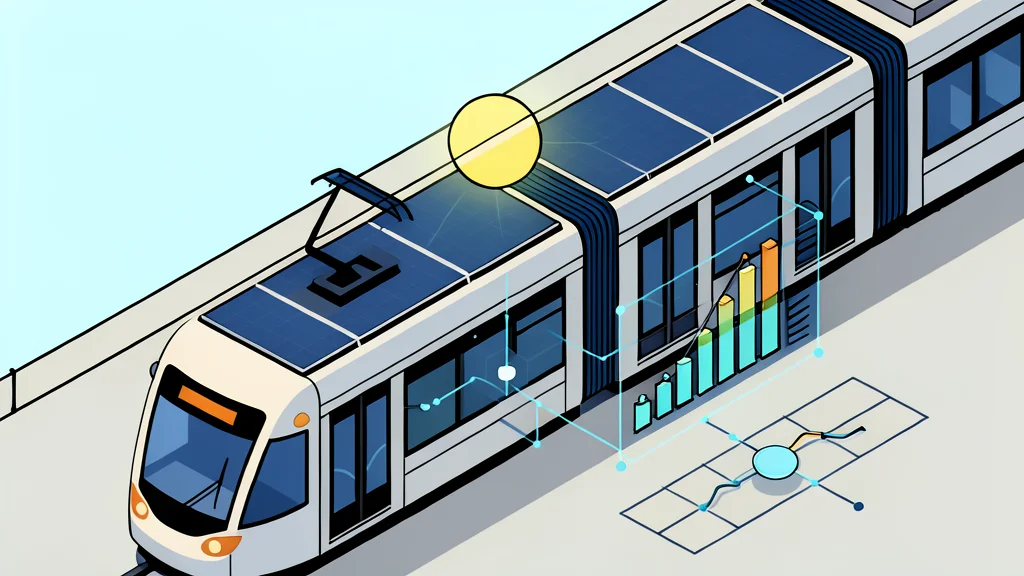
Chinese giants like Fuyao and FAW are bringing solar roof technology to mass production, challenging the assumption that vehicle-mounted panels are too weak to matter. This move follows the recent collapse of European startups that tried to solve the same problem with dedicated solar vehicles.
Chinese automotive suppliers are moving solar panel technology from the realm of niche experimentation to mainstream manufacturing. Fuyao, a major player in automotive glass, has announced that its solar sunroof is ready for mass production, while FAW has unveiled a prototype featuring a photovoltaic canopy. These developments mark a distinct shift in strategy compared to earlier European attempts, which focused on building entire cars powered solely by sunlight and ultimately failed to sustain commercial viability.
The skepticism toward solar vehicle technology is rooted in simple physics. A standard car roof offers limited surface area, meaning the energy generated is minimal. For context, a roof covered in 1.5 square meters of panels might produce only about one kilowatt-hour of electricity per day under ideal conditions. This is barely enough to drive seven kilometers, a distance insufficient for most daily commutes. Therefore, the current Chinese approach does not aim to replace battery charging but rather to integrate solar energy as a supplementary feature within existing electric vehicles.
European Startups Faced Physical Limits
European companies like Lightyear and Sono Motors attempted to overcome these limitations by designing vehicles specifically to maximize panel coverage. Lightyear, for instance, covered five square meters of its vehicle with photovoltaic cells, creating a car that functioned essentially as a moving solar panel. They achieved impressive efficiency with low drag coefficients and custom wheels, allowing the vehicle to travel 70 kilometers on a single day’s worth of sunlight. However, this required specialized engineering that prevented the car from competing on price or practicality with standard electric vehicles.
The financial strain of maintaining such a niche product line proved unsustainable. Sono Motors, a German startup that raised significant funds and collected deposits from customers, ceased operations in late July. Their failure highlighted the gap between technological feasibility and commercial reality. While the technology worked, the cost of integrating it into a viable consumer product remained too high, leading to a wave of bankruptcies in the sector that left the market open for different approaches.
Chinese Strategy Focuses on Integration
In contrast, the Chinese approach leverages existing supply chains for automotive components. By integrating solar cells into glass roofs and canopies, manufacturers like Fuyao can offer this technology as an optional feature on regular models rather than a standalone product. This strategy avoids the high costs associated with designing a new vehicle architecture. The goal is not to create a car that runs entirely on sun, but to reduce the frequency of charging stops or offset energy used for idle systems like air conditioning.
This integration strategy addresses the primary weakness of previous attempts: scale and cost. Since the solar panels are part of the existing vehicle structure, the marginal cost of adding them is lower. As reported by GN auto tech/ev, this shift represents a pragmatic adaptation rather than a radical reinvention. It acknowledges that solar energy is a small part of the equation but useful when applied broadly across a large fleet of vehicles.
Practical Benefits Versus Hype
The trade-off for consumers is modest. The additional range provided by a solar roof is minimal, often less than the distance needed for a typical grocery run. However, for owners who park their cars in sunny areas during the day, this feature can keep the battery slightly topped up, reducing the need for frequent top-up charges. It is a convenience feature rather than a primary power source, and buyers should not expect it to significantly alter their driving habits or reduce their electricity bills dramatically.
The success of this approach depends on how effectively manufacturers market these realistic benefits without overstating the technology's capabilities. If positioned correctly, solar roofs can add value by enhancing the self-sufficiency of electric vehicles. The key lies in managing expectations: this is an auxiliary power source that complements the main battery, not a replacement for it. As the technology matures, it may become a standard feature in the premium electric vehicle segment.