Chinese EV Factories in Southeast Asia Face Underutilization
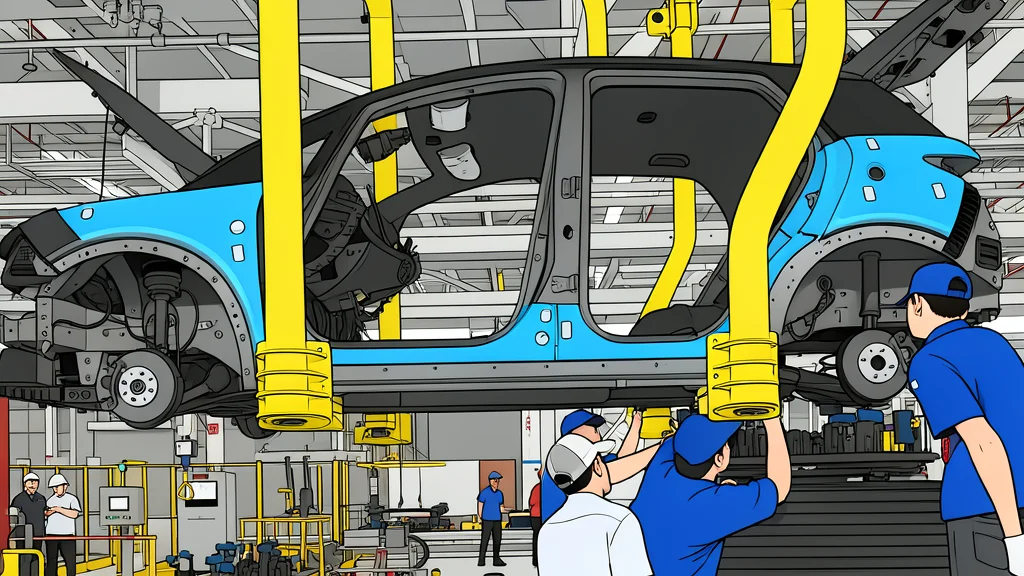
Chinese automakers are building massive production bases in ASEAN, but low sales figures reveal a gap between investment pace and market demand.
Chinese electric vehicle manufacturers have shifted their strategy from exporting finished cars to building them directly within Southeast Asia. The goal is to establish a regional production hub that serves local markets and meets rising localization requirements. However, this rapid expansion is outpacing actual consumer demand, leaving many new facilities idle. According to data cited by GN auto tech/ev: electric vehicle, factories in key target countries are operating at significantly low levels.
The International Energy Agency reports that Chinese battery electric vehicle plants in Thailand are running at only 20% of their capacity. In Indonesia, the figure is even lower, with production at less than 15%. This underutilization highlights a stark mismatch between the scale of infrastructure being deployed and the current volume of vehicles actually being sold to customers in the region.
Rapid brand expansion exceeds market size
The number of Chinese automotive brands operating in Southeast Asia has surged in recent years. In Indonesia, the count of active Chinese brands jumped from three in 2021 to 22 by 2026. Thailand has seen a similar trend, growing from three brands to 23 over the same period. This aggressive entry has created a crowded marketplace where multiple competitors are vying for the same pool of buyers.
Industry analysts note that the sheer volume of new entrants is a primary reason for missed sales targets. When too many brands chase limited near-term demand, individual companies struggle to reach their production goals. This saturation means that even successful brands face intense price competition, which further compresses margins and complicates the return on investment for newly built facilities.
Strategic shift toward local production
The move to build locally is not just about accessing Southeast Asian consumers. It is also a response to the intensely competitive and capacity-rich domestic market in China. Automakers are seeking international growth by producing vehicles within the target market rather than shipping them from home. This approach helps them navigate trade barriers and align with government policies that favor local manufacturing and supply chain integration.
Chinese firms have established nearly one million units of annual manufacturing capacity across the region. This represents more than half of their total overseas manufacturing footprint. The strategy is designed to secure long-term market access and create a scalable base for future exports. While current utilization rates are low, the investments aim to position these companies for growth as regional demand eventually matures.
Consolidation likely as demand remains weak
Despite the long-term vision, the short-term reality is difficult. Many automakers are currently reducing production plans because they are not meeting sales targets. This underperformance is driven by a combination of weak consumer demand and the internal competition among Chinese brands themselves. As a result, consolidation is inevitable, with some players likely to exit or scale back their operations in the region.
Governments in Indonesia and Thailand are aware of the overcapacity issue and are implementing measures to address it. For now, the trade-off for Chinese manufacturers is clear: they have secured a foothold and the infrastructure for future growth, but they are paying the price in the form of significant underutilization. The success of this strategy will depend on whether regional demand can eventually catch up with the massive scale of production already in place.