EV Trucks Dominate Wet Boat Ramps via Instant Torque
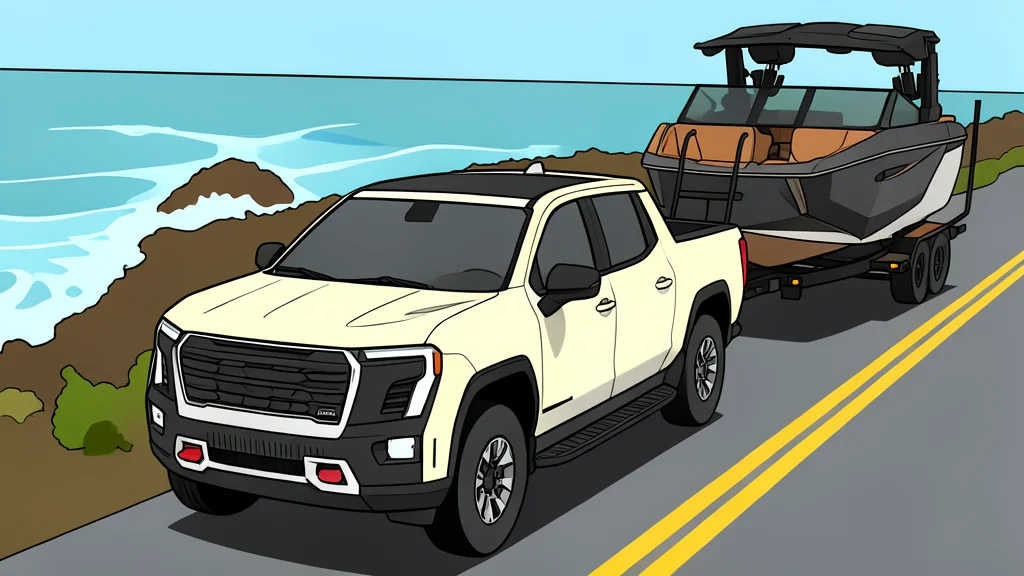
Electric pickups are redefining boat launch capabilities, offering superior traction on slick grades where traditional gas trucks often struggle with wheel spin and power delivery lag.
The Saturday afternoon boat launch has long been a test of patience and mechanical reliability for truck owners. For decades, the standard procedure involved revving a gas engine to build enough torque to pull a heavy vessel up a steep, algae-covered concrete ramp. This process frequently resulted in wheel spin, smoke, and a loss of control, a phenomenon well-known to anyone who has tried to load a wakeboat in wet conditions. The reliance on high engine revolutions to generate pulling force creates a mechanical lag that works against traction on slick surfaces.
Recent reports suggest a shift in this dynamic, with electric vehicles (EVs) demonstrating a distinct advantage at the water's edge. Drivers of electric pickups are describing a smoother, more controlled experience when hauling boats up grades as steep as 15 percent. By eliminating the need to rev an engine to build power, these vehicles can apply force more gradually and precisely. This change is altering the perception of EVs as capable workhorses in specific, high-torque scenarios, moving them beyond their reputation as sedate city cars.
Instant Torque Eliminates Wheel Spin
The core difference lies in how power is delivered. Internal combustion engines require time to reach optimal torque, often resulting in a sudden surge that breaks tire friction on mossy or wet concrete. Electric motors, by contrast, provide full torque from the moment they engage. This allows the driver to meter power output with extreme precision, effectively 'creeping' the vehicle up the incline without overwhelming the tires' grip. Owners of models like the Ford F-150 Lightning have noted that this instant availability of power allows them to pull heavy boats out of the water with minimal wheel movement, avoiding the common issue of the rear end hopping or sliding sideways.
Battery Placement Improves Weight Balance
Beyond torque delivery, the physical structure of electric trucks offers a mechanical benefit for towing. Traditional gas trucks carry the majority of their weight over the front axle, under the hood. When a heavy trailer is attached, the tongue weight acts as a lever, lifting the front end and reducing the downward force on the drive wheels. Electric trucks, however, feature a 'skateboard' battery layout that places thousands of pounds of weight low and centered between the axles. This distribution ensures that the drive wheels maintain consistent downforce, even when pulling a significant load, which is critical for maintaining traction on slippery ramps.
Additionally, modern electric trucks utilize software-driven torque vectoring systems. These systems monitor wheel slip thousands of times per second, adjusting power distribution to individual wheels in real-time. This is significantly faster than mechanical locking differentials found in many gas trucks. As reported by GN auto tech/ev: electric vehicle, this combination of precise power management and superior weight distribution allows EVs to handle challenging launch conditions with a level of stability that gas engines struggle to match, despite the latter's higher peak horsepower.
Range Limitations Remain A Critical Trade-Off
Despite these advantages at the boat ramp, electric trucks are not without significant drawbacks. The primary trade-off remains range and charging infrastructure. While an EV may handle the launch perfectly, the energy required to tow a heavy boat over long distances can deplete the battery quickly. Owners must plan their trips carefully, ensuring access to charging stations at their destination. For those who frequently travel long distances to remote waterways, the convenience of a gas tank that can be filled in minutes still outweighs the traction benefits of an electric drivetrain. The debate between the two technologies continues, with each excelling in different aspects of the towing experience.