Former Intel Teams Challenge NVIDIA Interconnect Dominance
Two startups spun out of Intel’s former networking division are launching aggressive moves to disrupt NVIDIA’s grip on high-speed AI cluster connections.
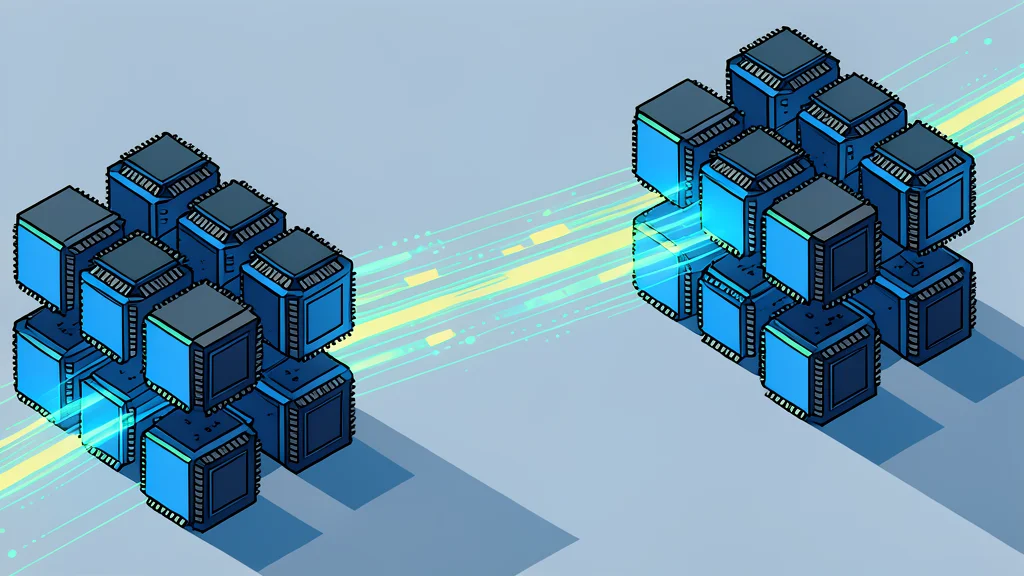
The race to connect thousands of AI accelerators is intensifying as two new entrants seek to break NVIDIA’s monopoly on high-speed interconnects. Both companies trace their origins to Intel’s former Omni-Path Architecture business, which was spun off in 2020. Now, they are targeting the Scale-up market, a segment where NVIDIA’s NVLink technology has long held a dominant position by linking GPUs within a single rack.
This shift marks a significant pivot from previous efforts focused on connecting separate servers, known as Scale-out. The new entrants argue that the current infrastructure causes severe inefficiencies, with up to half of computing power idling while waiting for data. By moving into the vertical connection space, they aim to reduce these delays and improve overall accelerator utilization for large-scale AI workloads.
Cornelis Targets In-Network Computing
Cornelis Networks, led by CEO Lisa Spelman, recently raised $205 million to launch its Active Compute Fabric. This architecture integrates programmable computing directly into the network, allowing data to be processed as it flows rather than waiting for a central processor. The company claims this approach can eliminate the massive waste of energy and compute time associated with data waiting in traditional clusters.
For a cluster of 100,000 GPUs, Cornelis estimates that traditional networks waste nearly $1.68 billion and 500 gigawatt-hours of electricity annually due to idle time. The new system is designed to be compatible with open standards like UALink and Ultra Ethernet, offering a multi-vendor alternative to proprietary solutions. However, the trade-off is that this technology is still in early stages of mass adoption compared to the mature NVLink ecosystem.
Delos Data Joins the Push
Delos Data, another startup with deep Intel roots, is simultaneously entering the fray. Founded in 2025 by Ed Doe and Dan Daly, both of whom previously led divisions at Intel and Barefoot Networks, the company is focusing on high-speed interconnects for AI clusters. Their entry adds another layer of competition to a market that has been largely dominated by a single vendor for years.
The presence of two strong challengers from the same technical lineage suggests a coordinated effort to create an open alternative to NVIDIA’s hardware. This development is part of a broader industry trend where major players are forming alliances to reduce dependence on a single supplier. The outcome will likely determine the standard architecture for next-generation AI data centers.
NVIDIA Defends Its Position
NVIDIA is not standing still in the face of this challenge. The company has introduced NVLink Fusion, a strategy aimed at replicating its success with the CUDA software ecosystem at the hardware level. By opening up its interconnect technology to more partners, NVIDIA hopes to lock in customers and maintain its lead in the AI infrastructure market.
As reported by GN auto tech/hardware, the competition is now a full-scale hardware showdown. While the new entrants promise greater efficiency and openness, they face the daunting task of displacing an established standard that is deeply integrated into current AI software stacks. The next few years will reveal whether these former Intel teams can successfully challenge the status quo.