Georgia's EV Manufacturing Faces Policy Headwinds

Georgia's push to become a clean manufacturing hub is slowing as federal support for electric vehicles is dismantled. Automakers in the state are pivoting toward hybrids and grid storage to survive the shifting regulatory landscape.
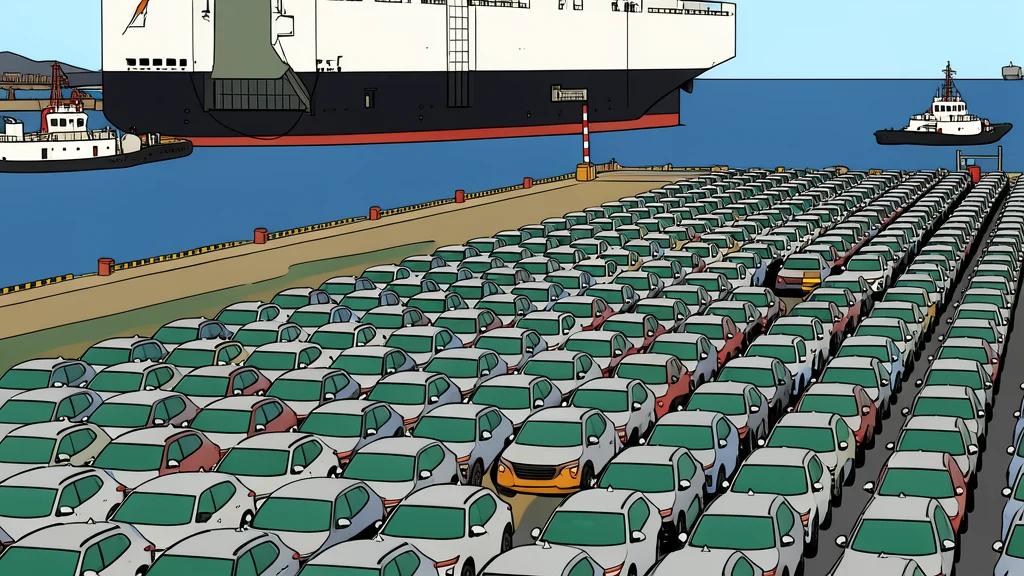
Georgia spent years courting electric vehicle manufacturers with tax breaks and workforce training, aiming to establish itself as a central hub for clean industry. Major plants from companies like Kia, Hyundai, and Rivian anchored this strategy, promising long-term economic stability for local communities. However, that momentum is now stalling. Federal policy shifts have removed key financial supports, forcing companies to rethink their production lines and leaving workers in a state of uncertainty.
The core issue is the withdrawal of federal incentives that previously made electric vehicles more affordable for consumers. As noted in reporting by GN auto tech/ev, the administration has eliminated tax credits, relaxed emissions standards for gas cars, and imposed tariffs on battery components. This creates a direct trade-off: while Georgia retains its manufacturing capacity, the market demand for pure electric vehicles has weakened significantly, compelling automakers to prioritize hybrid models that offer a middle ground for price-sensitive buyers.
Automakers pivot to hybrid production
In response to the changing market, manufacturers are adjusting their output. Stuart Countess, CEO of Kia’s West Point facility, explained that the removal of tax credits fundamentally altered the sales environment. The plant, which was designed to be flexible, is now shifting its focus toward hybrids. This is not an isolated case; Hyundai has also added hybrid production to its Georgia facility, even though the site was originally marketed as an electric vehicle plant. These companies are hedging their bets to remain competitive in a market where pure electric demand has cooled.
The transition is described by industry analysts as a messy period of adjustment. Stephanie Valdez-Streaty of Cox Automotive noted that while the timeline for full electrification has stretched, the industry is still moving in that direction. The immediate priority, however, is stabilizing revenue streams. By producing hybrids, automakers can leverage existing infrastructure and consumer familiarity with internal combustion engines, reducing the risk associated with betting everything on a segment that currently lacks federal financial support.
Economic stakes remain high locally
The implications for Georgia extend beyond corporate strategy. The state had invested heavily in this sector, with nearly $74 billion in manufacturing commitments still active. However, more than $4 billion in planned investment has been canceled or reduced due to the policy shifts. For communities that relied on these jobs, the uncertainty is palpable. Battery makers are also adapting, with some expanding into grid-storage batteries to diversify their revenue sources away from vehicle-specific applications.
Despite the setbacks, the infrastructure buildout continues. Private investment in charging networks is proceeding, with Kia and Hyundai participating in the Ionna network, which has installed sites across the state. Utility spending linked to electric vehicles has also increased, suggesting that the physical framework for electrification is being built even as consumer adoption slows. The Southern Alliance for Clean Energy emphasizes that the region has much riding on the success of both the vehicle and battery markets, making the current pivot a critical survival strategy rather than a permanent abandonment of electric technology.
Local demand may drive future growth
One potential offset to the lack of state-level consumer incentives is the local workforce itself. Valdez-Streaty suggests that familiarity gained through employment at these plants could eventually drive local demand. When workers and their communities are deeply connected to the product, adoption rates may rise organically. However, this is a long-term play. In the short term, Georgia drivers still face higher registration fees for electric vehicles and lack the tax incentives available in other states. The gap between production capacity and consumer readiness remains a significant challenge for the state’s clean energy ambitions.