MSI Eco Series EV Charger Brings Practical Hardware to Home Charging
The MSI Eco Series aims to simplify home electric vehicle charging by combining flexible physical design with smart energy scheduling, though users must match their car's capabilities to the unit's output.
For many electric vehicle owners, the ideal home charger is one that disappears into the background. You plug in, go about your evening, and expect the car to be ready in the morning. MSI, a company historically known for computer hardware, is entering this space with its Eco Series, promising a device that balances smart energy features with straightforward physical usability.
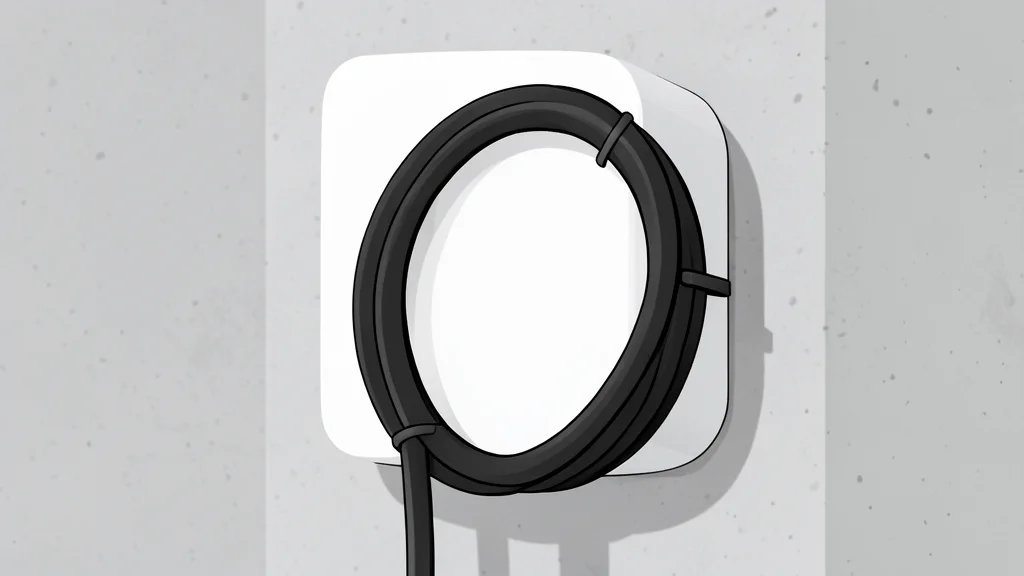
The core appeal of the Eco Series lies in its hardware flexibility. It offers a generous 7.5-meter cable and allows electrical connections to enter the unit from the top, bottom, or rear. This design choice gives installers more freedom to create a clean setup, rather than forcing the homeowner to arrange the driveway around the charger's specific port location.
Flexible installation options
A long cable is often a practical necessity rather than a luxury. It allows the wallbox to be mounted in a convenient spot while still reaching a car parked in various positions. This is particularly useful for households with two cars, awkward driveway angles, or vehicles where the charging port is on the opposite side of the car. The charger itself is compact, measuring 351mm in height and weighing 3.5kg without the cable, making it manageable for wall or pedestal mounting.
MSI provides two main versions: the Eco Life and the Eco Premium. The former uses a circular LED indicator to show status, while the latter adds a five-inch display for voltage and energy data. While the screen is a nice addition, most users will likely interact with the physical unit only briefly. The real value lies in the background automation that happens once the device is configured.
Power output depends on your car
The Eco Series advertises a maximum charging rate of 22kW, but this figure requires specific conditions. To achieve this speed, you need a three-phase electrical connection and an electric vehicle capable of accepting 22kW of alternating current. Many cars are limited to 11kW or 7kW regardless of the wallbox's capacity. For a typical single-phase home connection, the unit will deliver up to 7kW, which is still significantly faster than a standard power point.
This limitation is a crucial trade-off to understand before purchasing. If your car cannot utilize the higher power, the extra cost of a 22kW-capable unit may not offer immediate benefits. However, for those with compatible vehicles and infrastructure, the higher rate can drastically reduce charging times during the day.
Smart scheduling and solar integration
The charger integrates with MSI’s aConnect app, allowing users to set schedules and monitor usage. This is increasingly important as electricity tariffs become more complex. Shifting the charging load to off-peak hours or times when rooftop solar is active can lower running costs. The system supports automatic recognition of authorized vehicles, meaning you can configure it once and largely forget about it.
For shared spaces or apartments, RFID card authentication provides a secure way to control access. MSI labels the series as solar-ready, with advanced versions supporting OCPP integration. As reported by GN technics/smarthome (en-US), this capability is becoming vital for homeowners looking to optimize their energy consumption. The goal is a seamless experience where the charger handles the complexity of energy pricing and availability, leaving the driver to simply plug in and drive.