NHTSA Demands Proof Tesla Cybercab Meets Federal Safety Rules
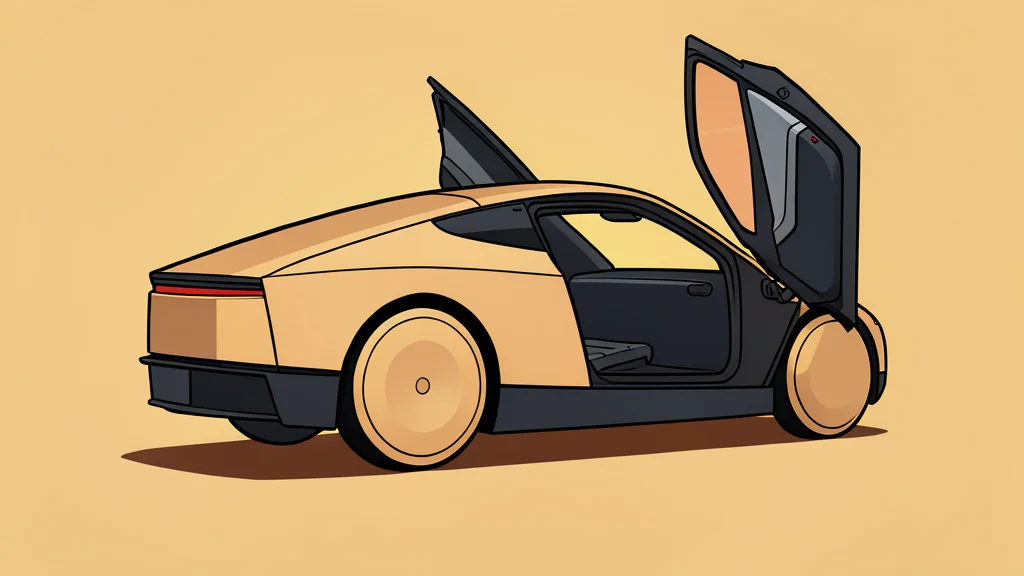
The US vehicle safety agency has issued a formal legal order requiring Tesla to prove under oath that its driverless Cybercab complies with standards originally written for human operators.
The National Highway Traffic Safety Administration has escalated its scrutiny of Tesla’s robotaxi program by issuing a formal Special Order. The agency is demanding that the company demonstrate, under penalty of perjury, how a vehicle with no steering wheel, pedals, or mirrors satisfies federal safety regulations designed for human drivers. This move transforms a previous audit query into a binding legal requirement with significant financial stakes.
Tesla has until September 30 to respond to the 21 detailed requests outlined in the order. If the company fails to provide a complete and truthful explanation, it faces potential penalties of up to $139 million. The order is signed by NHTSA Chief Counsel Peter Simshauser and addressed directly to Tesla’s legal leadership, signaling a serious challenge to the vehicle's current market status.
Self-certification creates the core legal conflict
The United States does not pre-approve vehicle designs; instead, automakers must self-certify that their products meet all applicable Federal Motor Vehicle Safety Standards. Tesla certified the Cybercab as compliant, but NHTSA argues this certification is questionable because most existing standards assume a human is behind the wheel. The agency is effectively asking Tesla to defend a position it suspects cannot be legally sustained under current law.
Tesla’s likely defense is that rules regarding mirrors, turn signals, and brake pedals are irrelevant to a car that handles all driving tasks autonomously. However, NHTSA’s counter-argument is blunt: until these rules are formally rewritten by regulators, they remain in effect. A manufacturer cannot simply declare a standard inapplicable on its own accord, especially when the vehicle lacks the physical components those standards require.
The foot-brake requirement remains a hurdle
One specific regulation presents a direct contradiction to the Cybercab’s design. Federal standard No. 135 explicitly states that service brakes must be activated by a foot control. The Cybercab has no foot control. NHTSA has previously noted that a manufacturer cannot certify compliance with this standard if the vehicle lacks the required mechanism, yet Tesla has done exactly that.
While NHTSA has proposed amendments to allow for automated vehicles without foot brakes, a proposal is not yet law. Until those changes are finalized, the existing rule applies. The agency is now enforcing this requirement against Tesla, forcing the company to explain how it certified a vehicle that physically cannot meet the standard’s basic definition.
Temporary controls raise compliance concerns
The order also investigates whether Tesla used temporarily attached manual controls to certify the vehicle’s compliance. If the company relied on these temporary parts to pass safety checks and then removed them before delivery, it may have violated the Safety Act’s prohibition on making safety equipment inoperative. NHTSA is asking for details on how the vehicle was tested and certified if it lacked the permanent controls required by law.
As reported by Electrek, this situation highlights the gap between rapid technological deployment and the slower pace of regulatory update. The agency is not banning the vehicle, but it is demanding rigorous legal justification for its current status. For Tesla, the challenge is no longer just engineering; it is a matter of legal defensibility in a court of law.