Shell and Amazon Expand Electric Truck Charging in Germany
A new partnership aims to solve the logistical headache of charging heavy electric trucks by offering reserved, high-power slots at key German hubs.
Amazon and Shell have formalized a collaboration to support the electrification of heavy-duty freight in Germany. The agreement focuses on high-power charging hubs in Hannover and Kirchheim, with a third site in Koblenz expected soon. This move addresses a critical bottleneck for electric truck fleets: the need for reliable, high-speed recharging that fits within strict operational schedules.
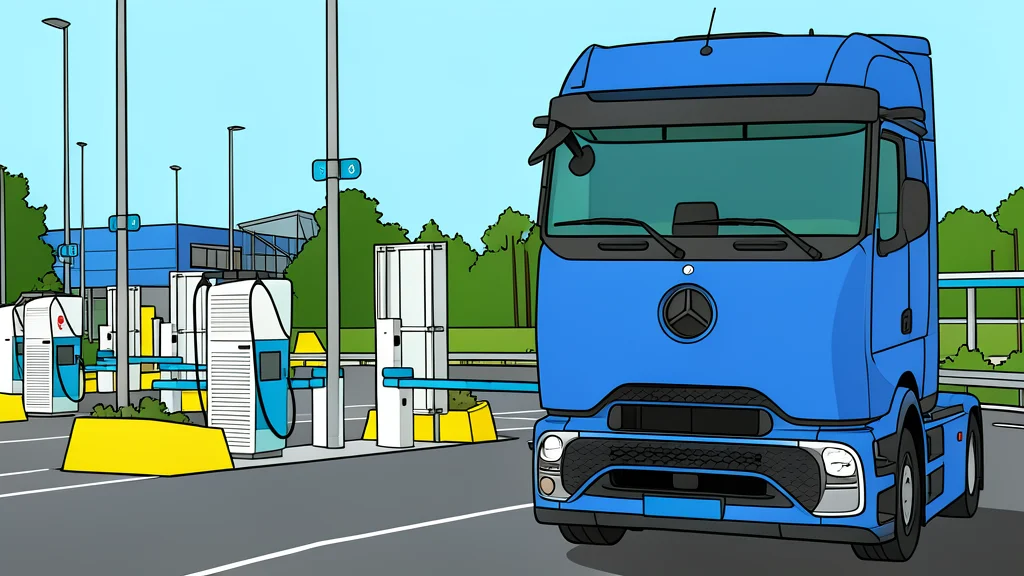
The core of this arrangement is a reservation system that allows fleet operators to book charging slots in advance. Each charger can deliver up to 400 kilowatts, a power level sufficient to reduce downtime for heavy vehicles. By securing a spot before arriving, Amazon can align charging stops with driver rest periods and route planning, reducing the uncertainty that often hinders the adoption of electric trucks in commercial logistics.
Reserved Access Simplifies Fleet Operations
For large fleets, unpredictability is a major cost driver. The partnership introduces physical barriers at charging bays that close automatically when a slot is reserved. Access is then granted via license plate recognition, ensuring that only the booked vehicle can charge. This controlled access prevents unauthorized use and streamlines the payment process through Shell’s existing card system, which spans roughly 150 heavy-duty charging points in Germany.
Torben Benhorf, Director of International Growth for Business Recharge Solutions at Shell Europe, noted that decarbonizing heavy transport requires more than just placing electric trucks on the road. Fleets need infrastructure that works around their specific routes and daily operations. This model transforms public charging from a potential disruption into a planned part of the delivery cycle, which is essential for maintaining service levels.
Part of a Larger European Strategy
This deal fits into Amazon’s broader push to electrify its European transportation network, where it currently operates over 45 electric heavy-duty trucks in Germany. Andreas Marschner, Vice President of Worldwide Sustainable Operations at Amazon, emphasized that reliable high-power charging is essential for integrating these vehicles. The ability to reserve slots provides the confidence needed to plan routes and driver schedules with greater precision.
While Amazon owns its last-mile vans, often in partnership with Rivian, it relies on specialist operators for heavier freight. In the US, for example, Swedish firm Einride deploys electric trucks and manages charging infrastructure. The partnership with Shell in Europe complements depot charging by providing accessible power on key highways, addressing the challenge of long-haul routes where depot access is not always available.
Infrastructure Meets Growing Fleet Demand
The expansion of electric heavy trucks in Europe is outpacing the development of standard public charging infrastructure. Shell operates over 2,400 charging points across Germany, positioning itself as a core provider for e-mobility in this sector. For Amazon, this strategic partnership reduces the risk associated with fleet electrification by ensuring that charging is not just available, but guaranteed at critical junctures in the supply chain.
As reported by GN auto tech/ev: electric vehicle, this collaboration highlights a shift toward specialized, bookable infrastructure for commercial fleets. The trade-off for this reliability is the need for strict adherence to booking windows and the integration of fleet management systems with third-party charging networks. However, for companies aiming to scale electric freight, this operational certainty is a necessary step toward sustainable logistics.