Slate EV Truck Tows 2,000 Pounds of Hay, Boats, or Campers
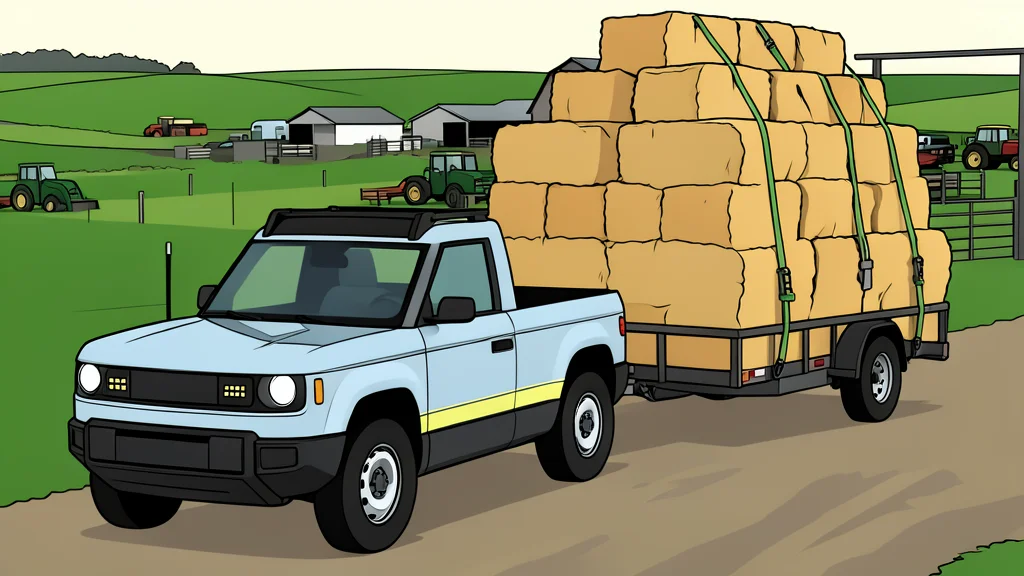
The Slate EV's 2,000-lb limit handles micro-campers and fishing boats, but heavy machinery requires careful weight management.
Key points
- The Slate EV has a 2,000-lb towing capacity and 1,550-lb payload rating, limiting it to light-duty uses.
- Suitable loads include micro-campers, fishing boats, and 20-30 dry hay bales when using lightweight trailers.
- Heavy equipment like excavators is discouraged due to the minimal safety margin and high risk of exceeding limits.
The Slate electric pickup truck is designed for compact utility rather than heavy industrial hauling. With a projected towing capacity of 2,000 pounds and a payload rating of 1,550 pounds, the vehicle targets specific niche use cases. According to Torque News, this limited rating restricts the truck from handling large commercial loads, but it remains capable of managing a variety of personal and small-business equipment.
For owners of small properties or hobby farms, this capacity is often sufficient for daily tasks. The truck can pull lightweight campers, fishing boats, and agricultural supplies without exceeding its structural limits. However, the margin for error is slim, meaning every additional pound of gear, water, or cargo must be accounted for to ensure safety and compliance with manufacturer guidelines.
Agriculture and camping fit the limit
Hobby farmers can transport 20 to 30 standard square hay bales, provided the bales are dry and the trailer is lightweight. Similarly, ultra-light teardrop campers and pop-up trailers typically weigh between 900 and 1,400 pounds dry. When loaded with water, propane, and gear, these setups generally stay within the Slate’s ceiling, making weekend camping trips feasible.
Watercraft also fall within this range. A lightweight double trailer can carry one or two personal watercraft, with total weights ranging from 900 to 1,400 pounds. The truck’s low center of gravity, aided by its underfloor battery, may improve stability on ramps, though the narrow weight margin requires precise calculation.
Small machinery requires light trailers
Sub-compact tractors and commercial zero-turn mowers are viable loads if paired with ultra-light aluminum trailers. A small utility tractor weighs around 1,500 pounds, and a commercial mower about 750 pounds. In both cases, the combined weight of the machine and the trailer must stay under 2,000 pounds, limiting options to single-axle, low-weight configurations.
Lightweight boats, such as aluminum skiffs and small pontoons, are another common application. These vessels, including motors and trailers, typically weigh between 1,150 and 1,500 pounds. This leaves a small buffer for fuel and gear, but it does not allow for heavy cargo or additional passengers in the towed load.
Heavy equipment poses a risk
The most significant trade-off lies in handling heavier specialized equipment. While some ultra-compact micro-excavators weigh as little as 1,238 pounds, towing them requires an extremely lightweight trailer and careful planning. Experts caution that this is not a recommended use case for the Slate, as the combination of machine, trailer, and any additional load leaves little to no safety margin.
Similarly, while classic micro-cars and mobile coffee carts can be towed, these setups often approach the upper limit of the truck’s capacity. Any deviation in weight, such as wet hay bales or fully stocked catering trailers, can quickly push the load over the 2,000-pound threshold. Owners must strictly adhere to manufacturer ratings and calculate every component to avoid structural stress or safety hazards.