South Korea Shifts EV Focus to 95% Uptime Standards
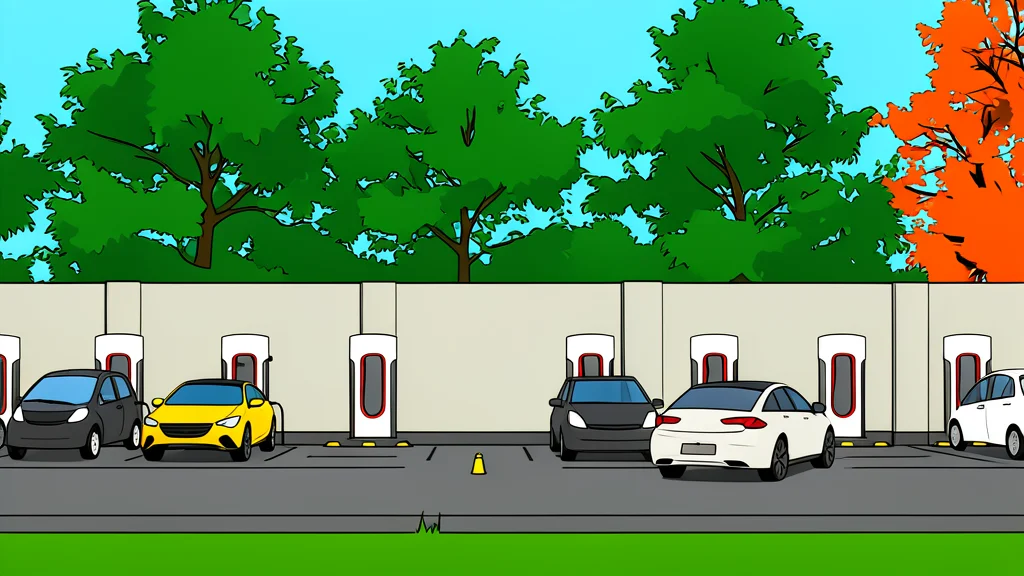
Seoul now penalizes operators for downtime, prioritizing reliability over raw charger counts to ensure drivers can actually use the network.
Key points
- South Korea ended 2025 with 490,467 EV chargers, targeting 1.23 million by 2030.
- New regulations penalize operators if charger uptime falls below 95% or output drops below 80%.
- Beecharge's CTO argues operators buy confidence and availability, not just technical specifications.
A charger that works perfectly in a lab demo often fails in the real world. As South Korea expands one of the world’s densest electric vehicle (EV) charging networks, the focus is shifting from simply installing hardware to ensuring it keeps working. The new challenge is not just having more plugs, but trusting that they will function when a driver needs them.
This shift addresses a critical gap in infrastructure maturity. For years, the industry measured success by installation counts. Now, regulators and operators are asking a harder question: can we depend on this equipment after it is installed, when it must coexist with aging electrical grids, maintenance crews, and inevitable mechanical faults? The era of counting chargers is ending; the era of guaranteeing performance is beginning.
Uptime mandates replace installation targets
South Korea ended 2025 with nearly 490,000 public chargers, an 18.3% increase from the previous year. The government aims for 850,000 units by 2027 and over 1.2 million by 2030. According to the International Energy Agency, Korea currently has the highest ratio of charging capacity per electric vehicle among assessed countries, with more than 9 kW of rated power per car.
However, the Ministry of Climate, Energy and Environment has introduced stricter rules. Subsidies are no longer guaranteed just for installing hardware. Operators now face financial penalties if a charger is offline for three consecutive days, if uptime falls below 95%, or if output drops below 80% of its rated specification. In 2026, the government allocated 545.7 billion won for new infrastructure, but linked these funds to minimum performance standards, meaning faulty fast-charging modules can trigger a 20% cut in support.
Operators prioritize trust over specs
Industry experts argue that technical specifications are only the starting point. Sui Hui Lie, Chief Technology Officer of Beecharge Innovation Group, notes that operators buy availability and confidence, not just data sheets. Beecharge, which has been approved to test mobile charging systems in Singapore, emphasizes that equipment must fit into existing operational environments without causing disruptions.
Lie highlights three critical factors that determine success outside a controlled test environment: integration with local grids, ease of maintenance, and operational fit. A charger must interact safely with existing on-site equipment and adhere to established safety procedures. If a device creates disproportionate difficulty for maintenance teams or requires complex, rare parts, it fails the practical test regardless of its peak charging speed.
Reliability becomes the core metric
The trade-off for this new regulatory approach is a higher barrier to entry for manufacturers. Companies can no longer rely on aggressive pricing or high peak power figures to secure contracts. They must prove their hardware can withstand the rigors of daily use, including temperature fluctuations, dust, and continuous cycling. As reported by KoreaTechDesk, this signals a maturing market where the cost of downtime is higher than the cost of the hardware itself.
For drivers, this means fewer instances of arriving at a station only to find broken or offline units. The policy shift forces the industry to treat charging stations as critical infrastructure, similar to fuel pumps or power substations, rather than one-time sales. The goal is a network where the promise of a charge is as reliable as the promise of a fuel delivery.