Tesla's New Modular Charger Aims to Fix Slow Network Growth
A new foldable charging unit promises cheaper and faster installation, but the gap with rival BYD remains significant.
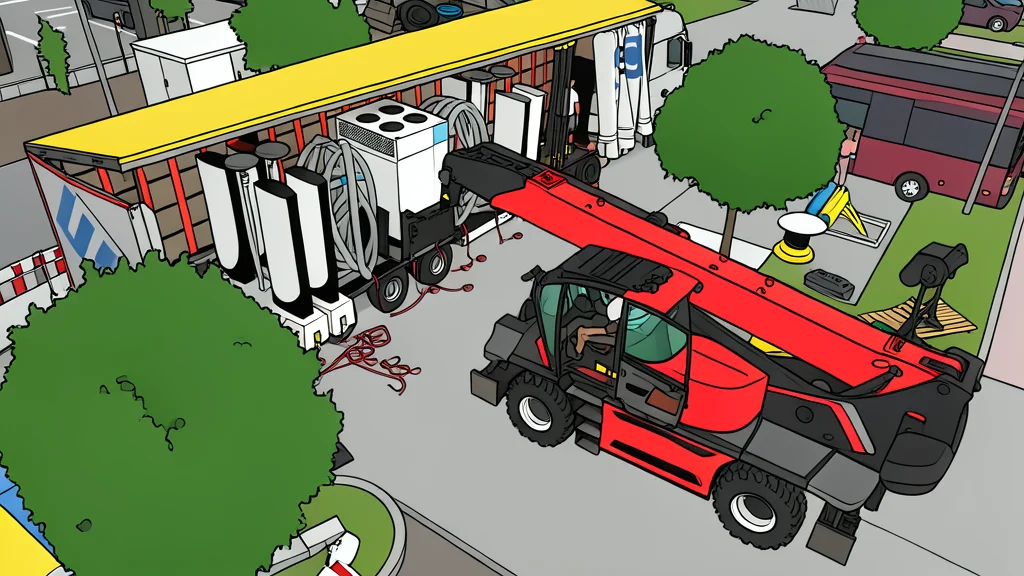
Tesla has rolled out its first "Accordion" Supercharger, a pre-assembled charging unit designed to solve logistical bottlenecks. This modular system ships with sixteen stalls on a single truck and is reported to cost twenty percent less to install than traditional sites. The move marks a strategic shift toward factory pre-assembly, a tactic Tesla needs to reverse a two-year trend of slowing deployment.
The primary advantage of this design is its flexibility in tight urban spaces. Unlike conventional stations that require trenching for underground cables, the Accordion unit sits between parking spaces. By skipping heavy civil engineering work, Tesla can access retail lots and city centers that were previously difficult to develop, potentially speeding up the addition of new stalls.
Factory assembly reduces installation complexity
The engineering behind the Accordion unit focuses on reducing on-site labor. Traditional installations require technicians to wire, trench, and permit every component individually. In contrast, the pre-wired island arrives ready for immediate activation. This approach minimizes the need for specialized field crews, allowing Tesla to scale its network without expanding its construction workforce.
This strategy is not new to the company. In 2022, Tesla built a full station in eight days using early prefab methods, later cutting that time to four days. However, the pace has since faltered. Following a significant restructuring of its charging team in 2024, the company’s expansion rate dropped sharply, with annual growth slowing to roughly seventeen percent as of mid-2026.
Rival BYD expands charging network rapidly
While Tesla refines its deployment methods, competitor BYD is outpacing it in raw volume. BYD installed ten thousand high-speed stations in China within five months of their launch, targeting twenty thousand by the end of the year. Each station offers higher peak power than Tesla’s current V4 cabinets, creating a significant disparity in charging speed and availability.
Although BYD’s network is concentrated in China, its expansion into Europe and other Asian markets is accelerating. The sheer volume of new charging points added monthly by BYD now exceeds Tesla’s global output. This rapid growth forces Tesla to maintain its competitive edge, making the efficiency gains from the Accordion Supercharger a critical component of its future strategy.
Trade-offs in modular charging design
Despite the benefits, the Accordion system is not a universal solution. It is specifically engineered for sites where underground infrastructure is impractical. For locations with existing grid access or space constraints that prevent large truck access, traditional methods may still be necessary. Additionally, the unit’s power output remains capped at 500 kilowatts, which is lower than the 1.5 megawatts offered by BYD’s latest hardware.
Electrek notes that while the Accordion Supercharger represents a logical step in scaling infrastructure, it does not eliminate the power gap with competitors. Tesla must balance the cost savings of modular installation against the need for higher peak charging speeds. The success of this approach will depend on whether the reduced installation costs can offset the technological disadvantage in power delivery.