US House Passes Bill Requiring AM Radio in New Cars
A new bill passed by the US House of Representatives would mandate that all new vehicles include AM radio at no extra cost, prioritizing emergency communication over modern streaming preferences.
The US House of Representatives has approved legislation that could force automakers to include AM radio in every new vehicle sold in the country. The AM Radio for Every Vehicle Act now moves to the Senate, where it faces a final vote. If enacted, the law would require the National Highway Traffic Safety Administration to establish standards ensuring this century-old technology remains accessible to all drivers without an additional fee.
This move reverses a recent industry trend where many manufacturers have removed analog radio hardware in favor of streaming services. While digital connectivity offers convenience, proponents of the bill argue that AM radio serves as a critical backup during emergencies when cell networks fail. Supporters point to the need for reliable information dissemination in rural areas and during natural disasters.
Emergency lifeline for rural communities
The primary argument for the legislation is public safety. During severe weather events or infrastructure failures, cellular signals are often disrupted, leaving drivers isolated. AM radio, however, operates independently of the internet and can broadcast local emergency alerts, weather forecasts, and news. House Energy and Commerce Committee Chairman Brett Guthrie highlighted that farmers and older residents rely heavily on AM bands for crop reports and local programming that streaming services may not fully replicate.
Emergency responder organizations have strongly backed the measure, viewing it as a necessary redundancy in communication infrastructure. The bill reflects a bipartisan effort to ensure that no driver is left without a basic form of information access during a crisis. This perspective contrasts with the automotive industry's focus on seamless digital integration, highlighting a tension between modern convenience and traditional reliability.
Electric vehicle manufacturers face highest costs
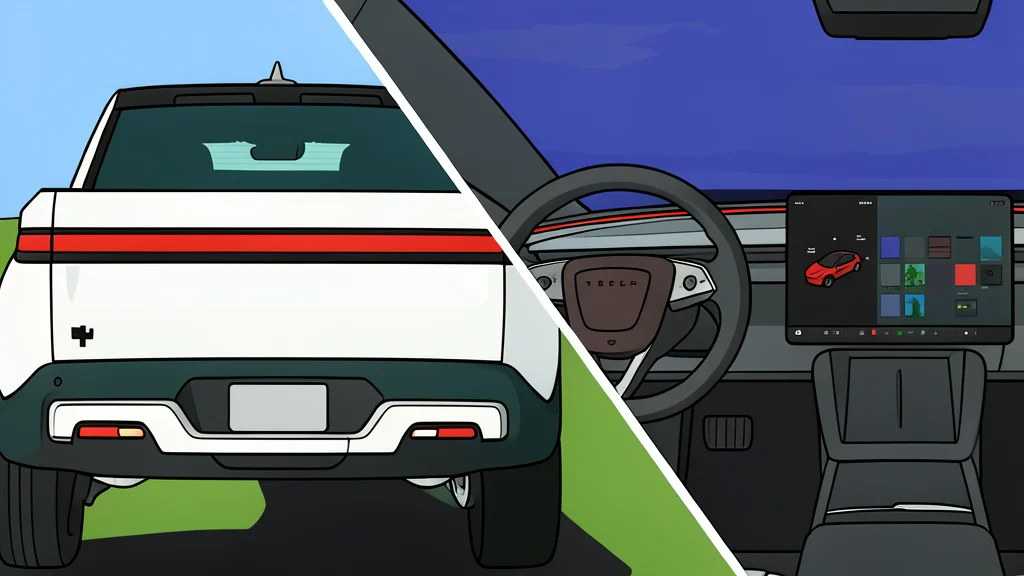
The financial impact of the mandate will not be evenly distributed across the industry. According to analysis cited by USA Today, electric vehicle (EV) manufacturers will bear the heaviest burden. This is largely because many EV makers have already stripped out analog radio hardware to reduce component costs and simplify software-defined vehicle architectures. Companies like Tesla, Rivian, Volvo, and BMW have moved toward streaming-only audio systems in recent models.
Tesla, for instance, began phasing out AM radio in 2020, citing interference from electric motors as a reason for the poor listening experience. However, the legislation would effectively force these companies to reintroduce the technology. Estimates suggest that manufacturers will need to update radio equipment in approximately two to 2.5 million vehicles annually. Traditional internal combustion engine carmakers, which often still include FM/AM receivers, will face less disruption, but the shift could alter the cost structure of new EVs.
Legislative path and industry resistance
While the House vote was overwhelming, the Senate must still pass the bill for it to become law. Senator Ted Cruz has voiced strong support, describing AM radio as a lifeline that must be protected. However, the automotive industry has raised concerns about the technical challenges and costs associated with retrofitting modern vehicles. The debate highlights a broader conflict between technological innovation and regulatory mandates for basic utility features.
If the bill passes, it will represent a significant regulatory intervention in consumer electronics within vehicles. It forces a return to hardware that many engineers consider obsolete. For consumers, this means potentially higher vehicle costs due to compliance requirements, but also the assurance that a non-digital communication channel remains available. The outcome in the Senate will determine whether this century-old technology remains a standard feature or becomes a niche option in the coming decade.