Yadea and Spiro Join Forces to Scale African Electric Two-Wheelers
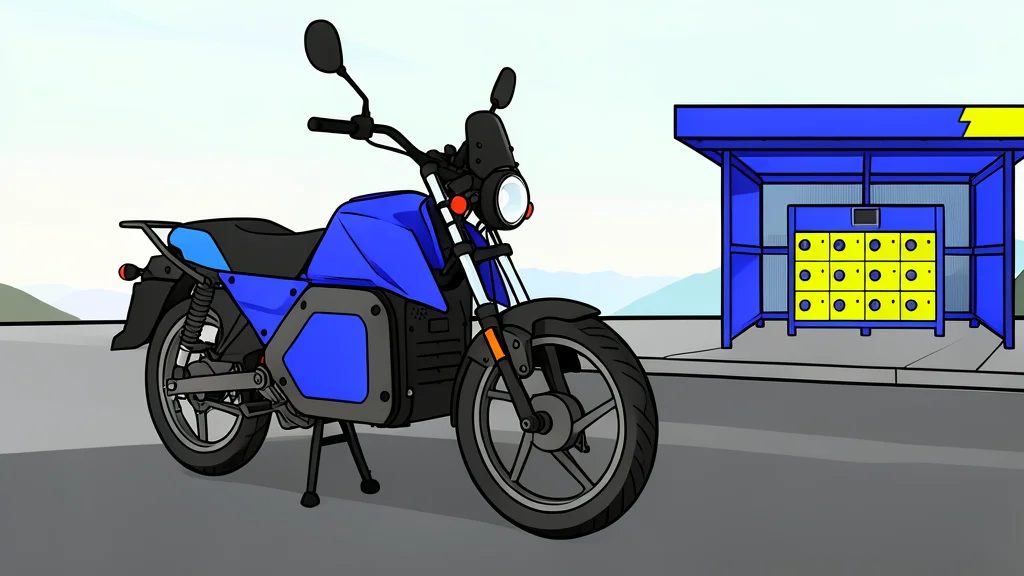
A strategic alliance between a global manufacturing giant and a regional infrastructure leader aims to reshape how electric motorcycles operate across the continent.
Yadea, the Chinese electric vehicle manufacturer recognized as the world's largest by unit sales, has announced a strategic partnership with Spiro, an African company specializing in electric mobility infrastructure. This collaboration merges Yadea’s massive production capacity with Spiro’s established network of battery-swapping stations across the continent. According to GN auto tech/ev: electric vehicle, the move is designed to create electric two-wheelers that are specifically adapted to the rigorous demands of African transport networks.
The agreement goes beyond simple distribution. The two companies plan to jointly develop customized scooters and motorcycles tailored for local road conditions and heavy commercial use. By integrating Yadea’s hardware into Spiro’s energy ecosystem, the partnership seeks to address the high daily mileage requirements of motorcycle taxi drivers and delivery workers, who rely on these vehicles for their livelihoods.
Existing infrastructure scales with new supply
Spiro brings a significant operational footprint to the table, with over 130,000 electric motorcycles currently active in seven African countries. The company supports these vehicles through more than 2,500 battery-swapping stations, a network that has facilitated over 50 million battery exchanges. This existing infrastructure provides a ready-made platform for Yadea’s vehicles to enter the market, reducing the need for Spiro to build new energy hubs from scratch.
Yadea contributes global manufacturing expertise, operating in over 100 countries with ten production facilities and more than 40,000 retail locations. The Chinese firm holds over 2,000 patents in electric vehicle technology, offering the technical depth required to produce reliable hardware at scale. This combination allows the partnership to leverage proven manufacturing processes while targeting specific regional needs.
Swapping solves the charging downtime problem
For commercial riders, time is money. Traditional charging can take hours, effectively removing the vehicle from service during peak working periods. Battery swapping offers a practical alternative by allowing depleted batteries to be exchanged for charged ones in minutes. This minimizes downtime and keeps riders earning, which is a critical factor for the adoption of electric vehicles in commercial sectors.
Spiro has focused on building this swapping infrastructure while also expanding assembly operations in Uganda, Kenya, Nigeria, and Rwanda. The recent raise of $270 million in funding signals a commitment to further expanding these networks. The trade-off for riders is a dependency on the availability of swapping stations, but the operational efficiency gains for high-mileage users generally outweigh this logistical constraint.
Tailoring vehicles for heavy commercial use
The joint development effort focuses on creating vehicles that can withstand the specific stresses of African roads and commercial loads. Standard global models often lack the durability or specific features needed for these conditions. By customizing the hardware, the partners aim to reduce maintenance costs and improve longevity, making electric two-wheelers a more viable long-term investment for riders.
This approach addresses a common hurdle in emerging markets, where vehicle reliability is paramount. If Yadea and Spiro successfully combine manufacturing scale with localized infrastructure, the partnership could set a new standard for electric mobility in the region. The outcome will depend on how well the integrated system performs under real-world conditions, but the alignment of resources is a strong starting point.