AI Tuning Runs Resident Evil 7 on Old Phone
A recent experiment demonstrates how artificial intelligence can make demanding horror games playable on aging smartphone hardware by intelligently reducing data load and optimizing rendering.
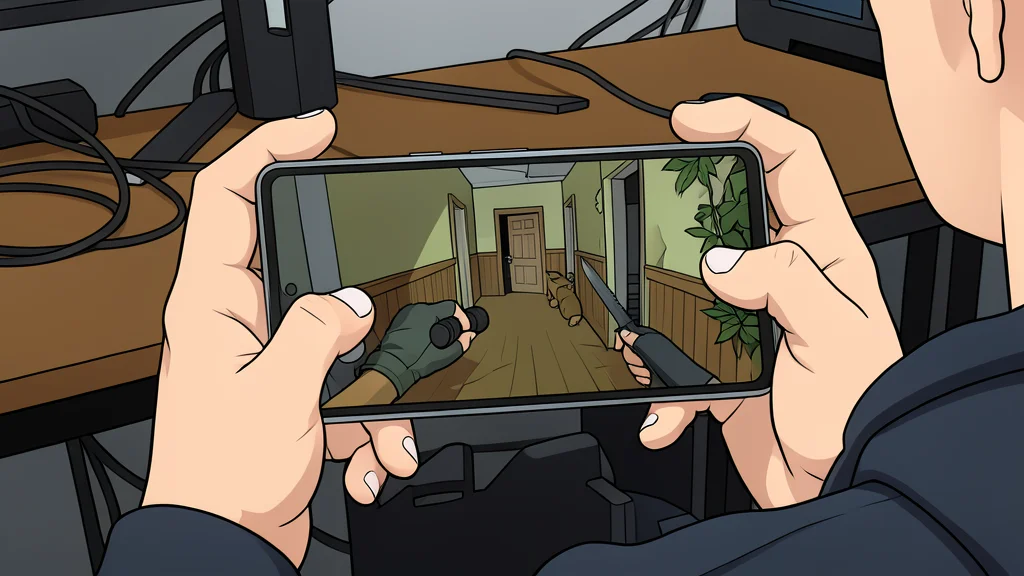
Running high-end console games on a smartphone has traditionally been a struggle for most devices. However, a new technical report details how Resident Evil 7 was successfully stabilized on a OnePlus 12R, a phone with a Snapdragon 8 Gen 2 chip. The breakthrough came not from raw power, but from using an AI agent to diagnose and fix specific emulation bottlenecks.
According to the report published by GN technics/mobile (en-US), the phone initially managed only about 20 frames per second. By connecting the device to a Mac and enabling debug modes, developers used an AI model to analyze performance logs. This allowed them to pinpoint exactly where the system was failing and apply targeted fixes.
AI Diagnoses Memory Bottlenecks
The core issue was identified as limitations in input/output speed and memory bandwidth. The AI suggested compressing the game's textures from a high-resolution 4096 pixels down to 1024 and 512 pixels. This change drastically reduced the amount of data the phone needed to process, dropping the requirement from approximately 25 GB to just 8 GB.
After removing unnecessary files, the total data footprint settled around 13 GB. This reduction meant the phone's memory controller no longer had to work at maximum capacity to keep up with the game engine, providing the headroom needed for smoother performance.
Rendering Optimization Improves Stability
To further assist the processor, the developers enabled Snapdragon Game Super Resolution. This feature allowed the game to be rendered at a lower internal resolution of 720p, which was then scaled up to approximately 1200p for the display. This technique reduces the graphical workload while maintaining visual clarity.
The result was a stable 30 frames per second, with power consumption held to a modest 5–6 watts. Notably, the phone was also recording gameplay simultaneously, which added extra load to the system, yet the performance remained consistent.
Trade-Offs in Visual Fidelity
While the performance gain is significant, there is a clear trade-off. Compressing textures from 4096 to 1024 pixels means the game will look visibly less detailed than on a modern PC or console. Close-up textures may appear softer or less sharp.
This experiment highlights a shift in how we approach mobile gaming. Instead of relying solely on newer, more powerful hardware, AI tools can now optimize existing devices. This makes high-quality gaming accessible to a broader audience with older phones, though users must accept slightly lower graphical fidelity to achieve playable frame rates.