Virtual Fly Brain Tests Consciousness in Minecraft
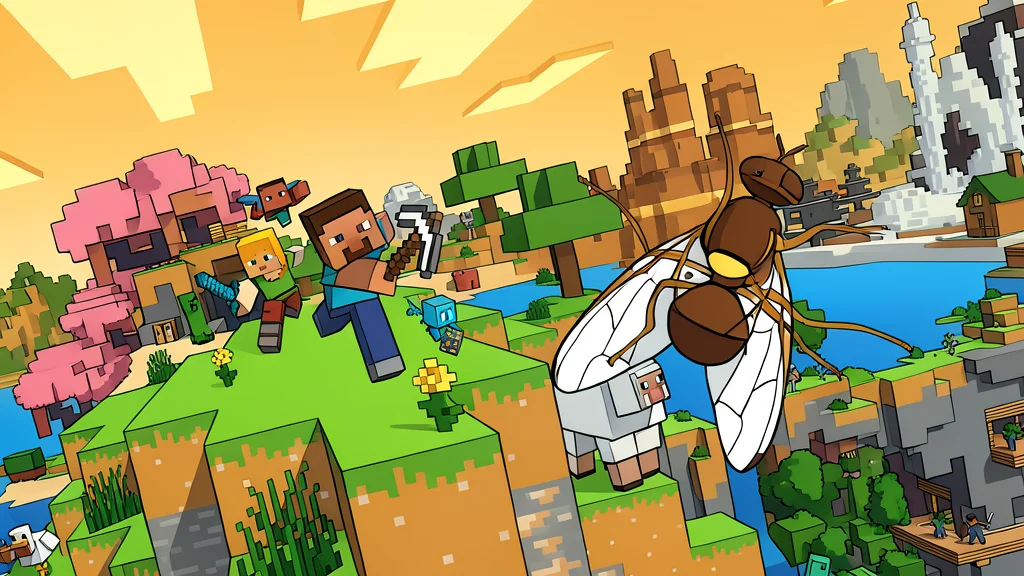
A YouTuber used a digital map of a fruit fly's brain to create a virtual insect that responds to hunger and fear inside Minecraft, raising questions about machine consciousness.
A recent experiment in the popular sandbox game Minecraft has blurred the line between entertainment and scientific inquiry. A content creator known as Roooney integrated a digital representation of a fruit fly’s brain into the game environment, allowing the virtual insect to perceive and react to its surroundings. The project serves as a novel test case for understanding how complex neural networks might function within a simulated world.
The initiative is grounded in serious academic research rather than mere novelty. It utilizes data generated by scientists at Princeton University who mapped the intricate neural connections of a fruit fly. By translating these biological structures into programmable code, the experimenters created a functional model that can process inputs and generate outputs, effectively simulating basic cognitive behaviors within the game’s blocky landscape.
Digital Neurons Power Virtual Behavior
The core of this project relies on a public dataset derived from the work of Dr. Arie Matsliah, a research scientist at Princeton. His team mapped approximately 54.5 million synaptic connections in the fruit fly brain, converting this biological architecture into a structured digital format. This data was then adapted for use in Minecraft, where it dictates how the virtual insect interacts with its environment. While the simulation simplifies the complex biophysics of a real brain, it retains enough structural fidelity to act as a functional neural network for testing purposes.
Simulating Hunger and Fear Responses
Roooney programmed the virtual fly to experience two fundamental drives: hunger and fear. When the insect’s energy levels dropped, the neural model triggered a response that drove the character to seek food sources within the game. Similarly, exposure to threatening stimuli elicited a fear response, prompting the fly to flee. These reactions demonstrate that the digital brain can process sensory input, evaluate its state, and execute logical actions to survive, mirroring basic biological imperatives.
Limitations of Virtual Consciousness Models
Despite the impressive results, the experiment has significant limitations. The digital fly does not possess true consciousness or subjective experience; it is a sophisticated algorithm mimicking biological behavior. The neural model is a mathematical abstraction, lacking the physiological depth of a real brain. Furthermore, the environment of Minecraft is highly structured and predictable, unlike the chaotic complexity of the natural world. As reported by levelup.com, this project highlights the potential of gaming as a platform for scientific exploration, but it also underscores the vast distance between simulated behavior and genuine awareness.