Zelda's Open World Design Prioritized Player Freedom over Checklist Tasks
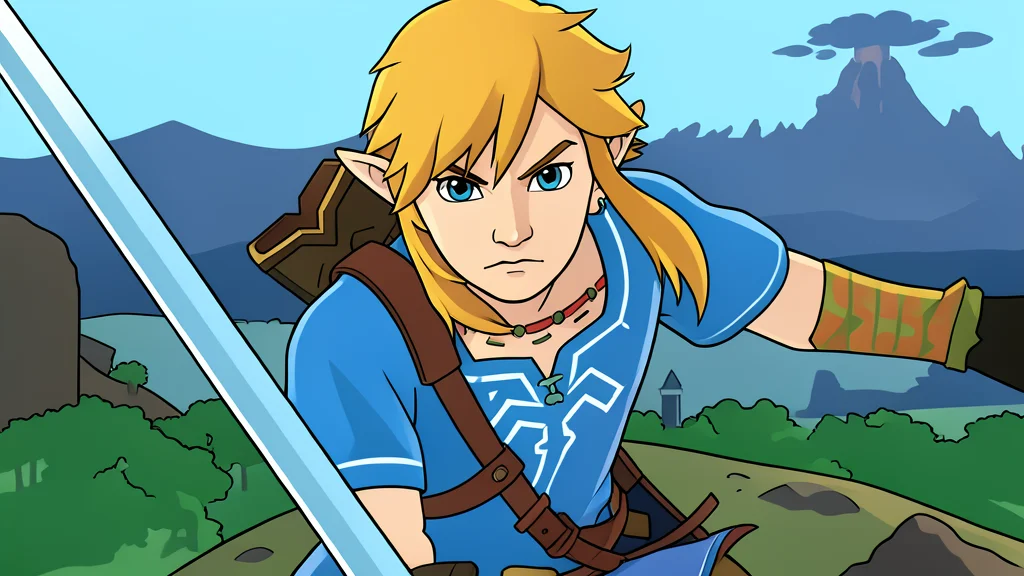
Nintendo's 2017 release stripped away the clutter of modern open-world games to restore a sense of organic discovery.
The video game industry spent the 2000s and 2010s solving the puzzle of how to make 3D spaces feel engaging. The Legend of Zelda: Ocarina of Time provided the initial blueprint in 1998, establishing standards that titles like The Elder Scrolls and Far Cry later expanded upon. These games typically solved the problem of player direction by adding more content: more map icons, more collectibles, and more scripted encounters. However, nearly two decades later, Nintendo approached the genre from a different angle. As noted by GN technics/gaming, the studio did not add complexity; it removed it.
The Legend of Zelda: Breath of the Wild entered a market where open-world games were often criticized for feeling like checklists. Players were frequently overwhelmed by dozens of markers on their maps, creating a sense of obligation rather than curiosity. Nintendo’s response was to drastically reduce the number of permanent markers on the map. By leaving most of Hyrule unmarked, the game forced players to rely on their own observation and intuition to find points of interest, rather than following a pre-determined path.
Removing Map Clutter Restored Curiosity
In many contemporary titles, the map serves as a to-do list. Icons for shops, quests, and enemies clutter the screen, telling players exactly where to go next. This design choice, while helpful for some, often leads to fatigue. Breath of the Wild stripped this down to the essentials: only main quest markers, towers, and shrines appear permanently. Everything else, from unique side stories to powerful gear, must be discovered through exploration. This shift turned navigation into a core part of the gameplay loop rather than a mechanical necessity.
This philosophy extended even to simple fetch quests. Instead of providing a precise waypoint, non-player characters gave verbal directions that required the player to interpret the environment. This simple change transformed a mundane task into a challenge of map literacy. It rewarded players who paid attention to their surroundings, making the world feel more alive and responsive to their individual path.
Simplifying Stats Eliminated Artificial Barriers
Beyond the map, the game also removed the traditional experience points and level-up systems that dominate the genre. Instead of managing complex skill trees or branching stat points, players had a single durability meter for weapons and armor. This reduction in mechanical complexity had a significant impact on gameplay flow. Players no longer needed to pause their adventure to optimize their character build or spend time in menus managing inventory stats.
The absence of levels also eliminated level gating, a common technique used to prevent players from progressing too far into a game. By removing these artificial barriers, the game allowed players to attempt difficult challenges early on, provided they had the right approach or equipment. This design choice prioritized player agency over developer control, trusting the player to figure out how to overcome obstacles through creativity rather than brute force or numerical superiority.
Trade-Offs of a Minimalist Design
While this approach created a sense of freedom, it was not without its trade-offs. The lack of explicit guidance can be disorienting for players who prefer structured progression. Without clear indicators of where to go next, some players may find themselves wandering aimlessly or missing out on content simply because they did not know it existed. The game requires a certain level of patience and willingness to experiment, which may not suit every player’s preference.
However, for those who embraced the minimalist design, the result was a more immersive and rewarding experience. The world felt less like a collection of tasks to complete and more like a place to inhabit. By removing the scaffolding of modern open-world design, Nintendo managed to recapture the sense of wonder that defined the original Ocarina of Time, proving that sometimes, less is indeed more.