China's Manufacturing Sector Shifts Toward High-End Innovation
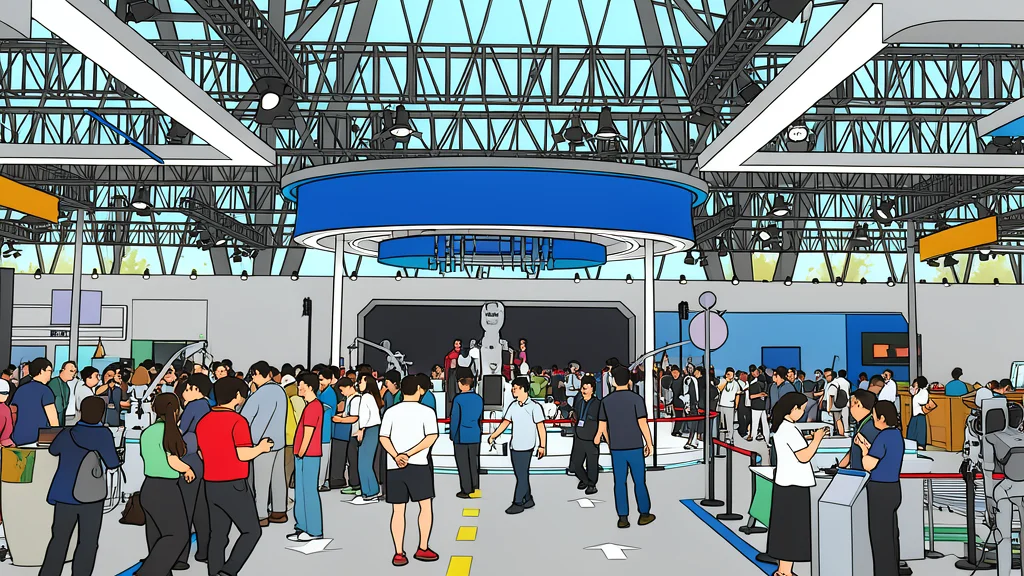
A major convention in Hefei highlights a strategic pivot from low-cost assembly to advanced robotics and chip production, signaling a new phase in global industrial competition.
The 2026 World Manufacturing Convention in Hefei has drawn attention to a fundamental shift in China’s industrial identity. Rather than focusing on low-cost assembly, the event showcased humanoid robots, advanced memory chips, and next-generation batteries, marking a move toward becoming a global hub for high-tech innovation.
According to Global Times, the gathering serves as a barometer for this transformation. The convention highlights how provinces like Anhui are outpacing traditional manufacturing heavyweights by integrating artificial intelligence and quantum research into their core economic strategies, challenging the long-standing view of China solely as the world's factory.
Local players drive industrial upgrade
Anhui Province, once known primarily for home appliances, has emerged as a leader in advanced manufacturing. It now hosts significant memory chipmakers, battery producers, and robotics businesses derived from automakers. Economists note that this regional shift demonstrates a broader national trend where industrial momentum is driven by technological depth rather than just labor volume.
The rise of local firms in high-tech sectors is reshaping the competitive landscape. By cultivating native capabilities in areas like artificial intelligence and embodied intelligence, the region is reducing reliance on imported components and positioning itself at the high end of the global supply chain. This transition represents a significant step in climbing the industrial value ladder.
Memory chip production scales up
At the convention, ChangXin Memory Technologies announced the mass production of its fifth-generation DRAM platform. This advancement allows for finer circuitry on chips, narrowing the gap with the most advanced memory technologies globally. The new process increases yield by at least 50 percent per wafer, making the products more energy-efficient and cost-competitive for smartphones and other portable devices.
While the production gains are substantial, the trade-off is an intense competition in a market dominated by established players. Scaling up such advanced manufacturing requires massive capital investment and continuous technological refinement. Success depends not just on production volume, but on maintaining reliability and performance standards that meet international benchmarks for high-end electronics.
Global cooperation meets strategic priority
The event featured over 500 foreign representatives and companies from the US, France, and Russia, indicating a desire for continued global exchange. However, this openness runs parallel to a strong national push to secure industrial chains. The concurrent national conference on advanced manufacturing in Beijing underscores that these sectors are now considered critical to strategic stability.
Analysts suggest the global industrial structure is evolving into a twin-peak model, with China occupying one of the high-end positions. For international partners, this creates both opportunities for collaboration and challenges in maintaining competitive advantage. The catch for foreign firms is navigating a market that is increasingly self-sufficient and technologically sophisticated, requiring deeper engagement rather than simple trade.