Shenzhen Launches New Hub for Global Hardware Innovation
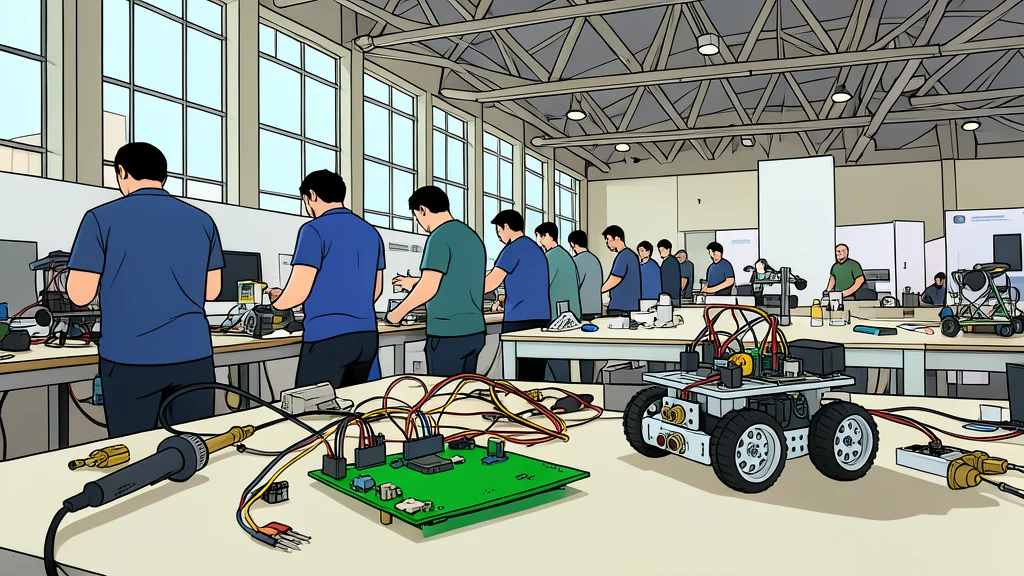
A new innovation center in Shenzhen aims to streamline the journey from concept to finished product for global hardware teams.
Shenzhen has opened a new Greater Bay Area Smart Hardware Innovation Center, signaling a deeper shift in how global makers approach product development. The facility, located in Futian District, was unveiled alongside the fourth Open Source Hardware Spark Conference, an event that attracted over 2,200 innovators from various countries. The initiative marks a strategic move to consolidate the hardware ecosystem, moving beyond simple component sourcing to a full-cycle support environment for design and validation.
The timing is deliberate, occurring just 60 days before the 33rd APEC Economic Leaders' Meeting in the city. By hosting this large-scale gathering, Shenzhen is positioning itself not just as a manufacturing hub, but as a primary destination for the entire innovation lifecycle. The event drew more than 400 project submissions, indicating a strong appetite among international teams to leverage local resources for prototyping and testing.
Complete Supply Chain Integration
The core value proposition of the new center is the proximity of the entire supply chain. At the recent exhibition, more than 50 chip and tool vendors set up booths alongside makers, creating a physical space where components can be sourced, tested, and integrated in real time. This setup allows teams to iterate quickly, reducing the logistical friction that often slows down hardware development in other regions.
A notable highlight was the physical debut of the world's first fully open-source chip. Built on open-source EDA, IP, and PDK standards, this chip was successfully powered on in late 2025. Its presence at the venue underscores a growing trend toward transparency and accessibility in core hardware design, offering developers a verifiable foundation for their projects.
Open Source Versus Closed Models
The conference highlighted two distinct pathways for hardware development: open-source and closed-source. The open-source track, powered by the LCSC platform, requires participants to publicly release design schematics, source code, and bills of materials. This model prioritizes community reuse and has seen over 700 cumulative submissions across four editions. In contrast, the closed-source track allows teams to retain full intellectual property rights, with a tiered disclosure mechanism for judges and investors.
The winner of the advanced open-source category, a wheel-leg robot designed for search and rescue, exemplifies the practical potential of shared designs. By combining wheeled drive with quadruped gait, the device can navigate both flat and rough terrain. However, the trade-off for open-source participants is the loss of exclusivity; their innovations become part of a public domain that competitors can also access and modify.
Shifting Global Manufacturing Dynamics
According to GN auto tech/hardware, the shift from buying components to building products in Shenzhen represents a significant change in global hardware dynamics. The new innovation center provides a structured environment for this transition, offering incubator support and technical validation services. For startups, this reduces the risk and cost associated with bringing new devices to market.
The catch, however, is the intense competition and the rapid pace of iteration required in this environment. With over 300,000 online viewers watching the live streams, the spotlight on these projects is intense. While the infrastructure supports rapid development, it also demands that teams keep up with a fast-moving ecosystem where standards and tools evolve continuously.